Sleep apnea disrupts your breathing while you sleep, leaving you tired and putting your health at risk. If you’ve been diagnosed with this condition, you’re probably wondering which treatment will work best for your life.
The two main options are CPAP machines and oral appliances, and each has its own benefits and drawbacks.
CPAP therapy is typically more effective for severe sleep apnea, while oral appliances work well for mild to moderate cases and offer a more comfortable, portable alternative.
Your choice depends on how serious your condition is, what feels comfortable to you, and how well you can stick with the treatment long-term.
Understanding the differences between these treatments will help you make the right decision for your sleep and health.
Both options can improve your breathing at night, but they work in different ways and suit different lifestyles.
Key Takeaways
- CPAP machines are the most effective treatment for severe sleep apnea, while oral appliances work better for mild to moderate cases
- Your personal comfort level and ability to use the device every night matters just as much as how well the treatment works
- The severity of your sleep apnea, your lifestyle needs, and guidance from your doctor should all guide your treatment choice
Comparing CPAP and Oral Appliance Therapy
CPAP machines deliver pressurized air through a mask to keep your airway open, while oral appliances physically reposition your jaw to prevent airway collapse.
Each sleep apnea treatment works differently and offers distinct advantages depending on your specific needs.
How CPAP Therapy Works
Continuous positive airway pressure (CPAP) delivers a steady stream of air through a mask that you wear over your nose, mouth, or both while you sleep.
This pressurized air acts as a splint to keep your airway from collapsing.
Your CPAP machine includes three main parts: a motor that generates air pressure, a mask that delivers the air, and a hose connecting them.
Modern CPAP machines also feature heated humidifiers to prevent dry mouth and adjustable pressure settings for comfort.
The air pressure level gets set based on your sleep study results. Your doctor prescribes a specific pressure that’s strong enough to prevent breathing pauses but comfortable enough for you to sleep through the night.
Some machines automatically adjust pressure throughout the night based on your breathing patterns.
How Oral Appliance Therapy Works
Oral appliance therapy (OAT) uses a custom-fitted device that looks similar to a sports mouthguard or retainer. The most common type is a mandibular advancement device (MAD), which gently moves your lower jaw forward.
This forward positioning increases the space in your airway and prevents your tongue from falling back during sleep. Your dentist takes impressions of your teeth to create a device that fits precisely in your mouth.
The oral appliance stays in place all night and requires no electricity or moving parts. You can adjust many devices to find the right jaw position that opens your airway while remaining comfortable.
Regular follow-up visits ensure the appliance continues working effectively and doesn’t cause tooth movement or jaw issues.
Key Differences at a Glance
| Feature | CPAP | Oral Appliance |
| Best For | Moderate to severe sleep apnea | Mild to moderate sleep apnea |
| Effectiveness | Highly effective for all severity levels | Less effective than CPAP for severe cases |
| Portability | Bulky, requires electricity | Small, no power needed |
| Noise Level | Some machine noise | Silent |
| Comfort | Mask may cause discomfort | May cause jaw soreness |
| Travel | Difficult to pack and use | Easy to bring anywhere |
Choosing between CPAP and oral appliances depends largely on your sleep apnea severity and lifestyle preferences. CPAP typically works better for more serious breathing interruptions, while oral appliances offer a comfortable and portable alternative for milder cases.
Choosing the Best Treatment Based on Severity
The severity of your sleep apnea plays a major role in which treatment will work best for you. Your doctor determines severity using your AHI score and oxygen saturation levels during sleep.
Mild to Moderate Obstructive Sleep Apnea
If you have mild to moderate sleep apnea, you have more treatment options to choose from. Mild OSA means your AHI is between 5 and 15 events per hour.
Moderate sleep apnea falls between 15 and 30 events per hour.
Oral appliance therapy is often effective for mild to moderate OSA and may be your first choice. These devices reposition your jaw and tongue to keep your airway open while you sleep.
CPAP machines work well for mild to moderate cases too. However, many people with milder cases prefer oral appliances because they’re easier to travel with and more comfortable to wear.
Your oxygen saturation levels may not drop as severely with mild to moderate OSA, which gives you flexibility in choosing between treatments.
The best approach is to pick the option you’ll actually use every night.
Moderate to Severe Obstructive Sleep Apnea
Severe OSA requires more aggressive treatment since your AHI is above 30 events per hour. Your oxygen saturation often drops to dangerous levels during sleep with severe sleep apnea.
CPAP therapy remains the most effective treatment for moderate to severe cases.
CPAP is typically recommended for moderate to severe cases because it delivers continuous air pressure that keeps your airway open throughout the night. This prevents your oxygen levels from dropping too low.
Oral appliances are less effective for severe OSA. They may not provide enough airway support when your breathing stops frequently during sleep.
If you cannot tolerate CPAP, some doctors may consider oral appliances as a backup option, but this requires careful monitoring of your AHI and oxygen levels.
Central Sleep Apnea Considerations
Central sleep apnea differs from obstructive sleep apnea because your brain fails to send proper breathing signals. Your airway doesn’t collapse like it does with OSA.
CPAP machines may help some people with central sleep apnea, but they don’t work for everyone. Specialized devices like BiPAP or ASV machines often work better because they adjust pressure levels automatically.
Oral appliances don’t treat central sleep apnea since they only reposition your jaw. These devices can’t fix the brain signal problem that causes central apnea events.
Ready for better sleep? Ask about oral appliance therapy for sleep apnea today.
Treatment Effectiveness and Real-World Outcomes
Both treatments can reduce your AHI scores and improve breathing during sleep, but the benefits you actually experience depend heavily on how consistently you use the device each night.
Improvement in Sleep Quality
CPAP therapy typically delivers better results in sleep studies for severe sleep apnea cases. It can reduce your AHI to near-normal levels when used properly throughout the night.
Most people notice less daytime fatigue within the first few weeks of starting treatment.
Oral appliance therapy works well for mild to moderate sleep apnea.
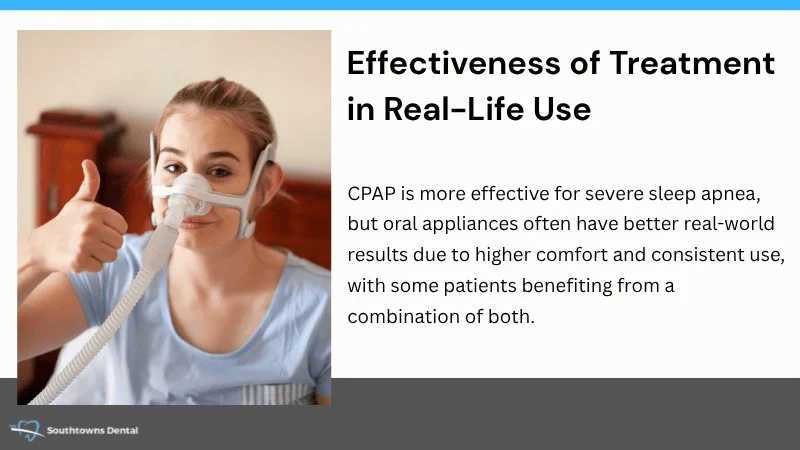
While it may not lower your AHI as much as CPAP in lab settings, real-world effectiveness often matches or exceeds CPAP because people actually wear the device consistently.
You’ll likely see improvements in your sleep quality and feel more refreshed during the day.
The key difference is that a treatment only works when you use it. Better breathing during sleep leads to more restful sleep, which reduces your daytime fatigue and improves your focus.
Adherence and Compliance
CPAP compliance remains a major challenge. Many people struggle with the mask, noise, or pressure sensation. Studies show most patients preferred oral appliance therapy over CPAP for higher adherence rates.
Oral appliances are easier to travel with and simpler to use. You don’t need electricity or worry about CPAP side effects like dry mouth, skin irritation, or aerophagia.
Most people wear their oral appliance more nights per week than those who use CPAP.
Your insurance may require you to show CPAP compliance before approving an oral appliance. This typically means using CPAP at least four hours per night for 70% of nights.
Combination Therapy Solutions
Some people benefit from using both treatments together. Combination therapy can help if you have severe sleep apnea but struggle with high CPAP pressure settings.
You might use CPAP at home and an oral appliance when traveling. This approach gives you flexibility while maintaining treatment benefits.
Your sleep doctor can adjust your CPAP pressure lower when you wear an oral appliance, which often makes the therapy more comfortable and improves your overall compliance.
Comfort, Side Effects, and Lifestyle Factors
CPAP machines and oral appliances each come with their own comfort challenges and side effects that can affect how well you stick with treatment.
Your daily routine, travel habits, and personal tolerance for equipment will play a big role in which option works best for your life.
Mask Discomfort and CPAP Side Effects
The CPAP mask sits on your face all night, which can cause skin irritation, red marks, or pressure sores where it contacts your skin. Many people struggle with mask discomfort during the first few weeks of treatment.
CPAP therapy can also lead to other side effects. You might experience a dry or stuffy nose, especially in the morning.
Heated humidification can help reduce these symptoms by adding moisture to the air you breathe.
Some users develop aerophagia, which means swallowing air during sleep. This causes bloating, gas, and stomach discomfort. The mask can also feel claustrophobic, making it hard to fall asleep initially.
The noise from the machine bothers some people and their bed partners, though modern CPAP devices are much quieter than older models.
Mouth breathing while using a nasal mask can cause dry mouth and reduce treatment effectiveness.
Oral Appliance Fit and Dental Considerations
Oral appliances work by moving your lower jaw forward to keep your airway open. This forward positioning can cause jaw discomfort or jaw pain, especially during the first few weeks of use.
Some people experience TMJ issues or worsening of existing TMJ problems. The device puts pressure on your jaw joints throughout the night, which can lead to soreness or clicking sounds.
Potential dental side effects include:
- Tooth discomfort or sensitivity
- Bite changes over time
- Excessive salivation
- Gum irritation
- Temporary jaw stiffness in the morning
Regular dental checkups are necessary to monitor for bite changes and ensure the device still fits properly. Your dentist may need to adjust the appliance as your mouth adapts to wearing it nightly.
Travel, Portability, and Convenience
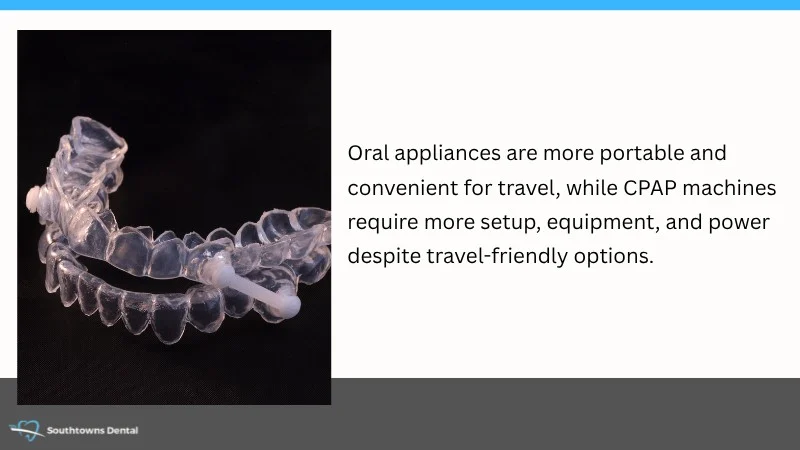
Oral appliances win for portability and convenience when you travel. The small device fits in your pocket or toiletry bag without taking up much space.
CPAP machines require more planning for trips. You need to pack the machine, mask, hose, power cord, and sometimes distilled water for the humidifier.
Airlines allow CPAP devices as medical equipment that doesn’t count toward your carry-on limit.
Battery-powered CPAP options exist for camping or places without electricity, but they add extra cost and weight. Some newer models are smaller and more travel-friendly than older machines.
Oral appliances need no electricity, making them ideal for camping, backpacking, or travel to areas with unreliable power. You simply pop the device in your mouth and go to sleep, with no setup required.
Personalizing Your Sleep Apnea Treatment Choice
Working with healthcare professionals helps you find a treatment that fits your specific needs and lifestyle.
Your sleep apnea severity, anatomy, and daily habits all play important roles in determining whether CPAP or an oral appliance works best for you.
Factors to Consider with Your Sleep Medicine Provider
Your sleep medicine doctor will review several key factors before recommending a treatment. The severity of your sleep apnea is often the most important consideration.
CPAP therapy works best for moderate to severe cases where airway obstruction happens frequently throughout the night.
Your anatomy also matters when treating sleep apnea. Some people have narrow airways or specific facial structures that respond better to one treatment over another.
Your doctor may examine your throat, jaw position, and tongue size to understand what causes your airway collapse during sleep.
Lifestyle factors help determine which treatment you’ll actually use every night. If you travel often for work, a portable oral appliance might fit your needs better than a CPAP machine.
Your sleep apnea symptoms like snoring severity and daytime tiredness can also guide your provider’s recommendations.
Dental Sleep Medicine and Follow-Up Care

If you choose oral appliance therapy, you’ll work with a dentist trained in dental sleep medicine. These specialists create custom-fitted devices that reposition your lower jaw to keep your airway open.
The dentist takes impressions of your teeth and adjusts the appliance to find the right position that prevents airway collapse without causing jaw discomfort.
Regular follow-up appointments are essential for oral appliance success. Your dentist will check for tooth movement, bite changes, and jaw soreness during these visits.
You may need adjustments to ensure the device continues working effectively as your mouth adapts to wearing it each night.
Your dental sleep medicine provider coordinates with your sleep doctor to track your progress. Follow-up sleep studies help confirm that the oral appliance is reducing your breathing interruptions to healthy levels.
Frequently Asked Questions
Treatment choices depend on your sleep apnea severity, lifestyle needs, and comfort preferences. Costs vary between options, and success rates differ based on how severe your condition is.
What are the benefits and drawbacks of using oral appliances to treat sleep apnea?
Oral appliances offer several benefits that make them appealing for many sleep apnea patients. They are small, lightweight, and easy to pack when you travel.
You don’t need electricity or batteries to use them.
These devices are also quiet and discreet. They look similar to a sports mouthguard and won’t disturb your bed partner.
However, oral appliances have some drawbacks you should know about. They work best for mild to moderate sleep apnea but may not fully resolve severe cases.
You need a dentist trained in sleep medicine to custom fit your device.
Some people experience jaw soreness or tooth discomfort. Your bite might change over time if the device isn’t monitored properly.
How does the cost of CPAP compare to that of oral appliances?
CPAP machines typically cost between $500 and $3,000 depending on the model and features. Most insurance plans cover CPAP therapy when a sleep study confirms your diagnosis.
You’ll also need to replace masks, filters, and tubing regularly. These supplies add to your ongoing costs.
Oral appliances generally cost between $1,800 and $2,500 for the initial device. Insurance coverage varies more widely for oral appliances than CPAP machines.
Some plans cover oral appliances fully while others provide partial coverage. You may need to meet specific requirements before your insurance approves payment.
What is the best oral appliance available for treating sleep apnea?
There isn’t one single “best” oral appliance that works for everyone. The most effective device depends on your mouth structure, jaw position, and specific sleep apnea needs.
Custom-made mandibular advancement devices are the most commonly prescribed type. These move your lower jaw forward to keep your airway open during sleep.
Your dentist will take impressions of your teeth to create a device fitted precisely to your mouth. Popular brands include SomnoDent, TAP, and EMA appliances.
The best appliance for you is one that fits comfortably, stays in place all night, and reduces your apnea events. Your dentist will monitor your progress and make adjustments as needed.
For patients with mild sleep apnea, should they consider CPAP or an oral appliance first?
Patients with mild sleep apnea often find success with oral appliances as a first-line treatment. These devices are less invasive and easier to get used to than CPAP masks.
CPAP remains the gold standard treatment even for mild cases. It’s more effective at reducing breathing interruptions during sleep.
Your doctor will consider several factors when recommending treatment. These include how often you stop breathing at night, your oxygen levels during sleep, and your lifestyle needs.
If you travel frequently or have claustrophobia, an oral appliance might be better for you. If you need maximum effectiveness, CPAP could be the better choice.
Some patients try an oral appliance first and switch to CPAP if symptoms don’t improve. Others start with CPAP and move to an oral appliance if they can’t tolerate the mask.
What is the average cost of a dental device for sleep apnea treatment?
A custom-fitted dental device for sleep apnea typically costs between $1,800 and $2,500. This price includes the initial consultation, fitting appointments, and device fabrication.
You’ll also pay for follow-up visits where your dentist adjusts the device. These appointments ensure the appliance works properly and stays comfortable.
Some dentists charge separately for sleep study referrals or impressions. Ask about total costs before starting treatment.
Insurance coverage can significantly reduce your out-of-pocket expenses. Many plans cover 50% to 80% of the cost when a sleep study confirms your diagnosis.
Over-the-counter devices cost much less, usually between $50 and $200. However, these aren’t custom fitted and are generally less effective than professionally made appliances.
How successful are dental appliances in managing sleep apnea symptoms compared to CPAP therapy?
CPAP therapy is more effective than dental appliances for most patients. CPAP often reduces apnea events by more than 90%, though results vary by individual.
Dental appliances work well for mild to moderate sleep apnea. Studies show they can reduce apnea events by 50% to 70% on average.
The key difference is adherence. Many patients wear their dental appliances more consistently than CPAP masks because they’re more comfortable.
A treatment you actually use every night is more effective than a more powerful treatment you abandon. Dental appliances often have higher compliance rates than CPAP.
Your success also depends on proper fitting and regular adjustments. Working closely with your dentist helps ensure your appliance continues working effectively over time.