If you struggle with snoring or sleep apnea, you may want a solution that feels simple and comfortable. Dentists can create a custom oral appliance that fits your mouth and helps keep your airway open while you sleep.
Dentists customize oral appliances by taking detailed scans or impressions of your teeth, measuring your bite, and setting your lower jaw in a safe forward position to support steady breathing at night.
This careful process helps improve comfort, fit, and results.
You will learn how different types of devices work, who may benefit most, and how custom treatment compares to other options. You will also see how proper follow-up and care protect your teeth and jaw over time.
Key Takeaways
- Custom oral appliances use detailed dental measurements to improve fit and comfort.
- These devices can help manage snoring and mild to moderate sleep apnea.
- Ongoing dental visits help maintain results and protect your oral health.
Get a custom oral appliance for sleep apnea in Lackawanna NY. Schedule your consultation today.
How Dentists Personalize Oral Appliances for Sleep Improvement
Dentists tailor each custom oral appliance to match your airway, bite, and sleep test results. They use detailed exams, digital scans, and step-by-step adjustments to improve airflow and comfort.
Assessment and Diagnosis by Sleep Specialists
You start with a confirmed diagnosis from a sleep physician. A sleep study shows your apnea-hypopnea index (AHI), oxygen levels, and whether you have obstructive or central sleep apnea.
A qualified dentist trained in dental sleep medicine then reviews those results. The American Academy of Dental
Sleep Medicine supports this team approach between dentists and sleep specialists, as explained by the American Academy of Dental Sleep Medicine.
Your dentist checks your teeth, gums, and jaw joints. They measure how far your lower jaw can move forward and look for signs of grinding or TMJ problems.
They also review your medical history and current symptoms, such as snoring or daytime sleepiness.
This step confirms that oral appliance therapy fits your needs and that you can safely wear mandibular advancement devices.
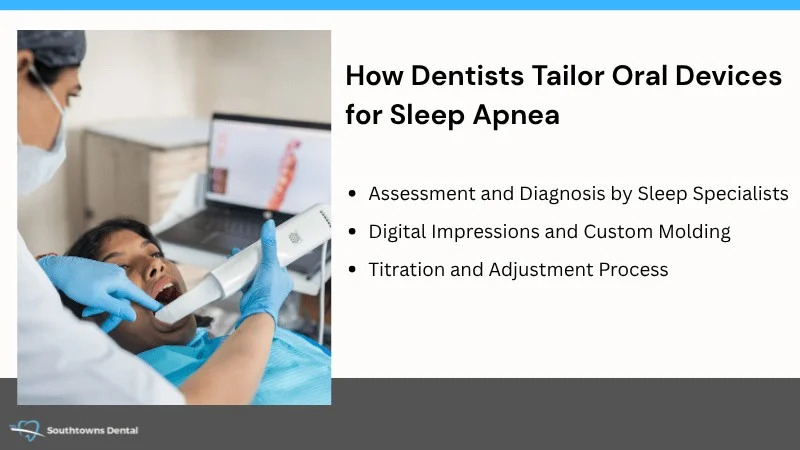
Digital Impressions and Custom Molding
Your dentist takes digital impressions or detailed molds of your teeth. These scans capture the exact shape of your bite and dental arches.
A lab uses this data to create customized oral appliances that fit snugly and stay in place while you sleep. This design works very differently from store-bought devices.
Clinical guidance recommends custom, titratable devices over over-the-counter options, as noted in this overview of custom, titratable oral appliances.
Your appliance may be a mandibular advancement splint or another type of mandibular advancement device. Each one moves your lower jaw forward in a controlled way to reduce airway collapse.
The final device matches your bite and holds your jaw in a starting position that balances comfort and airway support.
Titration and Adjustment Process
You do not receive a fixed setting and walk away. Your dentist adjusts your oral appliance over time in a process called titration.
At first, the mandibular advancement splint usually holds your jaw at about 50 to 70 percent of its maximum forward range. This position helps you adjust without causing jaw pain.
Every few weeks, your dentist may advance the device in small steps. You report changes in snoring, sleep quality, and comfort.
After you reach a stable setting, your sleep physician may order a follow-up sleep test with the appliance in place. This step confirms that your oral appliances reduce breathing events.
You also attend regular checkups. Your dentist checks for bite changes, tooth movement, or jaw soreness and makes updates to keep your custom oral appliance working well over time.
Looking for a custom oral appliance for sleep apnea in Lackawanna NY? Book your appointment today.
Types of Custom Oral Appliances for Sleep Disorders
Dentists use several types of custom dental devices to treat snoring and obstructive sleep apnea. Each design works in a specific way to keep your airway open while you sleep.
Mandibular Advancement Devices Explained
A mandibular advancement device (MAD) moves your lower jaw forward during sleep. This forward shift, called mandibular advancement, pulls your tongue and soft tissues away from the back of your throat.
When your jaw stays in a slightly forward position, your airway has more space. That space helps reduce airway collapse, which lowers snoring and breathing pauses.
Most mandibular advancement devices are custom made from digital scans or molds of your teeth. Your dentist adjusts the device in small steps over time to find the best jaw position.
These are often called mandibular advancement splints.
According to a clinical guide to mandibular advancement device therapy, custom and adjustable designs work better than store-bought options. They fit more securely and allow precise changes.
Dentists often recommend MADs as a first option for mild to moderate sleep apnea. They also help if you cannot tolerate CPAP.
Tongue-Retaining Devices Overview
A tongue retaining device (TRD) works differently. Instead of moving your jaw, it holds your tongue forward using gentle suction.
Your tongue sits inside a small silicone bulb at the front of the device. This position keeps the tongue from falling back and blocking your airway.
TRDs can help if you cannot move your jaw forward due to joint pain or limited jaw movement. They do not rely on your teeth for support, so they may work if you have fewer teeth.
However, some people find TRDs less comfortable than MADs. You may notice extra saliva or mild tongue soreness at first.
Many guides on oral appliances for sleep apnea explain that jaw-advancing devices are more common, but tongue-retaining devices still serve a clear role for certain patients.
Hybrids and Specialized Appliances
Some patients need more than a basic MAD or TRD. In these cases, your dentist may suggest hybrid or specialized oral appliances for sleep apnea.
Hybrid devices may combine jaw advancement with added tongue support. Others include features that limit side-to-side jaw movement or allow small vertical opening adjustments.
Your dentist chooses the design based on:
- Your jaw range of motion
- Your bite and tooth health
- The severity of your sleep apnea
- Any history of TMJ problems
Appliance designs vary in materials, adjustment systems, and connection styles. These details affect comfort, durability, and how easily your dentist can fine-tune the fit.
The goal stays simple: create a stable, comfortable position that keeps your airway open all night.
Ready to sleep better? Ask about a custom oral appliance for sleep apnea today.
Benefits of Dentist-Customized Oral Appliances
A dentist designs your oral appliance to fit your teeth and jaw with precision. This custom approach can improve sleep quality, reduce snoring, and support better sleep health over time.
Better Sleep Quality and Reduced Snoring
When your dentist customizes an oral appliance, they adjust it to gently move your lower jaw forward. This helps keep your airway open while you sleep.
An open airway means fewer breathing pauses and less airway blockage. As a result, you can improve sleep quality and wake up feeling more rested.
Many adults with mild to moderate obstructive sleep apnea use custom oral appliance therapy as a proven treatment option.
You may also notice a clear drop in loud snoring. By reducing tissue collapse in the throat, the device helps reduce snoring and create quieter nights for you and your partner.
Better airflow at night often leads to less daytime sleepiness and fewer early morning headaches. You stay more alert during work, school, and daily tasks.
Comfort, Portability, and Adherence
A custom device fits the exact shape of your teeth. Your dentist takes impressions or digital scans to ensure a snug and stable fit.
This tailored design makes the appliance more comfortable than over-the-counter options.
The American Academy of Sleep Medicine recommends custom, titratable oral appliances over non-custom devices for treating obstructive sleep apnea.
Because the appliance is small and does not require a machine or hose, you can pack it easily for travel. You simply place it in your mouth before bed.
Comfort and convenience matter. When a device feels natural and easy to use, you are more likely to wear it every night. Better adherence supports steady progress in your sleep health and reduces daytime fatigue.
Health Improvements Beyond Sleep
Improving your breathing at night can support more than just better rest. When your body gets steady oxygen during sleep, it works more efficiently.
Treating obstructive sleep apnea with a properly fitted device can help lower strain on your heart. Some people see improvements in blood pressure when their breathing becomes more stable during sleep.
You may also notice better focus and mood. Fewer breathing disruptions can reduce daytime sleepiness and improve mental clarity.
By choosing a dentist-customized appliance, you address the root cause of airway blockage. This targeted approach supports both your nightly comfort and your long-term health.
Comparing Oral Appliances to Other Sleep Apnea Treatments
You have more than one option for sleep apnea treatment. Each approach works in a different way, and your dentist and sleep doctor help you choose based on your diagnosis, comfort, and long-term goals.
Oral Appliance Therapy vs. CPAP
Continuous positive airway pressure (CPAP) uses a bedside machine that pushes air through a mask to keep your airway open. It is often the first treatment for moderate to severe obstructive sleep apnea (OSA).
CPAP can lower your apnea-hypopnea index more than most other options when you use it as directed. Many sleep specialists still consider it the standard for apnea treatment.
An oral appliance works differently. It gently moves your lower jaw forward to reduce airway collapse during sleep.
Research shows that device design affects results, and different oral appliance designs demonstrate different rates of success.
You may prefer an oral appliance if you cannot tolerate CPAP masks, air pressure, or noise. Dentists often recommend custom, adjustable devices because custom oral appliances are favored over non-custom options for fit and control.
Keep in mind that oral appliances treat obstructive sleep apnea, not central sleep apnea. If your sleep study shows central events, your doctor may suggest a different plan.
Oral Appliances and Surgical Alternatives
Surgery for sleep apnea aims to remove or reposition tissue that blocks your airway. Common procedures include soft palate surgery, jaw surgery, oral surgery, or implanted nerve stimulation devices.
Surgery may help in select cases, especially when anatomy clearly causes the blockage. However, surgery involves anesthesia, healing time, and some risk.
An oral appliance gives you a non-surgical option. You can remove it, adjust it, and stop using it if needed. This makes it easier to test whether jaw advancement improves your OSA before you consider permanent changes.
If you have mild to moderate sleep apnea, many providers suggest trying an oral appliance first. It can reduce snoring and breathing pauses without altering your airway structure.
Combination Therapies and Lifestyle Changes
You do not have to rely on one method alone. Many people combine treatments to improve results.
For example, if your sleep apnea worsens when you sleep on your back, your provider may add positional therapy. This trains you to sleep on your side while your oral appliance keeps your airway open.
Weight loss can also lower the severity of obstructive sleep apnea. Even modest weight changes may reduce the number of breathing events per hour.
Some people use CPAP on certain nights and an oral appliance when traveling.
Your care team may confirm effectiveness with follow-up testing, since oral appliance effectiveness is measured by AHI and treatment compliance.
By combining therapies and healthy habits, you give yourself more ways to manage sleep apnea in daily life.
Who Should Consider Custom Oral Appliances?
You may benefit from a custom oral appliance if you have been diagnosed with obstructive sleep apnea or if you struggle with loud snoring and poor sleep.
A sleep apnea dentist can review your test results, check your oral health, and decide if this treatment fits your needs.
Candidacy Criteria and Evaluation

You should consider a custom oral appliance if a sleep study confirms mild to moderate obstructive sleep apnea. Many people complete a lab test or a home sleep test before starting treatment.
These results show how often your breathing stops and how low your oxygen drops during sleep.
Clinical guidelines from the American Academy of Sleep Medicine and American Academy of Dental Sleep Medicine support custom, titratable oral appliances for adults who cannot tolerate CPAP or prefer another option.
A sleep apnea dentist will review:
- Your sleep study results
- Your medical and dental history
- Your jaw position and bite
- Signs of gum disease or loose teeth
You need enough healthy teeth to support the device. Your jaw joints should move without pain. If you have severe apnea, your dentist may still discuss the appliance, but you may need close follow-up or another therapy.
If you have Medicare, coverage often requires a confirmed diagnosis and proper documentation from your sleep physician.
Special Considerations for Certain Conditions
Some health and dental issues need extra care before you move forward.
If you have TMJ pain, jaw locking, or frequent headaches, your dentist will check whether jaw advancement could worsen your symptoms. Mild TMJ issues may still allow treatment with careful adjustments.
If you have severe periodontal disease, untreated cavities, or several missing teeth, you may need dental treatment first. The device must fit securely and evenly to avoid tooth movement.
Temporary devices sometimes help predict success, but experts note that a qualified dentist should manage them before moving to a custom option.
You should also share if you grind your teeth, wear dentures, or have had jaw surgery. These details help your dentist design a device that fits your mouth and supports safe, steady breathing at night.
Potential Side Effects and Long-Term Care
Oral appliances can improve sleep, but they can also cause mild changes in your mouth or jaw. With proper care and regular follow-up, you can manage most issues early and keep your treatment on track.
Common Side Effects and Management
Most side effects from a mandibular advancement device are mild and improve with time. You may notice jaw soreness, tooth pressure, dry mouth, or extra saliva during the first few weeks.
Some people develop temporary bite changes or mild tooth movement.
Research on the management of side effects of oral appliance therapy explains that jaw joint (TMJ) pain and occlusal changes can often be adjusted so symptoms become minor or barely noticeable.
Your dentist may suggest:
- Slower jaw advancement
- Minor changes to the appliance fit
- Morning jaw exercises
- A morning occlusal guide to help reset your bite
If you grind your teeth, the appliance may also act as a barrier. But ongoing teeth grinding can still place stress on the device, so your dentist will check for wear and damage at follow-up visits.
Report pain that lasts more than a few days. Early changes are easier to fix than long-term problems.
Ongoing Monitoring and Appliance Adjustments
Oral appliance therapy works best when you stay consistent with follow-up care. Long-term use can lead to gradual dental or skeletal changes, especially small shifts in tooth position.
Studies on long-term side effects of sleep apnea treatment with oral appliances show that dental changes can develop slowly over time. Many changes are minor, but regular exams help catch them early.
At follow-up visits, your dentist will:
- Check for tooth movement
- Review your bite alignment
- Examine your jaw joints
- Inspect the appliance for cracks or wear
You may need small adjustments as your teeth or jaw adapt. These changes keep the device effective and reduce strain on your joints and muscles.
Plan on visits every 6 to 12 months, or more often if you notice discomfort or bite changes.
Role of the Dental Sleep Medicine Team
A trained dental sleep medicine provider plays a key role in preventing and managing side effects. Proper fitting and careful titration of your mandibular advancement device reduce stress on your teeth and jaw from the start.
Your dental team will:
- Customize the device to your bite
- Adjust advancement in small steps
- Coordinate care with your sleep physician
- Track comfort and symptom relief over time
When you work closely with a trained provider, you lower the risk of serious complications. Ongoing communication helps protect your teeth, manage side effects, and support long-term sleep health.
Frequently Asked Questions
Dentists use several types of oral appliances to treat obstructive sleep apnea and chronic snoring. Your diagnosis, jaw structure, dental health, and comfort needs all guide the final choice, cost, and expected results.
What are the different types of oral appliances available for treating sleep apnea?
You will most often hear about mandibular advancement devices (MADs). These devices move your lower jaw slightly forward to help keep your airway open while you sleep.
Another option is a tongue retaining device (TRD). This device holds your tongue in a forward position so it does not block your airway.
Most dentists recommend custom devices over store-bought models. Custom dental devices fitted by a qualified provider tend to offer better comfort and effectiveness.
How do dentists determine the best oral appliance to treat an individual’s sleep apnea?
Your dentist starts with a full exam of your teeth, gums, and jaw. They also review your sleep study results to confirm the type and severity of your sleep apnea.
If you have mild to moderate obstructive sleep apnea and struggle with CPAP, you may qualify for oral appliance therapy. A trained provider will check your bite, jaw movement, and any history of TMJ pain.
Your comfort matters. Your dentist will choose a design that fits your mouth well and allows small adjustments over time.
What is the average cost of a dental device for sleep apnea treatment?
The cost of a custom oral appliance often ranges from about $1,500 to $3,000. The final price depends on the device type, lab fees, and follow-up visits.
Medical insurance may cover part of the cost if you have a confirmed sleep apnea diagnosis. You should check your specific plan to understand deductibles and coverage limits.
Over-the-counter devices cost less, but they do not offer the same level of fit or monitoring. Custom treatment includes exams, impressions or scans, fitting, and adjustments.
How successful are dental appliances in treating sleep apnea, and what are their success rates?
Dental appliances work best for people with mild to moderate obstructive sleep apnea. Many patients see fewer breathing pauses and less snoring when they use the device every night.
Success depends on proper fit and regular follow-up. Dentists may recommend a repeat sleep study to confirm that your airway stays open during sleep.
Oral appliances also help patients who cannot tolerate CPAP. When you wear the device as directed, you increase your chances of symptom relief.
What are the pros and cons of using an oral appliance for sleep apnea therapy?
One major benefit is comfort. The device is small, quiet, and easy to travel with.
You may also find it easier to use than a CPAP machine. Many people prefer not wearing a mask or dealing with air pressure.
However, you may notice jaw soreness, tooth discomfort, or bite changes at first. Some people need periodic adjustments to maintain comfort and results.
Regular dental visits help reduce long-term problems and keep the appliance working as intended.
How does the custom fitting process for a mandibular advancement device work?
Your dentist takes digital scans or impressions of your teeth to create a model of your mouth. These records allow a dental lab to build a device that matches your bite and jaw shape.
The lab uses durable medical-grade materials to create a device that gently advances your lower jaw. This forward position helps keep your airway open during sleep.
When the device arrives, your dentist checks the fit and sets the starting jaw position. You return for follow-up visits so they can adjust the advancement level and monitor your progress.