A gummy smile happens when too much of your gum tissue shows above your upper teeth when you smile. This can make you feel self-conscious about your appearance, even though it doesn’t cause any health problems.
Many people with this condition avoid smiling in photos or cover their mouth when they laugh.
Both non-surgical options like Botox and laser treatments and surgical procedures can effectively reduce excess gum display and create a more balanced smile.
The right treatment for you depends on what’s causing your gummy smile in the first place. Some people need minor adjustments while others benefit from more complete corrections.
You have more options than ever before to achieve natural-looking smile aesthetics. Understanding the different treatment options for gummy smiles will help you make the best choice for your situation.
This guide walks you through what actually works so you can feel confident showing off your smile.
Key Takeaways
- Multiple effective treatments exist for gummy smile correction, ranging from quick non-surgical options to permanent surgical solutions
- Finding the root cause of your excess gum display helps determine which treatment approach will work best for your specific case
- Working with the right dental professional ensures you get a balanced, natural-looking result that matches your facial features
Discover gummy smile treatment options that can help create a more confident and balanced smile.
Table of Content
- Understanding Gummy Smiles and Their Causes
- Diagnosing the Root Cause of Excess Gum Display
- Non-Surgical Methods to Fix a Gummy Smile
- Surgical and Long-Lasting Correction Procedures
- Choosing the Best Approach for a Balanced Smile
- Frequently Asked Questions
Understanding Gummy Smiles and Their Causes
A gummy smile happens when too much gum tissue shows above your teeth when you smile, and several factors can cause this condition.
The amount of gum you show, your lip movement, tooth position, and jaw structure all play a role in how your smile looks.

What Is a Gummy Smile?
A gummy smile means you show more gum tissue than usual when you smile. Doctors call this excessive gingival display.
Most people consider it a gummy smile when more than 3-4 millimeters of gum tissue appears above your upper teeth. This measurement helps dentists decide if treatment might help improve your smile aesthetics.
Your gum-to-tooth ratio affects how your smile looks. When you have excess gum tissue covering your teeth, it can make your teeth appear shorter than they actually are.
Different types of gummy smiles exist:
- Anterior: Too much gum shows above your front teeth
- Posterior: Excess gum appears mostly around your back teeth
- Mixed: A combination of both front and back
- Asymmetric: One side of your mouth shows more gum than the other
Excessive Gingival Display Explained
Excessive gingival display is the medical term for showing too much gum when you smile. Your upper lip position plays a big role in how much gum people can see.
A hyperactive upper lip lifts higher than normal when you smile. This can expose more of your gums even if you have a normal amount of gum tissue.
A short upper lip doesn’t cover as much of your gums at rest or when smiling. The average upper lip measures about 20-22 millimeters from top to bottom.
Your lip muscles control how much gum shows. When these muscles pull your lip up too far, more gum tissue becomes visible. Neuromuscular conditions can sometimes affect how your facial muscles work during smiling.
Common Dental and Facial Causes
Multiple factors contribute to a gummy smile, and identifying what causes a gummy smile helps determine the best treatment.
Bone and Jaw Issues:
- Vertical maxillary excess means your upper jaw grew too long
- Jaw alignment issues affect how your teeth and gums appear
- Jaw misalignment can change your bite and smile appearance
Tooth and Gum Problems:
- Abnormal tooth eruption happens when teeth don’t grow into proper position
- Excess gum tissue covering too much of your teeth
- Teeth that appear short because gums cover them
- Delayed passive eruption where gums don’t recede normally as you age
Your genetics often determine your facial structure and tooth position. Some people inherit traits that lead to gummy smiles from their parents.
Impact on Confidence and Oral Health
Many people feel self-conscious about their gummy smile. You might avoid smiling in photos or cover your mouth when you laugh.
Boosting self-confidence is a common reason people seek gummy smile correction. Your smile affects how you interact with others and how you feel about yourself.
A gummy smile usually isn’t a health problem by itself. Your teeth and gums can be perfectly healthy even with excessive gingival display.
However, excess gum tissue can sometimes make oral hygiene harder. Extra gum pockets might trap food and bacteria if not cleaned properly.
Regular brushing and flossing become even more important to prevent gum disease.
Some jaw alignment issues that cause gummy smiles can also affect your bite. This might lead to uneven tooth wear or jaw pain over time.
Schedule your visit in Lackawanna NY to explore personalized gummy smile treatment options.
Diagnosing the Root Cause of Excess Gum Display
Finding out why you have a gummy smile requires a careful look at your teeth, gums, lips, and jaw.
Your dentist will check multiple factors like tooth position, gum tissue, lip movement, and bone structure to create the right treatment plan for you.
Comprehensive Dental Examination
Your first step is a thorough dental exam with a cosmetic dentist or periodontist. They will measure how much gum shows when you smile, typically looking for displays over 3-4mm.
The dentist checks several things during your visit:
- Tooth length and position – Are your teeth shorter than normal or not fully erupted?
- Gum tissue thickness – Is there excess gum covering your teeth?
- Lip movement – Does your upper lip lift too high when you smile?
- Jaw position – Is there vertical maxillary excess or jaw misalignment?
Your dentist will also review your oral hygiene habits and medical history. They need to rule out gum disease or other health issues that might affect treatment.
This exam helps determine if your gummy smile has soft tissue or hard tissue causes.
Smile Analysis and Imaging
You’ll need special photos and X-rays to map out your smile. Your dentist takes pictures of your face at rest and while smiling from different angles.
Digital imaging shows exactly how your teeth, gums, and lips work together. Cephalometric X-rays reveal jaw alignment issues and bone structure problems.
Some offices use 3D imaging to create detailed models of your mouth.
These tools help your dentist see problems that aren’t visible during a regular exam. They can measure the exact amount of gum display and identify whether multiple factors contribute to your gummy smile.
The images also help plan your gummy smile correction and show you what results to expect.
Expert Consultations: Who to See?
You might need to see more than one specialist depending on your diagnosis. A periodontist handles gum tissue problems and can perform gum recontouring procedures.
An oral surgeon or maxillofacial surgeon treats jaw-related issues. They perform procedures to correct vertical maxillary excess or reposition your jaw bones.
If you have bite problems or need orthodontic treatment, an orthodontist joins your care team.
Your primary cosmetic dentist usually coordinates between specialists. They make sure everyone works together on your treatment plan.
Some cases need combined approaches, like braces plus gum surgery, to fix all the causes of your gummy smile at once.

Non-Surgical Methods to Fix a Gummy Smile
If you’re looking for ways to address your gummy smile without going under the knife, you have several effective options.
Botox injections can relax your upper lip, laser treatments can reshape your gum line, and orthodontics can reposition your teeth for a more balanced appearance.
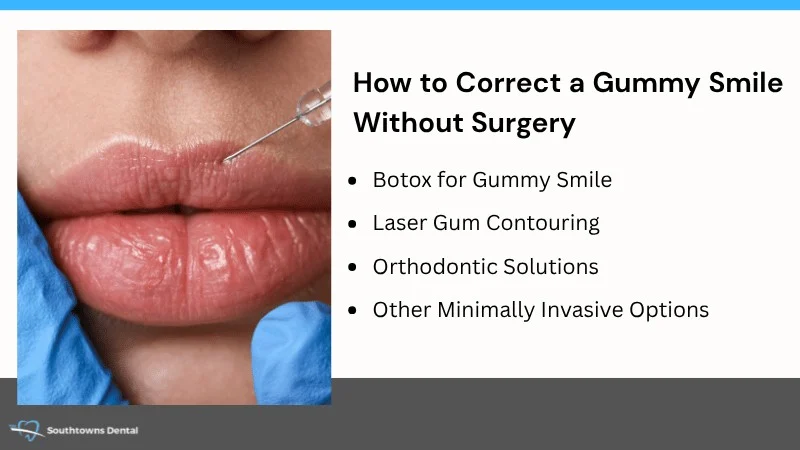
Botox for Gummy Smile
Botox for gummy smile correction works by targeting the muscles that control your upper lip movement. When you smile, a hyperactive upper lip can lift too high and expose excess gum tissue.
Botulinum toxin injections relax these muscles so your lip doesn’t rise as far.
The treatment takes about 10 to 15 minutes in your dentist’s or doctor’s office. You’ll see results within a few days, with full effects appearing after about two weeks.
Key benefits of Botox treatment include:
- No downtime or recovery period needed
- Results last 3 to 6 months
- Minimal discomfort during injection
- You can return to normal activities immediately
The side effects are typically mild. You might experience slight bruising, swelling, or tenderness at the injection sites. These usually clear up within a few days.
Keep in mind that Botox is commonly used in dentistry for various mouth problems beyond just cosmetic concerns. Since the results are temporary, you’ll need repeat treatments to maintain your natural-looking smile.
Laser Gum Contouring
Laser gum contouring reshapes your gum line by removing excess gum tissue that covers too much of your teeth. This minimally invasive procedure uses focused light energy to precisely trim and sculpt your gums.
During the treatment, your dentist numbs the area with local anesthesia. The laser removes the extra tissue while simultaneously sealing blood vessels, which means less bleeding and faster healing than traditional surgery.
Treatment duration typically ranges from 30 minutes to two hours, depending on how much work you need. The laser also sterilizes the area as it works, reducing your risk of infection.
Recovery is usually straightforward:
- Mild discomfort for 2 to 3 days
- Return to normal eating within a week
- Complete healing in 1 to 2 weeks
- Permanent results with proper care
Unlike Botox injections, the results from a gum lift are long-lasting. Your reshaped gum line won’t grow back to its original position. You might experience some sensitivity or swelling after the procedure, but these side effects resolve quickly.
Orthodontic Solutions
Orthodontic treatment can improve your smile if misaligned teeth contribute to your gummy appearance. When your teeth sit in the wrong position, they can make your gums look more prominent than they actually are.
Braces or clear aligners gradually move your teeth into better alignment. This can reduce the amount of gum that shows when you smile.
The treatment works especially well if your teeth haven’t fully erupted or if they’re tilted incorrectly.
Treatment duration varies based on your specific needs. Most people wear braces or aligners for 12 to 24 months. You’ll visit your orthodontist every 4 to 8 weeks for adjustments and progress checks.
The results are permanent as long as you wear your retainer as directed. Your orthodontist might combine this approach with other non-surgical options for gummy smiles for better outcomes.
Other Minimally Invasive Options
Lip repositioning is a minor surgical procedure that limits how high your upper lip can move. Your dentist makes a small incision inside your mouth and adjusts the tissue that connects your lip to your gums.
This restricts upward movement without affecting your facial expressions.
Dermal fillers can add volume to your upper lip, making it appear fuller and reducing the gum-to-tooth ratio. The treatment takes about 15 minutes and lasts 6 to 12 months.
Additional options include:
- Lip exercises to strengthen muscles (though results vary)
- Adjusting your smile technique consciously
- Using makeup contouring for temporary coverage
Different aesthetic treatments work better for different causes of gummy smiles. Your dentist can evaluate your specific situation and recommend the most effective non-surgical gummy smile correction method for you.
Contact our team in Lackawanna NY to learn which gummy smile treatment options fit your needs.
Surgical and Long-Lasting Correction Procedures
Surgical options provide permanent solutions by addressing the root causes of excessive gum display.
These procedures range from simple gum reshaping to complex jaw corrections, with treatment duration and recovery varying based on the specific technique used.
Gingivectomy and Gum Reshaping
A gingivectomy removes excess gum tissue to reveal more of your tooth surface. Your periodontist uses precise tools to reshape your gum line, creating better proportions between your teeth and gums.
This periodontal treatment works best when you have excessive gum tissue covering otherwise normal-sized teeth. The procedure typically takes one to two hours in your periodontist’s office.
Modern techniques include laser-assisted gingivectomy, which offers several benefits:
- Less bleeding during the procedure
- Reduced swelling and discomfort afterward
- Faster healing time
- More precise tissue removal
Recovery usually takes one to two weeks. You might experience mild discomfort and sensitivity during this time. Common side effects include temporary swelling and minor bleeding that resolves quickly with proper care.
Crown Lengthening Surgery
Crown lengthening surgery goes deeper than a simple gingivectomy by removing both gum tissue and sometimes small amounts of bone. This creates more visible tooth structure and better gum-to-tooth ratios.
Your dentist or oral surgeon performs this procedure when your teeth appear short because gum tissue and bone cover too much of the crown.
The surgery reshapes the supporting structures around your teeth to expose more enamel.
The procedure takes about one to two hours, depending on how many teeth need treatment. You’ll need local anesthesia, and some patients choose sedation for comfort.
Full healing takes six to twelve weeks, though you can return to normal activities within a few days. Your gums need time to fully settle into their new position before any cosmetic work can be completed.
Lip Repositioning Surgery
Lip repositioning surgery limits how high your upper lip rises when you smile. An oral surgeon removes a small strip of tissue from inside your upper lip and repositions it lower on your gums.
This creates a physical restriction that prevents your lip from lifting too high. The procedure addresses gummy smiles caused by a hyperactive upper lip muscle rather than excess gum tissue.
Treatment details:
- Surgery time: 45 minutes to one hour
- Anesthesia: Local with optional sedation
- Recovery: One to two weeks for initial healing
- Results: Immediate reduction in gum display
You might experience swelling and tightness in your upper lip area during recovery. Some patients report temporary difficulty with certain facial expressions, but this resolves as healing progresses.
Jaw Surgery for Severe Cases
Orthognathic surgery corrects vertical maxillary excess, where your upper jaw is too long or positioned too low. This maxillofacial surgery repositions your jaw bones to proper alignment.
Your oral surgeon performs this procedure in a hospital setting under general anesthesia. It’s the most comprehensive option for gummy smile correction when jaw structure causes the problem.
The surgery involves cutting and repositioning the upper jaw, then securing it with small plates and screws. Treatment duration in the operating room ranges from two to four hours.
Recovery takes longer than other surgical options. You’ll need six to twelve weeks before returning to all normal activities. Initial swelling peaks around day three and gradually decreases over several weeks.
This permanent correction also improves bite function and facial balance. Side effects may include numbness, swelling, and temporary changes in sensation that improve over time.
Choosing the Best Approach for a Balanced Smile
Finding the right gummy smile treatment requires understanding your specific needs and working with professionals who can create a personalized plan.
The most successful outcomes happen when you combine multiple approaches and know what to expect throughout the entire process.

Personalized Treatment Planning
Your consultation starts with a detailed examination of your gum-to-tooth ratio, lip movement, and jaw alignment.
A dentist, orthodontist, or periodontist will measure how much gum tissue shows when you smile and identify the root cause.
Some people need orthodontic treatment to reposition teeth, while others require surgical correction or injectable treatments.
Your provider will take photos, X-rays, and measurements to create a treatment plan tailored to your mouth.
The goal is achieving a natural-looking smile that fits your face. Your dental team will discuss treatment duration, expected results, and whether you’ll get permanent correction or temporary results.
They’ll also review side effects specific to each option.
Combination Treatments for Optimal Results
Many people get better outcomes by combining two or more treatments. For example, you might pair Botox injections with minor gum contouring for a more balanced smile.
Common combination approaches include:
- Braces or Invisalign plus gingivectomy for tooth position and gum reshaping
- Lip repositioning surgery with crown lengthening procedures
- Botox treatments followed by orthodontic work
Effective gummy smile correction often addresses multiple causes at once. Your dentist might recommend starting with less invasive options and adding treatments as needed.
This staged approach lets you see results gradually and adjust your smile makeover plan.
Combination therapy typically costs more upfront but can deliver results that single treatments can’t match. Your provider will help you prioritize which treatments to do first based on your budget and timeline.
What to Expect Before, During, and After
Before any procedure, you’ll receive detailed instructions about medications, food restrictions, and oral hygiene requirements. Some treatments need you to stop taking certain supplements or avoid alcohol.
During your appointment, the experience varies widely. Botox injections take 10-15 minutes with minimal discomfort. Surgical procedures require local or general anesthesia and can last one to three hours.
Recovery depends on your chosen treatment. Non-surgical options like Botox let you return to normal activities immediately.
Surgical procedures need several days to weeks of healing time with swelling and dietary restrictions.
Maintaining your results requires good oral hygiene and following all post-treatment instructions. You’ll have follow-up appointments to monitor healing and make adjustments.
Some treatments need touch-ups every few months, while others provide lasting changes.
Frequently Asked Questions
Treatment costs vary widely depending on the method you choose, and some options work better than others for different causes.
Many people want to know if they can avoid surgery, and the answer depends on what’s causing your gummy smile.
What are the most effective treatments for a gummy smile?
The most effective treatment depends on what’s causing your gummy smile in the first place. If you have a hyperactive upper lip, Botox injections can relax the muscle and reduce gum showing when you smile.
When excess gum tissue is the problem, laser gum contouring or crown lengthening can reshape your gum line. These treatment options work on different causes of gummy smiles.
For issues with your jaw position, orthognathic surgery offers a permanent solution. This option involves repositioning your upper jaw to reduce the amount of gum that shows.
How much does gummy smile treatment typically cost?
Botox treatments typically cost between $200 and $600 per session. You’ll need repeat treatments every 3-6 months to maintain results.
Laser gum contouring and gingivectomy procedures usually range from $600 to $3,000 per arch. The price depends on how much work needs to be done.
Jaw surgery is the most expensive option, often costing between $20,000 and $40,000. Insurance may cover part of the cost if the procedure is medically necessary.
Can a gummy smile be improved without surgery, and what options are available?
Yes, you have several non-surgical options available for treating a gummy smile. Botox is the most common non-surgical choice and takes only a few minutes to administer.
Dermal fillers can add volume to your upper lip, which helps cover more of your gums when you smile. The results last several months but aren’t permanent.
Orthodontic treatment can help in some cases by repositioning your teeth. However, these methods work best when combined with other treatments for maximum results.
Do braces or Invisalign help reduce a gummy smile?
Braces and Invisalign can help reduce a gummy smile if your teeth position is contributing to the problem. When your teeth sit too low or angle incorrectly, orthodontic treatment can move them into better positions.
These treatments work by intruding your upper front teeth or moving them forward. The movement can reduce how much gum shows when you smile.
However, orthodontics alone won’t fix all gummy smiles. If your issue comes from excess gum tissue or jaw positioning, you’ll likely need additional treatments.
What causes a hyperactive upper lip, and how is it treated?
A hyperactive upper lip happens when the muscle that lifts your lip pulls too hard when you smile. This overactive muscle pulls your lip higher than normal and exposes more of your gums.
The condition is usually genetic and develops naturally as part of how your facial muscles work. Stress or certain facial expressions can make it more noticeable.
Botox injections treat this by relaxing the overactive muscle. The treatment takes about 10 minutes and results typically last several months before you need another session.
How painful is gingivoplasty, and what is the recovery like?
Gingivoplasty causes minimal pain because your dentist numbs the area completely before starting. You might feel pressure during the procedure but shouldn’t experience sharp pain.
After the numbing wears off, you’ll likely have mild to moderate discomfort for a few days. Your dentist will prescribe pain medication or recommend over-the-counter options to manage any soreness.
Most people recover within one to two weeks. You’ll need to eat soft foods for the first few days and avoid touching the treated area with your tongue or fingers.
Your gums may appear swollen or red during the first week of healing. Following your dentist’s care instructions helps speed up recovery and prevents infection.