A little soreness after getting new dentures can feel unsettling, especially when you’re not sure if it’s part of the process or a sign something’s wrong.
Most denture wearers deal with some rubbing or tenderness at some point, whether they just started wearing dentures or have worn them for years.
The good news is that your mouth usually gives you clear signals about what it needs.
Some denture sore spots fade on their own as your gums adjust to a new appliance. Others stick around, show up in the same place every time, or get worse.
That pattern matters. Knowing the difference between normal break-in discomfort and a sign that your fit has changed can save you weeks of unnecessary pain.
Dentures are meant to restore function after replacing missing teeth, not create a new source of daily discomfort.
Getting the fit right protects your oral health and keeps you eating and speaking with confidence.
Key Takeaways
- Mild soreness that improves within a couple of weeks is a normal part of adjusting to new dentures, but pain that stays sharp, localized, or worsens usually points to a fit problem.
- Common causes of persistent sore spots include high pressure points, loose or ill-fitting dentures, bone changes over time, dry mouth, and bite misalignment.
- Home care can calm irritation temporarily, but a professional adjustment or reline is often needed to fix the underlying cause for good.
Table of Content
- Is the Soreness Part of the Adjustment Period?
- What Causes Dentures to Rub, Shift, or Hurt?
- How to Soothe Sore Gums Until You See a Dentist
- When Is an Adjustment Enough, and When Do You Need a Reline?
- Keeping Dentures Comfortable as Your Mouth Changes
- A Good Denture Fit Should Not Mean Living With Pain
- Frequently Asked Questions
Is the Soreness Part of the Adjustment Period?
Some soreness during your first weeks with dentures is expected, but it should feel mild and steadily improve, not sharp or worsening.
When dentures are provided by an experienced dental provider, careful fitting and follow-up adjustments can help support a more comfortable transition as your gums and cheeks adapt to the new appliance.
What Mild, Improving Tenderness Can Feel Like With New Dentures
Mild tenderness with new dentures often feels like general achiness or light pressure across your gums rather than a stinging spot in one place.
You might notice it more after eating or talking for a long stretch. This kind of denture discomfort usually eases a little more each day as your gums and other oral tissues adjust to the new appliance.
Signs a Localized Sore Is More Than Normal Break-In Discomfort
A sore that stays in the exact same spot, feels sharp, or shows an open sore, blister, or ulcer is not typical break-in pain.
Denture sores that worsen instead of improving, or that interfere with eating, speaking, or sleeping, need attention.
Dentists generally recommend calling if pain lasts longer than three to five days or if you notice swelling, pus, or visible tissue damage.
Why Immediate Dentures Often Need More Follow-Up
Same day dentures, placed right after tooth extraction, often need more adjustments because your gums and jawbone are still healing and changing shape underneath them.
The tissue swelling that follows extraction can shift day to day, which means a fit that feels fine at placement feels tight or loose a week later.
Extra follow-up visits in the first few months are normal with this type of denture, not a sign that something went wrong.
What Causes Dentures to Rub, Shift, or Hurt?
Sore spots almost always trace back to uneven pressure, movement, or moisture problems between your denture and your gum tissue.
Pinpointing which one is behind your pain helps your dentist choose the right fix instead of guessing.
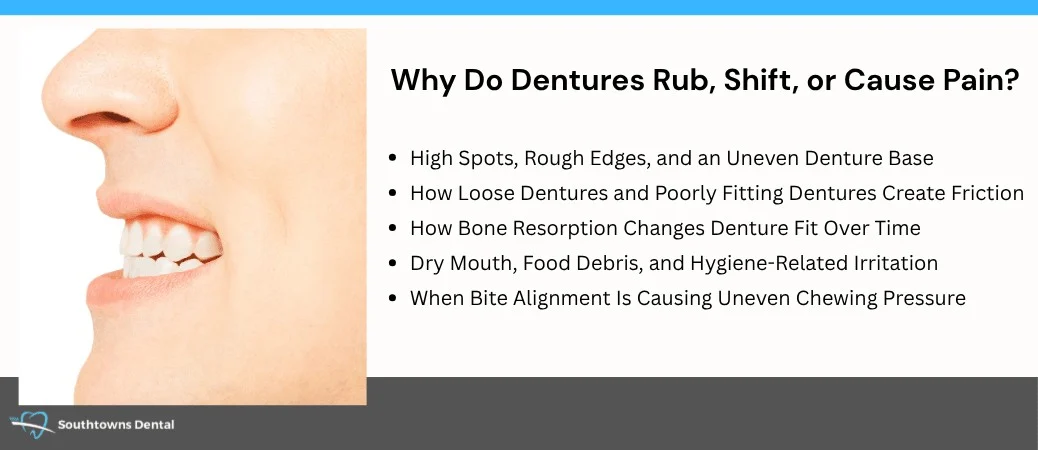
High Spots, Rough Edges, and an Uneven Denture Base
A small bump or rough patch on the denture base can dig into the same spot every time you bite down.
Even a tiny high spot on an acrylic denture concentrates force into one area instead of spreading it evenly, which is often what creates a sharp, localized sore rather than general soreness.
How Loose Dentures and Poorly Fitting Dentures Create Friction
Loose dentures rock and slide against your gums with every bite or word you speak, and that constant motion wears down soft tissue.
Ill-fitting dentures also let food debris slip underneath, adding more friction and irritation.
How Bone Resorption Changes Denture Fit Over Time
Bone resorption is the gradual shrinking of your jawbone after tooth loss, and it changes the shape your denture rests on.
Bone resorption gradually reshapes the gum ridge after tooth loss, so a denture that once fit well may become less stable over time.
Dry Mouth, Food Debris, and Hygiene-Related Irritation
Dry mouth, called xerostomia, removes the natural saliva cushion that helps your denture glide instead of drag.
Without that moisture, dentures stick and rub more easily, and trapped food particles add pressure against soft tissue.
Poor denture hygiene can also lead to denture stomatitis, a fungal irritation of the gum tissue under the denture, which adds redness and soreness on top of any fit issue.
When Bite Alignment Is Causing Uneven Chewing Pressure
Uneven bite alignment sends more force to certain teeth or gum areas every time you chew.
This kind of imbalance often needs occlusal equilibration, a process where your dentist reshapes the biting surfaces so pressure spreads evenly across your dentures instead of concentrating in one spot.
How to Soothe Sore Gums Until You See a Dentist
Home care calms irritation temporarily, but it does not fix a fit problem. These steps can make the days before your appointment more comfortable while you wait for a professional adjustment.
Use a Warm Salt Water Rinse Without Irritating the Tissue Further
A warm salt water rinse, made with about half a teaspoon of salt in a cup of warm water, helps reduce swelling and clean a sore area gently.
Rinse for about 30 seconds after meals, and skip hot water or alcohol-based rinses, which can irritate already tender tissue further.
Choose Soft Foods and Give Your Gums Rest
Soft foods like yogurt, scrambled eggs, and oatmeal reduce the pressure on a sore area while it heals.
Skip crunchy, sticky, or acidic foods for a few days, and take your dentures out for a few hours during the day so your gums get a break from constant pressure.
Support Moisture With Hydration When Dry Mouth Is a Factor
Drinking water throughout the day helps keep your mouth moist enough to reduce friction between your denture and gums.
If dry mouth is a regular problem, ask your dentist about saliva substitutes designed to add cushioning back into the equation.
What Not to Do With a Painful Denture
Never file, trim, or adjust your denture yourself, even if you can see the exact spot causing pain.
DIY adjustments almost always create new pressure points somewhere else and can permanently damage the denture base.
Piling on extra denture adhesive to mask looseness also delays the real fix, since adhesive cannot correct a changed fit, only cover it up temporarily.
When Is an Adjustment Enough, and When Do You Need a Reline?
A quick adjustment fixes small, localized pressure points, while a reline addresses a denture base that no longer matches the shape of your gums.
At Southtowns Dental, our dental team can evaluate persistent denture sore spots and determine whether the problem comes from a small pressure point or a change in the overall fit.
What Happens During a Professional Denture Adjustment
During a denture adjustment, your dentist uses a marking paste to find exact pressure points, then smooths or trimass those small areas of the denture base.
This in-office visit is quick and addresses isolated rubbing, sharp edges, or a single high spot without changing the overall fit of the appliance.
Signs You May Need Denture Relines Instead of Another Small Adjustment
Denture relines are the better option when your denture moves while you talk, sore spots keep showing up in different areas, or you find yourself using more and more denture adhesive just to keep it in place.
Food collecting under the denture and a lower denture that feels like it’s “floating” are also signs the base no longer matches your gum shape.
Soft Reline vs. Hard Reline: Which Fit Problem Does Each Address?
A soft reline adds a cushioned lining for gums that are sore, thin, or sensitive, while a hard reline uses durable acrylic for longer-term stability once your gums have healed and stabilized.
| Feature | Soft Reline | Hard Reline |
| Best for | Sensitive or sore gum tissue | Long-term fit stability |
| Material feel | Cushioned, flexible | Firm, durable acrylic |
| Typical lifespan | Shorter | Longer |
| Comfort during healing | Higher | Lower |
When a New Denture or Another Treatment May Be the Better Choice
A new denture may serve you better than another reline if the base is old, warped, or has been relined multiple times already.
Partial dentures with loose clasps or bite changes sometimes need new components instead of a simple reline.
If bone loss has changed your jaw shape significantly, your dentist might also discuss dental implants as a longer-term option for stability.

Keeping Dentures Comfortable as Your Mouth Changes
Daily denture care and regular checkups keep small fit changes from turning into painful sore spots.
Clean your dentures every day with a soft-bristled brush and a non-abrasive cleanser to remove plaque and food debris that can irritate gum tissue or lead to denture stomatitis.
Regular general dentistry visits also give your dentist an opportunity to check your gums, bite, and denture fit before minor changes become painful.
Watch for early warning signs between visits, like slight looseness, a new clicking sound, or a spot that feels tender after eating.
Catching these changes early usually means a simple denture adjustment instead of a bigger fix later.
A Good Denture Fit Should Not Mean Living With Pain

Denture sore spots and denture pain are signals, not something you have to accept as part of wearing dentures. A well-fitting denture should let you eat, talk, and smile without constant awareness of your mouth.
If home care hasn’t resolved a sore spot within a few days, a denture adjustment or denture reline usually solves the problem quickly.
Keeping up with oral hygiene and regular dental visits protects both your comfort and the health of the gum tissue underneath your denture.
Frequently Asked Questions
How do you know when your dentures need relining?
Your dentures likely need relining if they move while you talk or chew, if sore spots keep appearing in new places, or if you need more adhesive than before to keep them in place.
A “floating” feeling in your lower denture or food collecting underneath are also common signs. A dentist can confirm whether a reline or a smaller adjustment will fix the problem.
Should I wear my dentures if they hurt?
Take short breaks during the day to rest your gums, but avoid leaving your dentures out for long stretches unless your dentist advises it.
Wearing them less can make your mouth more sensitive to the appliance when you put them back in. If pain is severe or you see an open sore, contact your dentist before your next scheduled wear time.
What is the fastest way to heal denture sores?
Rinsing with warm salt water several times a day and giving your gums a break from the denture speeds healing for mild sores.
A topical benzocaine gel can ease pain temporarily while the tissue recovers. Sores that do not improve within three to five days need a professional adjustment to fully heal.
What is good for sore gums from dentures?
Warm salt water rinses, soft foods, and short breaks from wearing your denture all help calm sore gums. Staying hydrated also helps if dry mouth is adding to the friction.
These steps ease discomfort but do not fix an underlying fit problem, so persistent soreness still needs a dental visit.
Can denture adhesive stop sore spots?
Denture adhesive can improve retention temporarily, but it does not fix the actual mismatch between your denture and your changed gum shape.
Relying on adhesive to mask a loose or ill-fitting denture often delays the reline or adjustment that would solve the problem. If you find yourself using more adhesive than usual, that’s a sign to book a checkup.
What is the disadvantage of relining a denture?
A soft reline typically wears out faster than a hard reline and may need replacing sooner.
Relining also takes an office visit and some time for the material to set, and it cannot fix a denture base that is cracked, warped, or too old to hold a new lining well. In those cases, a new denture is often the more practical choice.