Many common medications can leave your mouth feeling dry, but this side effect is more serious than just discomfort.
When your saliva flow decreases, your teeth lose their natural protection against cavities, and your risk of tooth decay can increase significantly.
Over 500 prescription and over-the-counter drugs can reduce saliva production, affecting everything from how well you can chew food to how protected your teeth are from harmful bacteria.
You might not realize that medications you take daily for conditions like high blood pressure, allergies, or depression could be quietly putting your oral health at risk.
Dry mouth from medication happens because your saliva, taste buds, and gum tissue respond quickly to chemical changes in your body.
When you understand how your prescriptions affect saliva production, you can take steps to protect your teeth.
The good news is that you don’t have to choose between managing your health conditions and maintaining a healthy smile.
Simple changes to your daily routine and open communication with your doctor and dentist can help you reduce cavity risk while continuing the medications you need.
Key Takeaways
- Dry mouth from medications removes your teeth’s natural protection and increases cavity risk
- Recognizing symptoms early and adjusting your oral care routine can prevent tooth decay
- Working with your healthcare providers helps you manage medication side effects while protecting your smile
Table of Content
- How Medications Cause Dry Mouth and Reduce Saliva
- Recognizing Symptoms and Oral Side Effects
- The Link Between Dry Mouth and Cavity Risk
- Managing and Preventing Dry Mouth From Medication
- Adaptations for Those With Chronic Conditions
- Frequently Asked Questions
How Medications Cause Dry Mouth and Reduce Saliva
Medications reduce saliva flow through chemical changes in your body that affect your salivary glands, taste buds, and mouth tissues.
More than 500 prescription and over-the-counter drugs can trigger this side effect, with certain medication categories posing higher risks than others.
Mechanisms That Affect Saliva Production
Your medications can affect the mouth because saliva, taste buds, and gum tissue respond quickly to chemical changes in your body.
When you take certain drugs, they can block the signals that tell your salivary glands to produce moisture.
Some medications work by blocking specific receptors in your nervous system. This blocking action stops your glands from getting the message to make saliva.
Other drugs change the chemical balance in your body in ways that slow down or reduce saliva production.
The medical term for dry mouth is xerostomia. This condition affects about 1 in 5 people overall, but your risk goes up as you age and take more medications.
Common Medication Categories Linked to Dry Mouth
Antihistamines like diphenhydramine (Benadryl) are among the most common causes of reduced saliva production. These drugs block histamine receptors, which also affects your salivary glands.
Antidepressants frequently cause dry mouth as a side effect. Both tricyclic antidepressants like amitriptyline and newer options like fluoxetine can reduce saliva flow.
Blood pressure medications including beta-blockers and calcium channel blockers often trigger dry mouth. Other cardiovascular drugs like ACE inhibitors (such as captopril) can also affect saliva production.
Anxiety medications, decongestants, diuretics, muscle relaxants, and opioids all appear on the list of drugs that can cause xerostomia.
Pain medications, particularly stronger ones, commonly reduce moisture in your mouth.
Specific Drugs Often Implicated
Several specific medications show up frequently in reports of dry mouth. Among blood pressure drugs, nifedipine and amlodipine (calcium channel blockers) are common culprits.
The seizure medication phenytoin and the immune suppressant cyclosporine can both reduce saliva production. The antibiotic metronidazole may also cause dry mouth along with taste changes.
The prevalence of dry mouth increases with the number of medications you take for one or more conditions. If you take two drugs that can cause dry mouth, the effect may be much stronger than just doubled.
Amphetamines and other stimulant medications are also known to significantly reduce saliva flow.
Mouth Breathing and Other Contributing Factors
Mouth breathing makes medication-related dry mouth worse. When you breathe through your mouth instead of your nose, air flow dries out the tissues even more.
Sleep apnea often causes people to breathe through their mouths at night. This compounds the problem if you also take medications that reduce saliva.
If you use multiple medications from the categories listed above, your dry mouth symptoms will likely be more severe. Your age also plays a role, with older adults experiencing higher rates of this side effect.
Recognizing Symptoms and Oral Side Effects
Dry mouth from medication creates several noticeable changes in your mouth that go beyond just feeling thirsty.
These symptoms can affect your daily comfort and increase your risk of dental problems if left unaddressed.
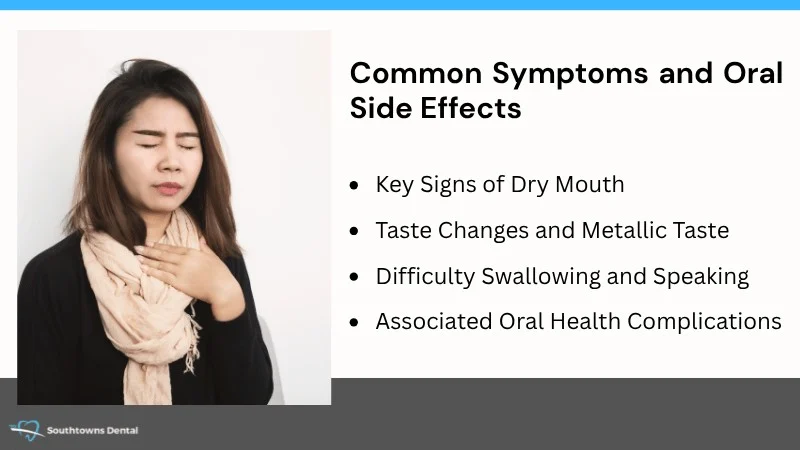
Key Signs of Dry Mouth
You’ll typically notice symptoms of dry mouth as a sticky or cotton-like feeling inside your mouth. Your tongue may feel rough or look red, and your lips might crack at the corners.
Saliva helps keep your mouth moist and clean throughout the day. When medications reduce saliva flow, you may find yourself reaching for water more often.
Your throat can feel scratchy or dry, especially when you wake up in the morning.
Bad breath becomes more common with dry mouth because saliva normally washes away bacteria. You might also notice stringy saliva or none at all.
Some people develop mouth sores or find that their dentures don’t fit as comfortably anymore.
Taste Changes and Metallic Taste
Medications can alter how food tastes to you, with a metallic taste being one of the most common complaints.
Blood pressure medications like lisinopril and captopril, along with the diabetes drug metformin, frequently cause these taste changes.
You might notice that your favorite foods taste slightly off or have a bitter quality. Some people describe it as having pennies in their mouth.
Antibiotics like metronidazole and clarithromycin can also trigger this metallic sensation.
These taste changes can affect your quality of life by making meals less enjoyable.
If you’re experiencing persistent taste problems that reduce your appetite, talk to your doctor about adjusting your medication dose or trying a different drug.
Difficulty Swallowing and Speaking
Dry mouth can make swallowing food more challenging because saliva helps form a bolus that slides down your throat easily.
You may need to take more sips of water during meals or choose softer, moister foods.
Speaking can become difficult when your mouth lacks proper moisture. Your tongue might stick to the roof of your mouth, causing you to pause mid-sentence.
You may notice changes in how your voice sounds or feel the need to clear your throat frequently.
Around 20% of adults experience dry mouth, with rates rising significantly in older adults taking multiple medications.
These oral side effects can make it hard to sleep, eat comfortably, or have normal conversations.
Associated Oral Health Complications
Dry mouth increases your cavity risk because saliva normally neutralizes acids and washes away bacteria. Without enough saliva, harmful bacteria multiply faster and stick to your teeth longer.
You’re more likely to develop gum disease when dry mouth persists. The protective barrier that saliva provides disappears, leaving your gums vulnerable to inflammation and infection.
White patches on your tongue could signal thrush, a fungal infection that’s more common when your mouth stays dry. Inhaled steroids for asthma and COPD cause thrush in about 5% to 10% of users.
You may also notice more frequent cavities, especially around the gum line and between teeth.
People with chronic dry mouth often have trouble wearing dentures because the lack of moisture causes friction and discomfort.
The Link Between Dry Mouth and Cavity Risk
Saliva does far more than keep your mouth comfortable. When medication reduces saliva production, your teeth lose their natural defense system against decay, and harmful bacteria multiply much faster than normal.
Why Saliva Is Essential for Dental Health
Your saliva works constantly to protect your oral health in ways you might not realize. It washes away food particles after you eat and neutralizes acids that bacteria produce on your teeth.
Saliva also contains minerals like calcium and phosphate that repair early damage to tooth enamel. These minerals strengthen your teeth throughout the day.
The proteins and enzymes in saliva fight harmful bacteria before they can cause problems.
When your mouth produces normal amounts of saliva, it maintains a balanced pH level. This balance prevents the acidic environment where cavity-causing bacteria thrive.
Without enough saliva flow, your mouth becomes a breeding ground for the bacteria that lead to tooth decay.
How Dry Mouth Raises the Risk of Cavities
Dry mouth from medications can raise cavity risk because your teeth lose their protective rinse. Food particles stick to your teeth longer, giving bacteria more time to produce enamel-damaging acids.
Decay can develop faster when saliva stays low. You might not notice the warning signs until cavities have already formed.
The buffering effect that saliva provides disappears, so acids attack your enamel directly after meals or snacks.
Studies show that as medication use increases, dental complications rise. People taking three or more medications experience twice as many dental problems compared to those taking one medication.
Other Oral Complications: Gum Disease and Plaque Buildup
Reduced saliva creates additional oral side effects beyond cavities. Plaque buildup accelerates because you lack the natural cleansing action that saliva provides.
Your gums become more vulnerable to irritation and infection. Without adequate moisture, gum tissue can become inflamed more easily. This inflammation can progress to gum disease if left untreated.
Bad breath often accompanies dry mouth because bacteria multiply without saliva to control them.
You might also notice difficulty chewing or swallowing your food. These oral consequences affect your daily comfort and nutrition.

Higher Susceptibility to Oral Infections
Your dry mouth environment allows opportunistic organisms to flourish. Oral candidiasis, commonly called oral thrush, occurs more frequently when saliva levels drop.
Dry mouth increases the risk for various mouth infections because saliva contains antimicrobial components. These natural defenses normally keep fungal infections and other oral infections in check.
You might develop white patches inside your cheeks or on your tongue if oral fungal infections take hold. Your mouth may feel sore or have a burning sensation.
These infections require treatment beyond standard oral hygiene practices, so you’ll need to consult your dentist if symptoms appear.
Managing and Preventing Dry Mouth From Medication
You can take action to reduce dry mouth symptoms and protect your teeth through simple daily habits, specialized products, proper dental care routines, and knowing when to get help from professionals.
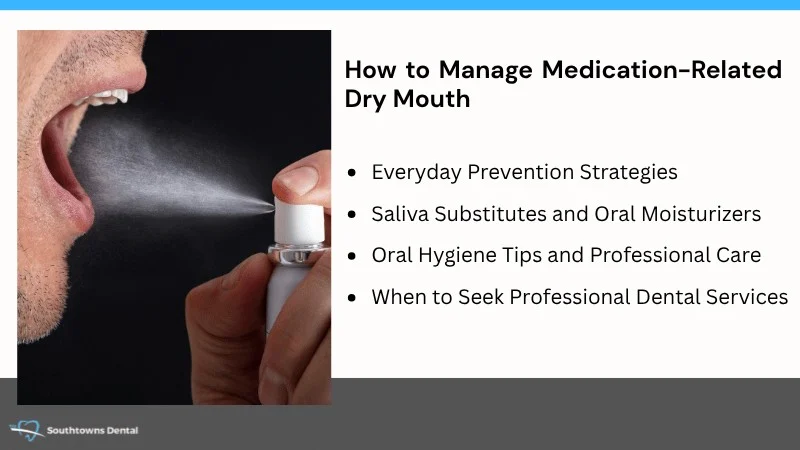
Everyday Prevention Strategies
Staying hydrated is one of the most effective ways to combat medication-related dry mouth. Sip water throughout the day rather than drinking large amounts at once.
You should avoid caffeine and alcohol because both can make your mouth even drier. Skip mouthwashes that contain alcohol for the same reason.
Chewing sugarless gum or sucking on sugar-free lozenges helps stimulate saliva production naturally. Look for products with xylitol, which not only helps increase saliva flow but also protects against cavities.
However, eating too much xylitol may cause stomach upset in some people.
Try breathing through your nose instead of your mouth. Mouth breathing dries out your oral tissues quickly.
Using a humidifier in your bedroom at night adds moisture to the air and can help prevent overnight dryness.
Saliva Substitutes and Oral Moisturizers
Artificial saliva products provide temporary relief when natural saliva production is low. These over-the-counter options come in several forms to fit your needs.
Available product types:
- Moisturizing mouth sprays (Oasis Moisturizing Mouth Spray)
- Oral gels (Biotene Dry Mouth Oralbalance Moisturizing Gel)
- Mouth rinses designed for dry mouth (Biotene Dry Mouth Oral Rinse, ACT Dry Mouth Mouthwash)
Look for products containing xylitol, carboxymethylcellulose, or hydroxyethyl cellulose. These ingredients help coat your mouth and provide longer-lasting moisture.
Apply oral moisturizers before bed and whenever your mouth feels particularly dry during the day.
Oral Hygiene Tips and Professional Care
Your oral hygiene routine becomes even more important when you have dry mouth. Brush at least twice daily with fluoride toothpaste to strengthen your tooth enamel against decay.
Brushing and flossing daily removes food particles and bacteria that thrive in a dry environment. Consider using a fluoride rinse or brush-on fluoride gel before bedtime for extra protection.
Your dentist might recommend prescription-strength fluoride treatments if you’re at high risk for cavities. Some dentists create custom fluoride applicators that fit your teeth perfectly for more effective treatment.
Avoid foods and drinks high in sugar or acid, as these increase your cavity risk. Skip spicy, salty, or hard foods that can irritate your already dry mouth.
If you wear dentures, dry mouth can make them uncomfortable and increase sores in your mouth. Keep your dentures clean and ensure they fit properly.
When to Seek Professional Dental Services
Visit your dentist at least once a year for checkups, though you may need more frequent visits depending on your situation. Your dentist can spot early signs of decay before they become serious problems.
Talk to your doctor or dentist if home remedies don’t improve your symptoms. Over 400 medications can cause dry mouth, and your healthcare provider might be able to adjust your dose or switch you to a different medication.
Never stop taking prescribed medication without consulting your doctor first. The health condition you’re treating is important, but your dental health matters too.
Your medical team can help you find solutions that address both concerns.
Seek professional services right away if you notice increased tooth sensitivity, visible cavities, or persistent bad breath despite good oral hygiene.
These signs suggest your dry mouth is already affecting your dental health and needs immediate attention.
Adaptations for Those With Chronic Conditions
People with chronic health conditions face unique challenges when medications cause dry mouth.
These patients need specialized care plans that address both their primary illness and the oral side effects that come with treatment.
Managing Dry Mouth in Diabetes and HIV
If you have diabetes, dry mouth can make blood sugar control even harder. High blood sugar levels already increase your risk of gum disease and cavities.
When you add dry mouth to the mix, bacteria grow faster in your mouth.
You need to check your blood sugar levels regularly and keep them stable. This helps reduce the severity of dry mouth symptoms.
For HIV patients, dry mouth often comes from antiretroviral medications. You’re also at higher risk for oral candidiasis, a yeast infection that thrives in dry mouths.
Watch for white patches on your tongue or inside your cheeks.
Both conditions require you to drink water throughout the day. Sugar-free gum with xylitol can help stimulate saliva production between meals.
Medication Adjustments and Collaborative Care
Your doctor might be able to adjust your medication regimen to reduce dry mouth while still treating your condition effectively. Don’t stop or change medications on your own.
Talk to both your dentist and your primary care doctor about your symptoms. They can work together to find solutions that protect your oral health without compromising your medical treatment.
Some options include switching to different medications in the same drug class or adjusting dosage timing. Your healthcare team can also prescribe saliva substitutes or medications that stimulate saliva flow.
If you’re undergoing chemotherapy, you may experience mucositis along with dry mouth. This painful inflammation of your mouth’s soft tissues needs immediate attention from your medical team.
Living With Long-Term Oral Effects

Long-term dry mouth means you need a more intensive daily oral care routine. Brush with fluoride toothpaste at least twice daily and floss once a day without exception.
Consider using prescription-strength fluoride toothpaste or gel. Your dentist can provide products with higher fluoride concentrations than over-the-counter options.
You’ll need more frequent dental checkups, usually every three to four months instead of twice yearly.
These visits let your dentist catch cavities early, especially along the gumline where decay develops quickly in dry mouths.
Avoid alcohol-based mouthwashes since they dry your mouth further. Use alcohol-free rinses designed for dry mouth instead.
Frequently Asked Questions
Many people taking medications deal with dry mouth and want to know how it affects their teeth.
Understanding which drugs cause the problem and how to protect your oral health can help you prevent serious tooth decay.
Which medications are most likely to cause dry mouth?
Over 400 medications can cause dry mouth, making it one of the most common side effects. Antidepressants and anxiety medications are major culprits.
Blood pressure medications and diuretics often reduce saliva production. Antihistamines for allergies can dry out your mouth significantly.
Pain medications, muscle relaxants, and antiseizure drugs also commonly cause this problem. Even over-the-counter decongestants and antidiarrheal medications can reduce your saliva flow.
If you take multiple medications, your risk increases because the effects can add up. Talk to your doctor if you notice persistent dryness after starting a new prescription.
Why does dry mouth make cavities and tooth decay more likely?
Saliva does much more than keep your mouth wet. It washes away food particles and neutralizes acids that attack your tooth enamel.
Your saliva contains minerals that help repair early tooth damage before cavities form. Without enough saliva, acids and bacteria can dissolve tooth enamel much faster.
Dry mouth also makes it harder for your body to fight off harmful bacteria in your mouth. This creates an environment where cavities can develop quickly, especially around the gum line and on tooth roots.
What’s the fastest way to relieve dry mouth symptoms during the day?
Sipping water throughout the day is your best immediate relief option. Take small, frequent sips rather than drinking large amounts at once.
Sugar-free gum or lozenges can stimulate saliva production if your salivary glands still work. Avoid products with sugar, which feed cavity-causing bacteria.
An alcohol-free mouth rinse designed for dry mouth can provide temporary moisture. Regular mouthwashes with alcohol will actually make your dryness worse.
Using a humidifier in your bedroom at night helps prevent your mouth from drying out while you sleep. Breathing through your nose instead of your mouth also reduces moisture loss.
How can I prevent cavities when I have ongoing dry mouth?
Prescription-strength fluoride toothpaste with 5000 ppm fluoride offers much better protection than regular toothpaste. Your dentist can prescribe this for daily use.
Brush twice daily and floss every day without exception. Your teeth need extra care when you don’t have enough saliva protecting them.
Avoid sugary, sticky, and acidic foods that promote tooth decay. Caffeine and alcohol can worsen dry mouth, so limit these drinks.
Visit your dentist every three to six months for checkups and professional fluoride treatments. Catching cavities early saves you from more extensive dental work later.
Why does my mouth feel dry even though I still seem to have saliva?
The quality of your saliva matters as much as the quantity. Some medications change the composition of your saliva, making it thicker or less effective.
Your mouth might produce saliva that doesn’t flow properly or doesn’t contain the right balance of protective enzymes. This leaves you feeling dry even when moisture is present.
You might also have reduced saliva in specific areas of your mouth while other parts seem normal. The floor of your mouth usually shows the most obvious signs of true saliva deficiency.
What health conditions or nutrient deficiencies can dry mouth be a sign of?
Autoimmune diseases like Sjögren’s syndrome directly attack your salivary glands. This condition causes severe, chronic dry mouth along with dry eyes.
Diabetes, HIV, and end-stage renal disease can all cause dry mouth. Head and neck radiation therapy damages salivary glands permanently in many cases.
Vitamin deficiencies, particularly B vitamins and iron, sometimes contribute to dry mouth symptoms. Dehydration from not drinking enough water is a simple but often overlooked cause.
COVID-19 infection has been reported to cause dry mouth in some patients. If your dry mouth is severe or sudden, talk to your doctor about testing for underlying health conditions.