You feel it before you understand it: a rough edge on a tooth where there used to be a smooth one. Maybe it happened on a dumbbell, a fall on the mat, or a hard candy in the break room.
Whatever caused it, chipping a tooth at work or the gym puts you in an awkward spot, standing around with limited supplies and a decision to make about whether to keep going with your day.
Most chipped teeth are not true emergencies, but a few signs mean you need care within the hour, not the week.
Knowing what to do for a chipped tooth starts with checking the size of the chip, your pain level, and whether the tooth has moved.
This guide walks through the first steps to take after a dental injury and explains when you should seek urgent dental care.
Any dental emergency feels bigger in the moment than it usually turns out to be. Knowing the right first moves keeps a small problem small.
Key Takeaways
- Rinse gently, control bleeding with clean gauze, and save any broken tooth fragments
- Severe pain, a visible pink or red center, a loose tooth, facial swelling, or fever mean you need an emergency dentist now, not tomorrow.
- Skip crunchy or sticky foods, resist the urge to file or glue the tooth yourself, and let a dental professional decide on bonding, a crown, or root canal treatment.
Table of Content
- What to Do in the First Hour
- How to Tell Whether You Need an Emergency Dentist
- First Aid for a Chipped, Broken, Cracked, or Knocked-Out Tooth
- What to Avoid Until You Are Seen
- What the Dentist May Do to Save and Restore the Tooth
- Fast Action Protects Your Tooth and Your Smile
- Frequently Asked Questions
What to Do in the First Hour
The first sixty minutes are about controlling the situation, not fixing the tooth. Rinse your mouth, stop any bleeding, calm the swelling, and protect what’s left of the tooth until you can get to a dentist.
Rinse Gently and Check for Missing Pieces
Swish warm water around your mouth to clear away any grit, blood, or small tooth fragments. Spit into a napkin or tissue so you can check it for a piece of tooth before tossing it.
Look in your mouth with a phone flashlight if you have one nearby.
A small, painless chip on the edge of a front tooth looks very different from a deep break that shows pink or red in the center, and that difference matters for what happens next.
Control Bleeding With Clean Gauze
Press clean gauze directly against the area for about ten minutes if you see bleeding. A folded paper towel works if gauze isn’t available, which it often isn’t at a worksite or gym.
Keep steady pressure instead of checking every thirty seconds. Constant peeking slows clotting down.
Use a Cold Compress to Limit Swelling
Hold a cold compress against the outside of your cheek, over the injured area, to reduce swelling.
An ice pack from a first aid kit works, and so does a bag of frozen vegetables from a break room freezer or gym smoothie bar.
Ten to twenty minutes on, then a break, keeps swelling down without numbing the skin too much. Facial swelling that keeps building after icing is worth mentioning when you call a dentist.
Save the Tooth Fragment and Protect Sharp Edges
Find the broken piece if you can and place it in a small container with milk or your own saliva, never dry tissue or tap water.
A dentist may be able to bond that fragment back onto the tooth, which often gives a more natural-looking repair than composite alone.
Cover any sharp edge with dental wax, the same soft wax used for braces, if you have access to a first aid kit or gym pro shop that stocks one.
Sugar-free gum works as a stopgap over a sharp edge if wax isn’t around, though it’s a short-term fix, not a fix.
For pain relief, an over-the-counter option like ibuprofen at the labeled dose can take the edge off while you arrange care.
How to Tell Whether You Need an Emergency Dentist
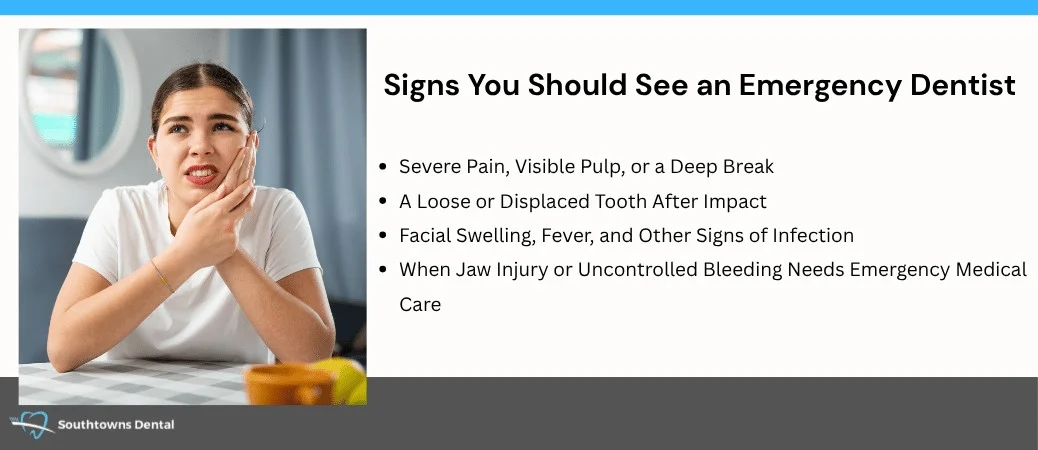
Call an emergency dentist right away if you notice severe pain, a visible pink center, a loose or shifted tooth, facial swelling, or fever.
A small chip without severe pain, bleeding, swelling, or tooth movement may not require immediate emergency treatment, but it should still be evaluated by a dentist.
Severe Pain, Visible Pulp, or a Deep Break
Pain that throbs on its own, without you touching or biting on anything, points to a deeper injury than a surface chip.
So does seeing pink or red tissue in the center of the broken area, which is the pulp, the soft inner part of the tooth holding nerves and blood vessels.
A broken tooth or cracked tooth exposing the pulp needs same-day treatment.
Left alone, an exposed pulp can become infected, and what could have been a simple bonding turns into root canal treatment.
A Loose or Displaced Tooth After Impact
Any tooth that moved, wiggles, or sits at a different angle after a hit needs urgent evaluation. A displaced tooth can mean damage to the ligament holding it in the jawbone, and the sooner a dentist repositions and stabilizes it, the better its odds of surviving long term.
Don’t try to push a shifted tooth back into place yourself. Get to care and let a dental professional handle repositioning with the right tools and imaging.
Facial Swelling, Fever, and Other Signs of Infection
Facial swelling that spreads beyond the immediate area, a fever, or pus near the injured tooth are signs of infection that need attention that day.
Infection can move fast in the mouth, and waiting it out at home risks it spreading further.
Call your dentist and describe what you’re seeing. Mention the swelling’s location, whether it’s growing, and your temperature if you’ve checked it.
When Jaw Injury or Uncontrolled Bleeding Needs Emergency Medical Care
Go to an emergency room instead of a dental office if you suspect a broken jaw, can’t stop bleeding after fifteen minutes of steady pressure, or lost consciousness during the injury.
These situations go beyond what a dental office is equipped to handle in the moment.
A jaw that feels out of alignment, won’t open or close normally, or came with a hard blow to the head needs medical evaluation first.
The tooth itself can often wait a short while once the more urgent injury is stabilized, and emergency rooms can help control pain and bleeding but generally can’t repair the tooth, so plan on a follow-up dental visit regardless.
First Aid for a Chipped, Broken, Cracked, or Knocked-Out Tooth
The right first aid changes based on how much of the tooth is affected and whether it’s a permanent tooth or a baby tooth.
A small chip, a large break, and a fully knocked-out tooth each call for a different response in that first hour.
Small Chip With No Severe Pain
A small chip with no bleeding, no sharp pain, and no visible pink center can usually wait for a next-day or within-the-week dental visit.
Cover any rough edge with dental wax so it doesn’t cut your cheek or tongue, and stick to softer foods on that side of your mouth.
Enamel doesn’t grow back, and a rough edge tends to catch and worsen if it goes unaddressed.
Large Break or a Cracked Tooth
A large break or a tooth that looks cracked through the visible surface needs a same-day or next-morning appointment, even without severe pain.
A crack that isn’t repaired can spread further into the tooth with normal biting force, which turns a repairable situation into one that needs a crown.
A Knocked-Out Permanent Tooth
A knocked-out permanent tooth is the one true race-against-the-clock dental injury.
Pick it up by the crown, the white chewing part, never the root, since touching the root can damage the cells needed for it to reattach successfully.
Rinse it briefly with water if it’s dirty, without scrubbing. Try placing it back in its socket if you can do so gently; if not, keep it in a container of milk, or hold it in your own saliva, and get to a dentist within the hour.
Why Baby Teeth Need Different Handling
Baby teeth get different handling than permanent teeth after a knock-out, and re-inserting a knocked-out baby tooth is not recommended.
Pushing a baby tooth back into the socket can damage the permanent tooth developing underneath it in the gum.
Keep the child calm, control any bleeding with clean gauze, and call a dentist to explain what happened.
They’ll guide you on whether an urgent visit is needed based on the child’s age and which tooth came out.
What to Avoid Until You Are Seen
Skip hard, crunchy, and sticky foods, and don’t try to repair the tooth yourself with household glue or tools. What you avoid in the hours after a chip matters as much as what you do right away.
Foods and Habits That Can Worsen the Damage
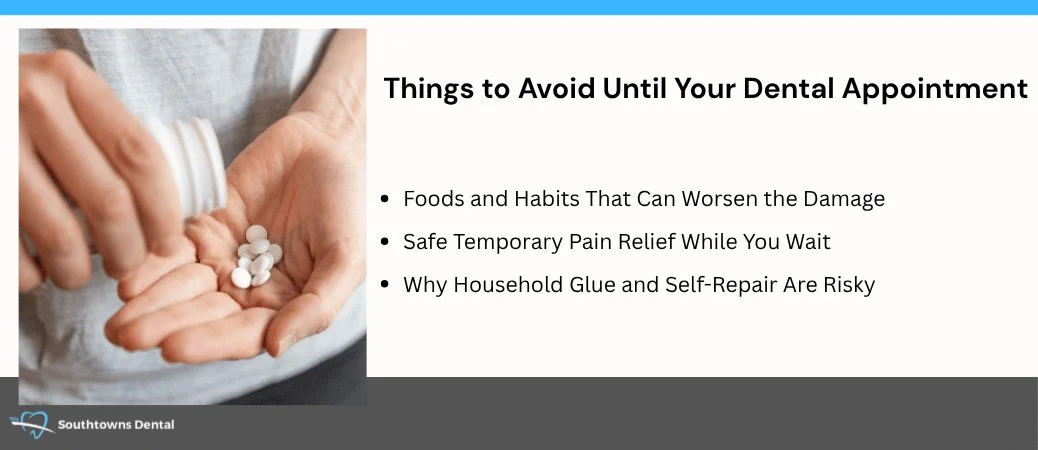
Stick to soft foods and chew on the opposite side of your mouth until a dentist examines the tooth.
Hard, crunchy foods like nuts, ice, or raw carrots can chip the tooth further or dislodge a fragile piece that’s barely holding on.
Skip sticky foods like caramel too, since they can pull at a cracked or loose tooth.
Avoid clenching your jaw or grinding your teeth, which puts more pressure on the damaged area than you might realize.
Safe Temporary Pain Relief While You Wait
An over-the-counter pain reliever at the labeled dose, like ibuprofen or acetaminophen, is a reasonable way to manage discomfort while you wait for your appointment.
Cold compresses against the cheek help with swelling and can ease some of the ache too.
Avoid placing aspirin directly against the gum or tooth, a home remedy that sounds helpful but can actually burn the soft tissue.
Dental wax over a sharp edge and sugar-free gum as a short-term cover both help reduce irritation from the tooth rubbing against your cheek or tongue.
Why Household Glue and Self-Repair Are Risky
Household glue, nail files, and DIY dental repair kits from a drugstore are risky substitutes for professional care.
Household glues are not designed for dental use and should not be used to repair a chipped or broken tooth.
Filing down a sharp edge yourself can remove healthy tooth structure you didn’t need to lose, and it does nothing to address damage below the surface that you can’t see.
A dental professional has the training and imaging tools to treat the tooth properly the first time.
What the Dentist May Do to Save and Restore the Tooth
At Southtowns Dental, our dental team can evaluate a chipped or broken tooth to determine how much damage has occurred and which treatment may be appropriate.
Depending on the injury, treatment may involve smoothing, dental bonding, a crown, or additional care when the inside of the tooth has been affected.
Examination and Imaging After a Workplace or Gym Injury
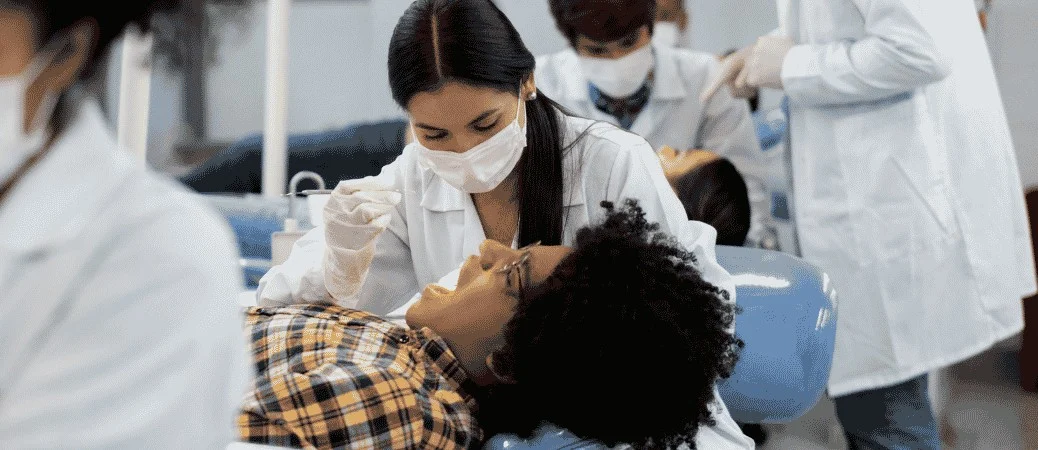
A visual exam alone can’t show what’s happening inside a tooth or below the gumline, so expect X-rays as part of the visit.
Imaging shows whether the crack extends into the root, whether the nerve is affected, and whether the surrounding bone took any damage from the impact.
Tell the dentist exactly how the injury happened, whether it was a fall, a piece of equipment, or contact during a game. That detail helps them know what else to check for beyond the visible chip.
Bonding, Smoothing, or a Crown for a Fracture
A small chip is often treated with bonding, where a dentist shapes tooth-colored composite material directly onto the tooth, usually finished in a single visit.
Very minor chips sometimes need only smoothing to remove a rough edge.
A larger break, or damage to a tooth that handles heavy chewing force like a molar, more often calls for a crown, a cap that covers and protects the remaining tooth structure.
When Root Canal Treatment May Be Needed
Root canal treatment may be needed when a fracture reaches or significantly damages the pulp.
Removing the damaged pulp and sealing the tooth stops infection from developing and lets the dentist rebuild the tooth with a crown afterward.
Not every deep chip needs a root canal, and only an exam with imaging can confirm whether the pulp is affected.
A dentist explains the reasoning before recommending it, and it’s worth asking direct questions if you’re unsure why it’s necessary in your case.
Fast Action Protects Your Tooth and Your Smile
A dental emergency at work or the gym feels disruptive at the moment, but the steps you take in that first hour make a real difference in how the tooth heals and how it’s repaired.
Rinse, control bleeding, ice the area, save any fragments properly, and get to an emergency dentist quickly if you notice severe pain, movement, swelling, or fever.
Painless chips still deserve a dental visit soon, since enamel doesn’t repair itself and a rough edge tends to worsen over time.
If you play contact sports or lift heavy at the gym regularly, a properly fitted mouthguard is one of the more effective ways to prevent this kind of injury from happening again.
Frequently Asked Questions
Can I keep working after I chip a tooth?
You can usually finish out a shift with a small, painless chip, especially after covering any sharp edge with dental wax and switching to soft foods.
Leave immediately for care if you notice severe pain, a loose tooth, visible pink or red tissue, or facial swelling.
Should I go to the emergency room or an emergency dentist for a broken tooth?
Go to an emergency dentist for a broken tooth in most cases, since emergency rooms can manage pain and bleeding but typically cannot repair the tooth itself.
Head to an ER instead if you suspect a broken jaw, have uncontrolled bleeding, or lost consciousness during the injury.
How should I store a piece of chipped tooth before my appointment?
Store a broken tooth fragment in milk or your own saliva inside a small clean container.
Avoid dry tissue or paper towels, which dry out the fragment, and avoid plain tap water, which can damage the cells a dentist needs intact for reattachment.
Can a chipped tooth get infected even if it does not hurt?
A chipped tooth can develop an infection even without pain, especially if the chip is deep enough to expose or weaken the pulp. Watch for facial swelling, fever, or a bad taste near the tooth in the days after the injury, and get any chip examined by a dentist even if it feels fine.
What should I do if I knock out a tooth at the gym?
Pick the tooth up by the crown, never the root, rinse it gently if it’s dirty, and try placing it back in the socket if you can do it without force.
If it won’t go back in, keep it in milk or your own saliva and get to a dentist within the hour for the best chance of saving it.
Can a mouthguard help prevent tooth injuries during workouts?
A properly fitted mouthguard significantly lowers the risk of a chipped, cracked, or knocked-out tooth during contact sports and heavy lifting.
Custom-fitted versions from a dentist tend to stay in place better than generic boil-and-bite versions bought off a shelf, which matters most during high-impact movement.