Millions of adults put off dental care because of fear. If you feel your heart race just thinking about a dentist visit, you are not alone, and there are real ways to get past it.
Dental anxiety can range from mild nervousness to severe dental anxiety that keeps you from booking an appointment at all.
Sedation dentistry for dental anxiety can help you stay calm and comfortable during treatment, so dental fear no longer stands between you and a healthy smile.
Whether you have a specific fear of the dentist or general unease, understanding your options can make the next step feel a lot less scary.
This guide walks you through how to spot the signs that anxiety is holding you back, how sedation works, and what choices you have.
You will also learn how to talk to your dentist about a plan that fits your needs, so you can finally get the dental care you have been putting off.
Key Takeaways
- Adult dental anxiety often causes people to delay or skip dental care, which can lead to bigger problems later.
- Sedation dentistry offers several options that can make appointments feel calmer and more manageable.
- Talking openly with your dentist helps you choose the right sedation plan and prepare for a smoother visit.
Table of Content
- Recognizing When Adult Dental Anxiety Is Holding You Back
- How Sedation Dentistry Makes Treatment More Manageable
- Comparing Sedation Options for Adults
- Choosing the Right Plan With Your Dentist
- Preparing for a Safer, Calmer Appointment
- Why Getting Treatment Sooner Protects Your Oral Health
- Frequently Asked Questions
Recognizing When Adult Dental Anxiety Is Holding You Back
Dental anxiety can range from mild nervousness to full-blown panic, and it often gets worse the longer you avoid the dentist.
Knowing the difference between normal jitters and something more serious can help you figure out what kind of support you need.
Dental Anxiety, Dental Fear, and Dental Phobia
These three terms sound similar, but they describe different levels of distress.
- Dental anxiety is that uneasy feeling you get before an appointment. You might feel nervous, but you still show up.
- Dental fear is stronger. You may dread specific parts of a visit, like the sound of the drill or the smell of the office.
- Dental phobia is the most severe. It can cause severe anxiety and panic attacks, and many people with phobia avoid the dentist for years.
If your fear feels overwhelming or physical, like a racing heart or trouble breathing, you may be dealing with a phobia rather than simple nerves.
This distinction matters because it affects which type of help works best for you.
Common Triggers: From Fear of Needles to a Strong Gag Reflex
Most dental anxiety comes from a specific trigger, not just a general dislike of the dentist.
Common triggers include:
- Fear of needles, especially numbing shots
- Strong gag reflex, which can make cleanings or X-rays uncomfortable
- Fear of pain from past bad experiences
- Feeling a loss of control while lying in the chair
- Embarrassment about the condition of your teeth
- Sensory issues, like harsh lights or loud sounds
Your dentist may recommend sedation if you have claustrophobia that makes it hard to relax in the treatment chair, a sensitive gag reflex, or a strong fear of needles.
Identifying your specific trigger helps your dental team choose the right approach, whether that means numbing gel before injections or nitrous oxide to ease overall tension.
Signs That Anxiety May Be Causing You to Delay Care
Sometimes it’s hard to admit that fear is affecting your health. Watch for these signs that anxiety may be running the show:
- You’ve canceled or rescheduled appointments more than once
- You haven’t seen a dentist in over a year, even with a known problem
- You feel sick to your stomach just thinking about your next visit
- You avoid smiling or talking about your teeth because you’re embarrassed
- You’ve had a panic attack, or come close to one, in a dental chair
If several of these signs feel familiar, dental anxiety may be affecting your ability to get the care you need. Talking openly with your dentist can help you find ways to feel more comfortable and in control during your visits.
How Sedation Dentistry Makes Treatment More Manageable
Sedation dentistry gives you a way to relax during treatment while your dentist takes care of the work you need. It also helps you sit through longer visits and makes it easier to come back for care in the future.
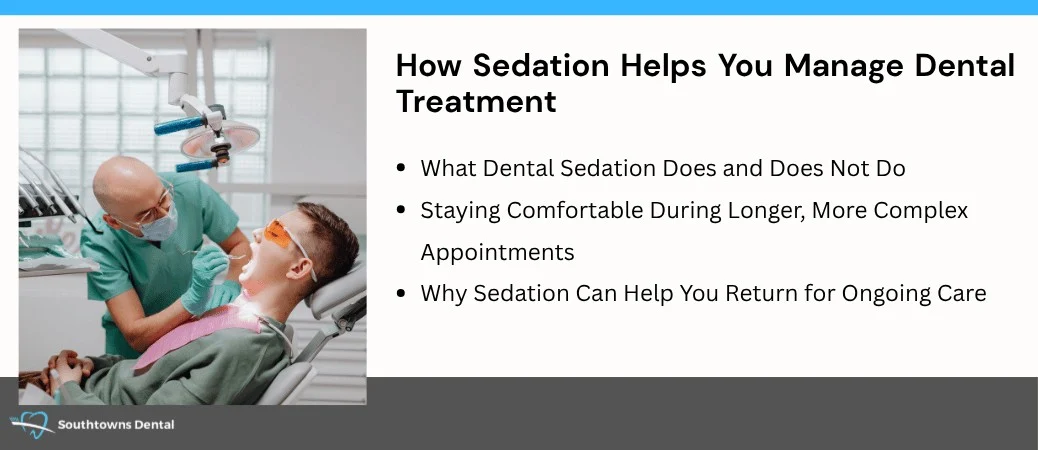
What Dental Sedation Does and Does Not Do
Dental sedation helps you feel calm and relaxed during a dental procedure. It does not put you to sleep or make you lose control of your body.
With conscious sedation, you stay awake and can still respond to your dentist. You keep your normal reflexes, and you can still breathe and swallow on your own.
Common sedation techniques include:
- Nitrous oxide (laughing gas), which wears off quickly
- Oral sedatives, taken as a pill before your visit
- IV sedation, given through a vein for deeper relaxation
Your sedation dentist will pick the method that fits your needs. This depends on your anxiety level, health history, and the type of dental treatment you need.
Staying Comfortable During Longer, More Complex Appointments
Complex dental procedures often take more time in the chair. Sedation helps you stay comfortable through root canals, extractions, or multiple fillings done in one visit.
Sitting still for a long time can be hard, even without anxiety. Sedation helps your muscles relax so you don’t feel as stiff or restless.
It also helps block out some of the sounds and sensations that come with dental work. Many patients say time feels like it passes faster when they are sedated.
This can make it possible to finish more treatment in fewer visits.
Why Sedation Can Help You Return for Ongoing Care
A good experience with sedation can change how you feel about future dental visits. If your last appointment felt manageable, you’re more likely to show up for the next one.
This matters most if you have mild to moderate anxiety and tend to put off checkups. Regular visits let your dentist catch problems early, before they turn into bigger issues.
Sedation is not meant to replace good communication with your dental team. But it can lower the barrier that keeps many adults from getting routine care.
Comparing Sedation Options for Adults
Every option offers a different level of calm, from a light sense of relaxation to being fully unaware during treatment.
Knowing how each one works can help you talk to your dentist about which choice fits your comfort level and the work you need done.
Nitrous Oxide for Mild Anxiety
Nitrous oxide, also known as laughing gas, is one of the gentlest forms of dental sedation available. You breathe it in through a small mask over your nose, and it starts working within minutes.
This type of minimal sedation leaves you awake and able to talk with your dentist the whole time. You’ll likely feel light, relaxed, and maybe a little giggly.
One of the best parts is how fast it wears off. As soon as the mask comes off, the effects fade, so you can drive yourself home after your appointment.
Oral Sedation for Deeper Relaxation
Oral sedation means you take a pill before your visit, usually something like Halcion or Valium. These are types of benzodiazepines that help calm your nerves and ease anxiety.
You’ll likely feel very drowsy, and some people even doze off in the chair. You’ll still be able to respond if your dentist talks to you, but you may not remember much afterward.
Because of the drowsiness, you’ll need someone to drive you home. This option works well if you feel nervous about needles or want a deeper level of calm than nitrous oxide can offer.
IV Sedation for Extensive Dental Work
IV sedation is a stronger option that works fast because the medicine, often midazolam, goes directly into your bloodstream through a small tube in your arm.
This is sometimes called conscious sedation because you stay awake, but you likely won’t remember much of the procedure.
This choice works well for longer visits or more involved procedures like multiple extractions or dental implants. Your dentist can also adjust the dose during treatment, which helps keep you comfortable throughout.
You’ll need someone to take you home afterward since the grogginess can last a few hours.
When General Anesthesia May Be Considered
General anesthesia is the deepest form of sedation, and it makes you fully unconscious during treatment. You won’t feel, hear, or remember anything from the procedure.
This option is usually saved for people with severe dental phobia, oral surgeries, or special needs that make other sedation types too difficult.
Because of the risks involved, you’ll need a separate health evaluation before this can be scheduled, and sometimes an anesthesiologist will need to be present.
Recovery takes longer than with other sedation types, so plan for a full day of rest afterward.
Choosing the Right Plan With Your Dentist
Your dentist will look at your health, your fear level, and your treatment needs before picking a sedation option. A good plan matches the right method to the right person, so you get care that feels safe and manageable.

How Your Medical History Affects Sedation
Your medical history plays a big role in what sedation options are safe for you. Your dentist will ask about health conditions, allergies, and medications you take, including supplements.
This helps your sedation dentist rule out risks before your appointment. For example, some sedatives can interact with heart medications or breathing conditions like asthma.
Be honest, even about small details. It might feel unimportant, but it could change your plan.
Your dentist may also check your airway, heart, and lungs during an exam. If you have a complex medical history, they might team up with your primary care doctor first.
Matching Sedation to Your Anxiety Level and Procedure
Sedation isn’t one-size-fits-all. Your dentist will match the method to how anxious you feel and what kind of work you need.
Mild nervousness for a cleaning may only need nitrous oxide. But if you have severe dental anxiety or need a longer procedure, like a root canal, oral or IV sedation might work better.
Here’s a quick breakdown:
- Mild anxiety, short visits: nitrous oxide
- Moderate anxiety, longer visits: oral sedation
- High anxiety or complex dental procedures: IV sedation
Root canals and other detailed work often use local anesthesia alongside sedation. This numbs the area while sedation keeps you relaxed.
Comfort Measures That Work Alongside Sedation
Sedation isn’t the only tool for anxiety management. Small comfort steps can make a big difference too.
Some dentists offer weighted blankets, noise-canceling headphones, or calming music during your visit. Others let you bring a support person or take breaks if you feel overwhelmed.
These extras don’t replace sedation, but they can boost patient comfort during your appointment.
Talk to your dentist about what helps you feel calm, whether that’s a stress ball, a quiet room, or clear step-by-step explanations of what’s happening.
Combining sedation with these comfort measures often leads to a smoother, less stressful visit overall.
Preparing for a Safer, Calmer Appointment
A little planning goes a long way when it comes to sedation dentistry. Knowing what to ask, what to expect on the day of your visit, and how you’ll feel afterward can help you relax before you even sit in the chair.
Questions to Ask Before Scheduling Sedation
Before you book your appointment, talk with your dentist about which type of dental sedation fits your needs. Not every anxious patient needs the same level of sedation, so it helps to ask questions upfront.
Here are some good things to ask:
- What type of sedation do you recommend for my procedure; nitrous oxide, oral sedation, or IV sedation?
- Will you need my full medical history, including current medications?
- Are there any health conditions that might affect my sedation options?
- How long will the sedation last, and when will I feel back to normal?
- What are the risks or side effects I should know about?
Your dentist should also ask about any past reactions to sedation or anesthesia. This helps them choose the safest option for you.
Preparing for Your Visit and Arranging Transportation
How you prepare depends on the type of sedation you’re getting. For nitrous oxide, you usually don’t need to do much; maybe just avoid a heavy meal beforehand.
Oral sedation and IV sedation are a bit different. You may need to fast for several hours before your visit, so ask your dentist for exact timing.
Transportation matters a lot here. Except for nitrous oxide, most forms of sedation leave you unable to drive safely afterward. You’ll need someone to bring you to your dental treatment and drive you home.
It’s smart to lay out comfortable clothes and skip jewelry or contact lenses. Also, let your dentist know if you’re feeling sick that day, since illness can change how sedation affects you.
What to Expect During Monitoring, Recovery, and Aftercare
During your procedure, your dental team will watch your vital signs closely. This includes your heart rate, oxygen levels, and breathing, especially with IV sedation or deeper levels of sedation.
Once your treatment is done, you’ll spend some time recovering in the office before heading home. Drowsiness is common after oral or IV sedation and can last several hours.
Here’s what to expect during recovery:
- Someone should stay with you for a few hours after you get home
- Avoid driving, cooking, or making big decisions for the rest of the day
- Skip alcohol until the sedation fully wears off
- Stick to light foods if you feel a bit queasy
Your dentist will give you specific aftercare instructions based on your sedation type. Following them closely helps you heal comfortably and reduces the chance of complications.
Why Getting Treatment Sooner Protects Your Oral Health
Waiting to see a dentist because of fear can let small dental problems grow into painful, expensive ones. Getting past your fear now can save your teeth, your gums, and your wallet later.
How Delayed Care Can Turn Small Problems Into Bigger Ones

A tiny cavity is easy to fix. It usually just needs a simple filling, and you’re done.
But if you skip dental visits, that same cavity can grow deeper. It can reach the nerve inside your tooth, and then you may need a root canal instead of a filling.
Gum disease follows a similar pattern. Early gum disease, called gingivitis, can often be reversed with a professional cleaning and better oral hygiene.
Recognizing the early symptoms of gum disease, such as bleeding, redness, or swelling, can help you seek treatment before the condition progresses.
If it’s left untreated, though, it can turn into a more serious form of gum disease. This can damage the bone that holds your teeth in place, and it’s a leading cause of tooth loss in adults.
Here’s how problems can escalate over time:
- Small cavity → left untreated → deeper decay → possible root canal
- Mild gum irritation → left untreated → gum disease → bone loss → tooth loss
- Minor tooth sensitivity → left untreated → cracked tooth → extraction
Taking the First Step After Years of Avoiding the Dentist
If you’ve stayed away from the dentist for years, you’re not alone. Dental phobia is common, and dentists who work with anxious patients understand this.
You don’t have to jump straight into a full exam or a big procedure. Many dental offices let you start small.
You might book a short visit just to meet the dentist and talk about your fears. No treatment, no drills, just a conversation.
From there, you can talk about options like sedation dentistry, which can help you feel calm and relaxed during future visits.
This first step can make it much easier to get the oral health care you need without feeling overwhelmed.
Frequently Asked Questions
Here are some quick answers to common questions about sedation options, safety, and how the process works so you know what to expect before your visit.
Can adults with severe dental anxiety be sedated for treatment?
Yes, dentists can sedate adults with severe dental anxiety. There are several sedation levels to choose from based on how anxious you feel.
If you have intense fear or a strong gag reflex, sedation dentistry can help you get through your appointment. Your dentist will talk with you about your health history first to pick the safest option for you.
What should I expect during IV sedation at the dentist?
IV sedation puts you into a relaxed, sleepy state often called a twilight state. You stay technically conscious, but you likely won’t remember much of the procedure afterward.
This method is used for complex or lengthy treatments because your dentist can adjust the dose as needed during the procedure. You’ll need someone to drive you home since the medication takes time to wear off.
Is sedation dentistry safe for people with dental phobia?
Sedation dentistry is generally safe when provided by a trained professional who monitors you throughout treatment.
Before your visit, your dentist will review your medical history, current medications, and overall health to determine the safest sedation option for you.
This step helps them pick the right sedation type and dose for your body. Millions of people with dental phobia use sedation to get through their appointments safely every year.
Will I feel pain during treatment with oral sedation?
Oral sedation helps you relax, but it does not block pain on its own. Your dentist will still use local anesthesia to numb the area being treated.
You’ll feel calm and drowsy, but you shouldn’t feel sharp pain during your procedure. Some patients feel very little discomfort at all since the medication reduces overall body tension.
What types of medication are used for dental sedation?
Dentists commonly use benzodiazepines for oral sedation, including triazolam, lorazepam, and diazepam. These drugs help calm your nervous system so you feel less stressed.
For quicker or milder anxiety relief, nitrous oxide, also known as laughing gas, is used to keep you awake and responsive while still feeling relaxed.
Your dentist chooses the medication based on your anxiety level, health history, and how long the procedure will take.
Does dental insurance cover sedation for anxiety?
Coverage for dental sedation varies by insurance plan. Some plans may cover sedation when it is medically necessary for certain procedures, while sedation used primarily to manage dental anxiety may not be covered.
If your insurance does not cover all of the cost, Southtowns Dental offers financing options through CareCredit, Cherry, and Alphaeon Credit to help make eligible dental care more manageable.
Our team can also help you review your benefits and understand your payment options before treatment.
Conclusion
Dental fear does not have to lead to years of delayed appointments.
With sedation dentistry for dental anxiety, you can work with your dentist to choose a level of relaxation that matches your anxiety, health history, and treatment needs.
From nitrous oxide to oral or IV sedation, the right approach can make necessary dental care feel much more manageable.
The first step is simply having an open conversation about what makes you uncomfortable and what options are available.
With proper planning, professional monitoring, and the right support, you can receive the care your smile needs with greater comfort and confidence.