Your gums might be trying to tell you something important.
Many people don’t realize they have gum disease until it becomes serious, but catching the warning signs early can save you from painful and expensive dental problems down the road.
The good news is that early-stage gum disease can often be reversed with proper gum care and attention to your oral health.
When you know what to look for, you can take action before minor issues turn into major concerns. Red or swollen gums, bleeding when you brush, and bad breath that won’t go away are all signs that something needs your attention.
Understanding how gum disease progresses through different stages helps you protect your smile.
Whether you’ve noticed some concerning symptoms or just want to prevent problems before they start, learning about early warning signs and simple preventive steps can make a real difference in your dental health.
Key Takeaways
- Early gum disease often shows up as red, swollen, or bleeding gums that you shouldn’t ignore
- Good daily brushing and flossing habits combined with regular dental visits can prevent gum problems from developing
- Catching and treating gum disease early can reverse the damage before it becomes permanent
Table of Content
- Recognizing Warning Signs for Healthy Gums
- Understanding the Causes and Progression
- Preventive Habits for Lasting Gum Health
- Professional Care and Treatment Options
- Taking Action: What to Do If You Notice Gum Problems
- Frequently Asked Questions
Recognizing Warning Signs for Healthy Gums
Catching gum problems early can save your teeth and prevent serious damage. Knowing what to look for and when to get help makes all the difference in keeping your gums healthy.
Symptoms to Watch Out For

Bleeding gums are often the first sign something is wrong. If you see blood when you brush or floss, your gums may be inflamed. This is one of the most common early signs of gum disease that people notice.
Swollen or red gums point to inflammation and irritation. Healthy gums should not look puffy or feel tender to the touch. Gingivitis causes red, swollen, bleeding gums and is the earliest stage of gum disease.
Persistent bad breath that does not go away after brushing may signal gum problems. Bacteria buildup along the gumline creates odors that regular brushing cannot fix.
Receding gums make your teeth look longer than before. When gum recession happens, more of your tooth surface becomes exposed. This creates gaps between your teeth and gums where bacteria can collect.
Loose teeth or changes in how your teeth fit together are serious warning signs. This means the disease has damaged the bone and tissue supporting your teeth.
What Healthy Gums Should Look Like
Healthy gums are firm and pink. They fit snugly around each tooth without any gaps or pockets. When you touch them, they should feel solid and not squishy.
Your gums should not bleed during normal brushing and flossing. A little blood might appear if you floss too hard, but regular bleeding is not normal.
The tissue should have a consistent color without dark red or purple patches. White spots or very pale areas also need attention from a dentist.
You should not see your gum tissue pulling away from your teeth. The gumline should form a smooth seal around each tooth.
When to See a Dentist
Visit your dentist right away if you notice bleeding that happens regularly. Early-stage gum disease can usually be reversed with professional cleaning and better home care.
Make an appointment if your gums stay swollen for more than a few days. Ongoing inflammation means bacteria are damaging your gum tissue.
Go to the dentist if you have bad breath that will not go away. This often means bacteria are building up below the gumline where you cannot reach with a toothbrush.
See your dentist immediately if you notice any tooth movement or changes in your bite. These are signs of periodontal disease that has progressed beyond the early stage.
Regular dental checkups every six months help catch problems before you notice symptoms. Gum disease often develops without noticeable pain, so professional monitoring is important.
Who Is at Risk
Smokers face a much higher risk of developing gum problems. Tobacco weakens your immune system and makes it harder for gums to heal.
People with diabetes are more likely to get gum infections. High blood sugar creates an environment where bacteria thrive.
Other risk factors include:
- Poor oral hygiene habits
- Family history of gum disease
- Hormonal changes during pregnancy
- Certain medications that reduce saliva
- Stress that weakens your immune system
- Teeth grinding or clenching
Age also plays a role, as gum problems become more common after age 30. However, early gum disease and gingivitis can affect people of any age who do not take care of their teeth properly.
Understanding the Causes and Progression
Gum disease doesn’t happen overnight. It starts with plaque buildup that turns into tartar, and poor oral hygiene speeds up the damage, especially if you have certain risk factors that make your gums more vulnerable.
How Plaque and Tartar Form
Plaque is a sticky film that forms on your teeth when sugars and starches from food mix with bacteria in your mouth. This happens constantly throughout the day.
When you eat or drink, bacteria feast on the leftovers and create this soft coating.
You can remove plaque by brushing twice a day and flossing once daily. But if you skip these habits, plaque hardens within 24 to 72 hours.
Once plaque hardens, it becomes tartar. Tartar forms below your gumline and creates a rough surface where more bacteria can gather.
You can’t remove tartar with regular brushing or flossing. Only a dental professional can clean it off during a checkup.
The bacteria in plaque and tartar release toxins that irritate your gum tissue. This irritation is what starts the infection process.
The Role of Poor Oral Hygiene
Poor oral hygiene is the main cause behind most cases of gum disease. When you don’t brush and floss regularly, plaque accumulates along your gumline. The bacteria multiply and create an environment where infection can thrive.
Skipping even one day of proper cleaning gives plaque time to harden. Missing your regular dental cleanings means tartar builds up in places you can’t reach at home.
Your mouth needs consistent care to stay healthy. Brushing removes food particles and bacteria from tooth surfaces. Flossing cleans between teeth where your toothbrush can’t reach.
Together, these habits prevent gum inflammation that can progress to more serious conditions.
Without proper cleaning, bacteria irritate your gums until they become swollen and bleed easily.
Risk Factors for Gum Disease
Some factors make you more likely to develop gum disease even if you practice good oral hygiene. Smoking or using tobacco products damages gum tissue and slows healing. This makes it harder for your body to fight off infection.
Diabetes affects how your body controls blood sugar, which can weaken your immune response to bacteria. Problems controlling blood sugar in diabetes are linked with periodontitis.
Other risk factors include:
- Hormonal changes during pregnancy or menopause
- Certain medications that cause dry mouth
- Genetics that make you more prone to gum problems
- Poor nutrition, especially low vitamin C levels
- Obesity
- Stress that weakens your immune system
Age also plays a role. Gum disease becomes more common as you get older.
From Gingivitis to Periodontitis
Gingivitis is the earliest and mildest form of gum disease. Your gums become red, swollen, and bleed when you brush. The good news is that gingivitis can be reversed with professional treatment and better home care if you catch it early.
If you ignore gingivitis, the infection gets worse. The inflammation deepens and creates pockets between your gums and teeth. These pockets fill with bacteria, plaque, and tartar.
As periodontitis develops, these pockets grow deeper. The infection damages the soft tissue and bone that hold your teeth in place. Your gums start pulling away from your teeth, making them look longer.
Without treatment, periodontal disease destroys enough bone that your teeth become loose. You might eventually lose one or more teeth. The bacteria can also enter your bloodstream and affect other parts of your body.
Preventive Habits for Lasting Gum Health
Building strong daily habits protects your gums from disease and keeps your mouth healthy for years to come.
The right brushing technique, consistent flossing, smart product choices, and healthy lifestyle decisions all work together to prevent gum problems before they start.
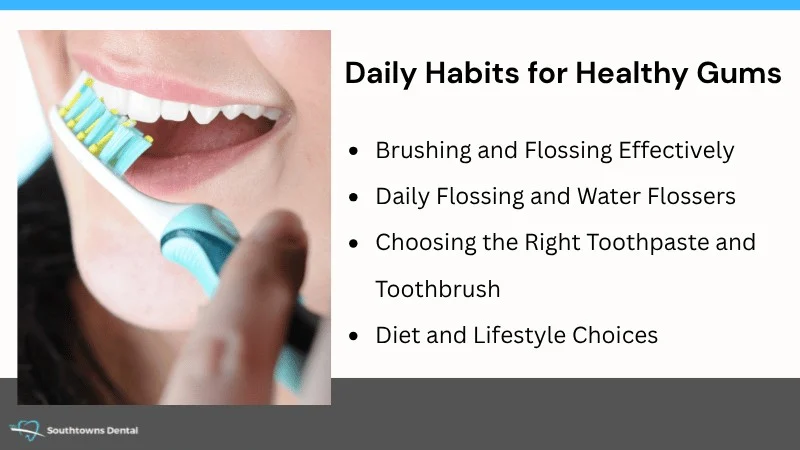
Brushing and Flossing Effectively
You need to brush your teeth twice a day for two minutes each time. This removes plaque before it hardens into tartar that only a dentist can clean off.
Hold your toothbrush at a 45-degree angle to your gums. Use gentle circular motions rather than harsh back-and-forth scrubbing that can damage your gum tissue.
Make sure you brush all surfaces of your teeth. This includes the outer surfaces, inner surfaces, and chewing surfaces. Don’t forget to gently brush your tongue to remove bacteria.
Replace your toothbrush every three to four months or sooner if the bristles look worn. Old toothbrushes don’t clean as well and can harbor bacteria that harm your gums.
Good oral hygiene combined with professional cleanings can largely prevent gum disease. Consistency matters more than intensity when it comes to brushing and flossing.
Daily Flossing and Water Flossers
You must floss every day to remove plaque and food particles from between your teeth where your toothbrush can’t reach. Skipping this step leaves bacteria to multiply in these tight spaces.
Use about 18 inches of floss and wind most of it around your middle fingers. Gently slide the floss between your teeth using a rubbing motion, then curve it around each tooth in a C-shape.
A water flosser offers an effective alternative if you find traditional floss difficult to use. These devices spray water to clean between teeth and along the gumline.
They work especially well if you have braces, bridges, or arthritis that makes regular flossing challenging.
The key is picking a method you’ll actually use daily. Whether you choose traditional floss or a water flosser, the regular removal of plaque keeps your gums healthy.
Choosing the Right Toothpaste and Toothbrush
A soft-bristled toothbrush protects your gums while still cleaning effectively. Hard or medium bristles can scrape and irritate your gum tissue, causing it to recede over time.
Your toothbrush head should be small enough to reach all areas of your mouth comfortably. Electric toothbrushes can be more effective at removing plaque if you have trouble with manual brushing technique.
Always choose fluoride toothpaste to strengthen your tooth enamel and fight decay. Look for products with the American Dental Association seal of approval.
Some toothpastes include ingredients specifically designed for gum health, such as stannous fluoride or essential oils. These can provide extra protection if you’re prone to gum problems.
Diet and Lifestyle Choices
What you eat directly affects your gum health. Foods high in vitamin C, like oranges and bell peppers, help keep your gums strong. Crunchy vegetables like carrots and celery can help clean your teeth naturally.
Limit sugary and starchy foods that feed the bacteria in your mouth. These bacteria produce acids that irritate your gums and cause inflammation.
Smoking is one of the biggest risk factors for gum disease. About 62% of U.S. adults who smoke have periodontitis, compared to much lower rates in non-smokers.
Drinking plenty of water throughout the day helps wash away food particles and bacteria. Staying hydrated also promotes saliva production, which naturally protects your gums from harmful bacteria.
Professional Care and Treatment Options
Getting professional help is the most reliable way to stop gum disease from getting worse.
Your dentist and dental hygienist can clean areas you can’t reach at home and provide treatments that repair damage to your gums and teeth.

Importance of Regular Dental Visits
Regular dental visits help catch gum disease in its earliest stages when it’s easiest to treat. Your dentist can spot problems during dental checkups before you even notice symptoms.
Most people should visit their dentist every six months for routine care. If you have risk factors like diabetes or a history of gum problems, your dentist may recommend more frequent visits.
During these appointments, your dental hygienist will examine your gums for signs of inflammation and measure the depth of pockets around your teeth.
Healthy gums have pocket depths between 1 and 3 millimeters. Pockets deeper than 4 millimeters may indicate periodontitis, which requires more intensive treatment.
Your dentist may also take X-rays to check for bone loss that isn’t visible during a visual exam.
Professional Dental Cleaning and Deep Cleaning
Professional dental cleaning removes hardened plaque (tartar) that regular brushing and flossing can’t eliminate. Your dental hygienist uses special tools to clean below the gumline where bacteria accumulate.
Standard dental cleanings work well for preventing gum disease and treating early gingivitis. Your hygienist will scrape away tartar and polish your teeth to make it harder for plaque to stick. These routine cleanings typically take 30 to 60 minutes.
When gum disease has progressed beyond gingivitis, you’ll need a deep cleaning. This more thorough procedure reaches further below the gumline to remove bacteria and tartar from diseased pockets.
Deep cleanings often require numbing medication to keep you comfortable during the process.
Scaling and Root Planing
Scaling and root planing is a two-part deep cleaning procedure that treats periodontal disease when it hasn’t advanced too far. Your dentist or periodontist may perform this treatment using hand instruments, lasers, or ultrasonic devices.
Scaling removes tartar and bacteria from your tooth surfaces and below your gumline. Your dental professional will clean each tooth carefully, going deeper into the pockets than during a regular cleaning.
Root planing smooths the root surfaces of your teeth. This step helps prevent bacteria and tartar from building up again. It also allows your gums to reattach to your teeth as they heal.
You might need two to four appointments to complete scaling and root planing, depending on how much of your mouth needs treatment. Your dentist may prescribe antibiotics to help control bacterial infection during your recovery.
Advanced Treatments for Serious Gum Issues
When gum disease has caused significant damage, you may need surgical treatments from a periodontist. These procedures can save your teeth and restore lost tissue and bone.
Flap surgery involves making small cuts in your gums to fold back the tissue and expose tooth roots. This allows your periodontist to perform more effective scaling and root planing. After cleaning, they may reshape damaged bone before stitching your gums back in place.
Bone grafting replaces bone destroyed by bacteria. The graft material can come from your own bone, donated bone, or synthetic materials. This procedure prevents tooth loss and creates a foundation for new bone to grow.
Guided tissue regeneration (GTR) uses special membranes placed between your bone and tooth to encourage bone regrowth. The membrane keeps unwanted tissue from growing into the healing area so bone can regenerate instead.
Newer treatments use platelet-rich fibrin (PRF) and platelet-rich plasma (PRP) from your own blood to speed healing. These materials contain growth factors that help your body repair damaged gum tissue and bone more quickly.
Taking Action: What to Do If You Notice Gum Problems
Acting fast when you spot gum problems can prevent serious damage to your teeth and gums. Professional dental care combined with improved home habits can reverse early gum disease and protect your smile.
Steps to Take Immediately
Schedule a dental appointment as soon as you notice bleeding, swelling, or redness in your gums. Don’t wait for your regular checkup if symptoms appear.
While waiting for your appointment, improve your brushing technique. Brush twice daily for two minutes using gentle circular motions. Hold your toothbrush at a 45-degree angle to your gums.
Start flossing every single day if you haven’t been. Floss removes plaque between teeth where your toothbrush can’t reach. Use about 18 inches of floss and curve it around each tooth in a C-shape.
Rinse with an antibacterial mouthwash to help reduce bacteria in your mouth. Avoid tobacco products, which make gum disease worse. Drink plenty of water throughout the day to wash away food particles and bacteria.
How to Stop Gum Disease Progression
Your dentist will perform a professional cleaning to remove hardened plaque called tartar. You can’t remove tartar at home with regular brushing. This cleaning is essential to stop gum disease from advancing.
Be honest with your dentist about your symptoms. Tell them about bleeding gums, bad breath, or loose teeth. Early-stage gum disease can usually be reversed with professional treatment and better home care.
Follow your dentist’s specific instructions for home care. They may recommend special toothpaste, mouth rinses, or cleaning tools. Use a soft-bristled toothbrush to avoid irritating your gums further.
Replace your toothbrush every three months or sooner if bristles look worn. Worn bristles don’t clean effectively.
Long-Term Strategies for Healthy Smiles
Visit your dentist every six months for regular cleanings and exams. Some people with gum disease need cleanings more often. Your dentist will tell you how frequently you should come in.
Eat a balanced diet rich in vitamins and minerals. Vitamin C helps keep gums healthy. Crunchy fruits and vegetables like apples and carrots can help clean teeth naturally.
Manage health conditions that affect your gums. Diabetes, for example, can make gum disease worse. Control your blood sugar levels and take medications as prescribed.
Pay attention to changes in your mouth. Notice if your gums bleed more than usual or if teeth feel loose. Track your dental health by watching for warning signs between checkups.
Reduce stress when possible. Stress weakens your immune system and makes it harder for your body to fight infections, including gum disease.
Frequently Asked Questions
Gum disease often starts with subtle signs like bleeding gums and bad breath, but it can progress through different stages if left untreated.
Knowing when the condition can still be reversed and what treatments are available helps you take action quickly.
What are the first signs that gum disease might be starting?
Your gums may bleed when you brush or floss your teeth. This is often one of the earliest warnings that something is wrong.
You might also notice that your gums look redder than usual or appear swollen. Healthy gums should be pink and firm, not puffy or tender to the touch.
Bad breath that doesn’t go away even after brushing can be another early sign. Your mouth might have an unpleasant taste that lingers throughout the day.
Some people notice their gums feeling sore or sensitive, especially when eating or drinking hot or cold foods. These symptoms mean plaque and bacteria are building up along your gum line.
How can I tell the difference between gingivitis and more advanced gum disease?
Gingivitis is the early stage when your gums are inflamed but your teeth are still firmly in place. Your gums may bleed and look red, but the bone and tissue holding your teeth haven’t been damaged yet.
Advanced gum disease, called periodontitis, goes deeper. Your gums start pulling away from your teeth, creating small pockets where more bacteria can hide.
You might notice your teeth looking longer because your gums are receding. Some teeth may feel loose or shift position slightly when you touch them with your tongue.
Periodontitis can cause persistent bad breath that’s worse than what you’d experience with gingivitis alone. You may also see pus between your teeth and gums, which never happens with simple gingivitis.
What are the stages of gum disease, and how quickly can it get worse?
Gum disease starts with gingivitis, the mildest form where plaque buildup causes gum inflammation. Your gums bleed easily, but no permanent damage has occurred yet.
If gingivitis isn’t treated, it can advance to early periodontitis within weeks or months. The infection starts destroying the bone and fibers that hold your teeth in place.
Moderate periodontitis means you’ve lost more bone support around your teeth. Pockets between your gums and teeth get deeper, and bacteria continue causing damage.
Advanced periodontitis is the final stage where teeth may become loose or fall out. The bone loss is severe, and you might need tooth extraction or complex treatments.
How fast gum disease progresses depends on your oral hygiene, genetics, and overall health. Some people move from gingivitis to periodontitis in just a few months, while others take years.
Can gum disease be reversed, and when is it considered no longer curable?
Gingivitis can be completely reversed with good dental care. Professional cleaning removes the plaque and tartar, and improved brushing and flossing can restore your gums to health.
Once gum disease reaches the periodontitis stage, the damage to bone and tissue is permanent. You can’t reverse this damage, but you can stop it from getting worse with treatment.
Early periodontitis can often be managed and controlled so you keep your teeth. Your dentist can clean deep below the gum line and help prevent further bone loss.
Advanced periodontitis causes damage that can’t be undone. At this point, the focus shifts to saving as many teeth as possible and preventing complete tooth loss.
What at-home steps can help stop gum disease from progressing before I see a dentist?
Brush your teeth twice a day for two full minutes each time. Use a soft-bristled toothbrush and make sure you brush along the gum line where plaque builds up.
Floss every single day to remove food and plaque from between your teeth. Your toothbrush can’t reach these spaces, so flossing is essential.
Use an antibacterial mouthwash to help reduce bacteria in your mouth. Rinse for 30 seconds after brushing and flossing.
Drink plenty of water throughout the day to wash away food particles and bacteria. Water also helps your mouth produce saliva, which naturally fights bacteria.
Stop smoking or using tobacco products, as they make gum disease worse and harder to treat. Eating a healthy diet with less sugar also helps reduce plaque buildup.
What treatment options do dentists use for gum disease, and what should I expect?
For gingivitis, your dentist will perform a professional cleaning to remove plaque and tartar. They’ll also teach you better brushing and flossing techniques to prevent it from coming back.
If you have early periodontitis, your dentist may do a deep cleaning called scaling and root planing. This procedure cleans below the gum line and smooths tooth roots to help gums reattach.
Your dentist might prescribe antibiotic gel or pills to fight the infection in your gums. These medications work alongside professional cleaning to control bacteria.
For more advanced cases, you may need surgery to reduce pocket depth or repair damaged bone. Procedures like gum grafts can also restore tissue that has been lost.
You’ll need regular follow-up visits every three to four months to monitor your progress. These maintenance cleanings help keep gum disease under control and prevent it from getting worse.