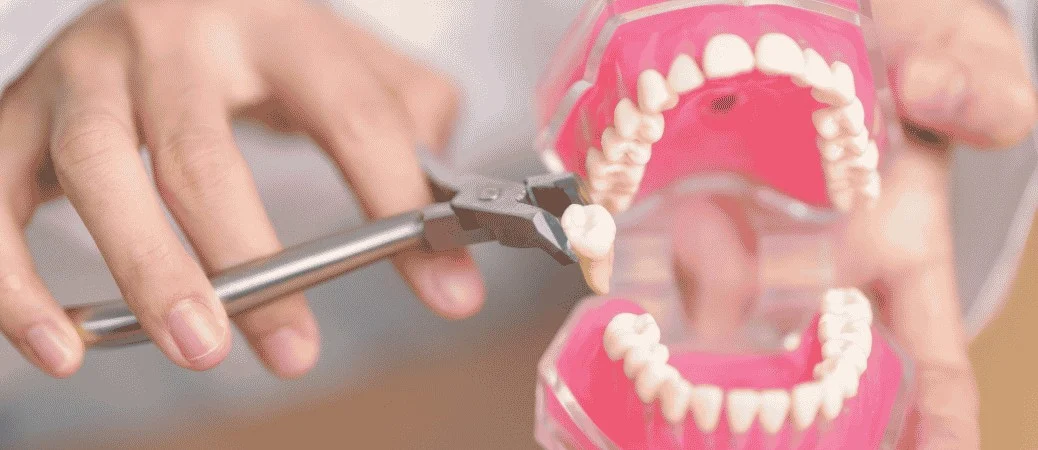
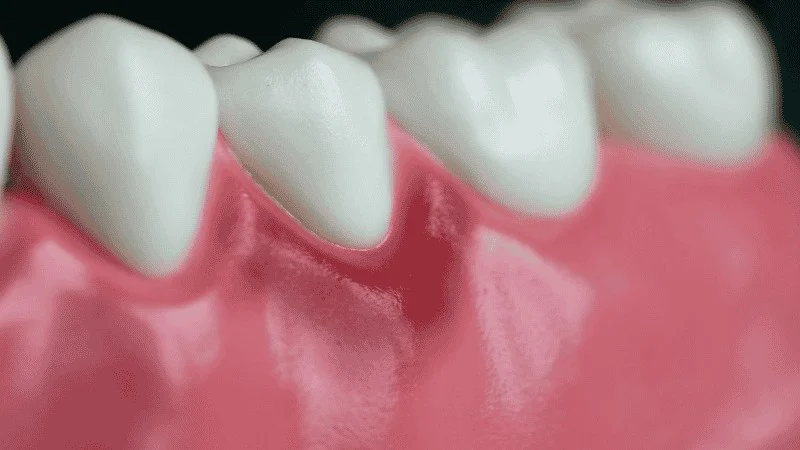
If you’re considering wisdom teeth removal at 25, 35, or 45, you may wonder whether waiting longer makes the procedure more difficult.
Wisdom teeth removal age can affect surgical planning and recovery, but age alone doesn’t determine how complicated an extraction will be.
The position of your wisdom teeth, root development, surrounding bone, and proximity to nearby nerves all play a role. A fully erupted wisdom tooth at 45 may be easier to remove than an impacted tooth at 25.
When wisdom teeth are impacted, painful, or causing problems with nearby teeth, oral surgery may be recommended.
Your dentist will evaluate your tooth position and overall oral health to determine whether removal or continued monitoring is the better option.
At Southtowns Dental, our team can help you understand how these factors affect your treatment.
Whether you’re in your twenties, thirties, or forties, the goal is to choose the right approach for your individual needs, not simply your age.
Key Takeaways
- Root maturity, bone density, and nerve position matter more for surgical planning than your exact age.
- Healthy, properly positioned wisdom teeth can often be monitored instead of removed at any age.
- Imaging and a surgical consultation, not a birthday, determine whether your extraction will be simple or more involved.
Table of Content
- How Does Removal Differ at 25, 35, and 45?
- Why Can Extraction Become More Involved with Age?
- When Is Removal Better Than Monitoring?
- How Are Surgery and Recovery Planned for Adults?
- Choose the Timing That Fits Your Teeth
- Frequently Asked Questions
How Does Removal Differ at 25, 35, and 45?
Removal tends to get more involved with each decade, but the differences are gradual, not sudden jumps tied to a specific birthday.
Root formation, jawbone density, and how your third molars sit in your mouth all shift slowly over time, and each of those changes the surgical approach your dentist will recommend.
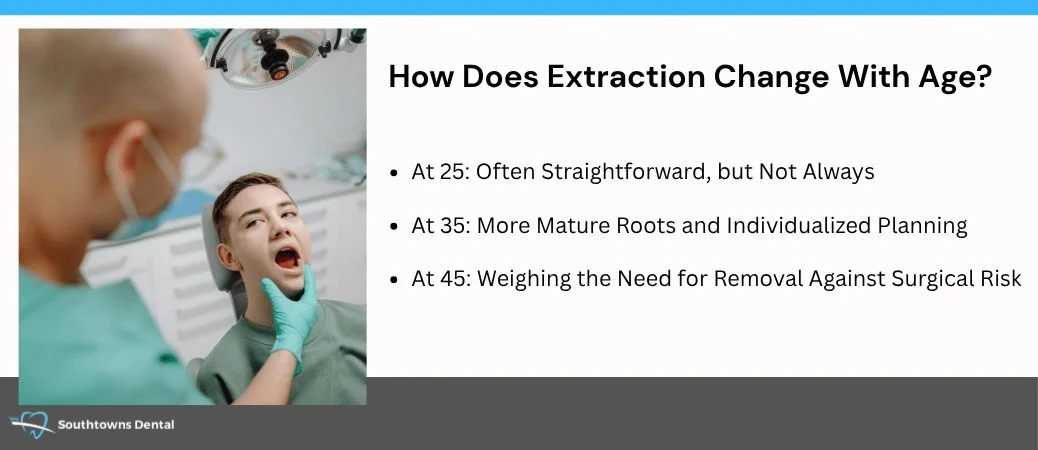
At 25: Often Straightforward, but Not Always
By 25, your wisdom tooth roots have usually finished forming, which can make extraction a bit more involved than it would have been a few years earlier.
Many people in their mid-twenties still have a fairly uncomplicated procedure, especially if the tooth has erupted or sits in a workable position.
Not every 25-year-old has an easy case, though. An impacted wisdom tooth that is angled against the neighboring molar or trapped under bone can be just as complex at 25 as it might be later in life.
Position matters more than the date on your ID.
At 35: More Mature Roots and Individualized Planning
At 35, your bone is denser and your roots are fully set, so your dentist will likely build a more individualized plan around your imaging. This often means a closer look at root curvature and how the tooth relates to the jaw before deciding on technique.
Planning at this age tends to involve more detailed X-rays or scans, since root shape and nerve proximity are harder to predict from a visual exam alone.
Recovery can also take a little longer than it would have at 25, though this varies by case.
At 45: Weighing the Need for Removal Against Surgical Risk
At 45, the central question shifts from “how hard will this be” to “does this tooth actually need to come out.”
Many wisdom teeth at this age are either absent, fully erupted and functional, or causing a clear problem that makes the decision straightforward.
When removal is needed, denser bone can mean a longer procedure, but a well-positioned tooth at 45 is not automatically harder to remove than a poorly positioned one at 25.
Your surgeon weighs your overall health alongside the tooth’s position before recommending surgery.

Why Can Extraction Become More Involved with Age?
Extraction can become more involved with age mainly because of changes in root shape, jawbone density, and how close roots sit to a major nerve.
None of these changes happen overnight, but their combined effect over years is why your dentist may describe an adult extraction differently than one performed on a teenager.
How Do Roots and Jawbone Affect the Procedure?
Roots that finish growing can curve or hook in ways that make them harder to remove in one piece, and this is one of the clearest age-related changes in third molar surgery.
Younger roots tend to be shorter with blunt tips, which lowers the chance of a root fracturing during removal.
Your jawbone also hardens as you get older. Denser bone holds teeth more securely, but your dentist may need to remove a bit more bone tissue to reach a tooth, which can add time to the procedure and to your healing afterward. Harder bone simply does not flex the way younger bone does during surgery.
Impacted wisdom teeth that sit unerupted for years can also press against neighboring teeth.
Over time, this pressure has been linked to bone loss, decay, or damage to the roots of the tooth next door, which is one reason long-term impaction is not always a “wait and see nothing happens” situation.
When Does Nerve Proximity Change the Surgical Plan?
Nerve proximity changes the plan whenever imaging shows a lower wisdom tooth root sitting close to, or wrapping around, the inferior alveolar nerve.
The inferior alveolar nerve runs through the lower jawbone and provides sensation to the lower teeth, lower lip, and chin. A separate nerve, called the lingual nerve, provides general sensation to part of the tongue.
Fully developed roots may have a close relationship with the inferior alveolar nerve, depending on the tooth’s position.
Imaging helps your surgeon evaluate that relationship and discuss the risk of temporary or, rarely, persistent numbness.
A review of inferior alveolar nerve complications following third molar extraction found that imaging and careful surgical technique play key roles in managing this risk and informing patients beforehand.
When a scan shows this kind of closeness, your surgeon may change the surgical approach, order a more detailed 3D scan, or discuss the slightly higher risk with you directly before moving forward.
When Is Removal Better Than Monitoring?
Removal makes more sense than monitoring when a wisdom tooth is already causing pain, infection, decay, or damage to a neighboring tooth.
Monitoring can be a reasonable choice when the tooth is healthy, fully erupted, properly positioned, and easy to keep clean.
Which Symptoms or Dental Findings Call for an Evaluation?
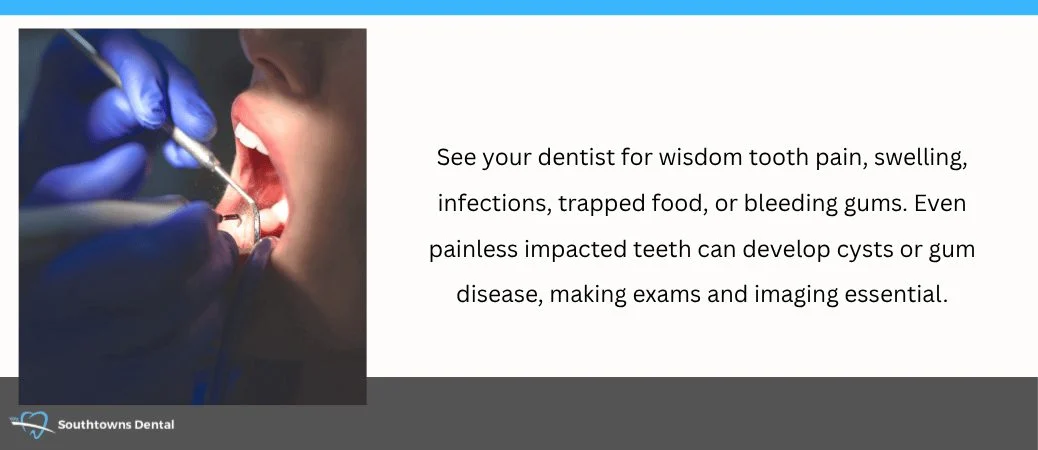
Pain, swelling, or repeated infection near your back molars are the clearest signs you should schedule an evaluation soon.
Other warning signs include trapped food that will not clear with brushing, bad breath from one specific spot, or bleeding gums around the tooth.
Your dentist is also watching for problems that do not cause any pain at all. A cyst can form around a wisdom tooth root silently, and left alone, it can lead to jawbone loss before you notice anything is wrong.
Research on impacted wisdom teeth notes that a notable share of people with impacted wisdom teeth have no symptoms at all, which is exactly why dentists rely on exams and imaging rather than pain alone.
Gum disease around a partially erupted wisdom tooth is another common reason for removal, since these spots are hard to clean and tend to collect bacteria.
If your dentist spots early gum disease at your back molars, that is worth addressing before it spreads to nearby teeth.
When Can Healthy, Painless Wisdom Teeth Stay?
A wisdom tooth can often stay in place if it has fully come through the gum, lines up with your bite, and you can floss around it without trouble.
Your dentist checks for decay, gum disease, and any pressure against the neighboring tooth before recommending this path.
Dental specialists disagree on removing symptom-free wisdom teeth, and many recommend doing so in the late teens or early twenties specifically because complication rates are lower then.
That disagreement is part of why your own dentist’s exam, not a blanket rule, should guide your decision at 35 or 45.
If you decide to monitor instead of remove, regular checkups with dental x-rays become part of your routine, since they let your dentist catch changes below the gumline long before you would feel them.
If you notice new pain, swelling, or a bad taste near a wisdom tooth you have been watching, it is worth getting it checked rather than waiting for your next regular visit.
You can review more signs that may point to wisdom teeth removal if you are trying to decide whether your symptoms warrant a sooner appointment.
How Are Surgery and Recovery Planned for Adults?
Surgery and recovery for adults are planned around imaging, anesthesia choice, and a realistic healing timeline that may run longer than it would for a teenager.
Your dentist or oral surgeon builds this plan after seeing exactly how your roots, bone, and nerves are arranged.
What Can Imaging Reveal Before Extraction?
A dental x-ray shows your dentist the basic position, angle, and depth of each wisdom tooth before any decision is made.
For adults, especially past 35, your dentist may also want a more detailed scan to map root curvature and nerve position precisely.
This step matters because imaging can reveal problems you cannot feel, including early bone loss, a forming cyst, or roots sitting closer to the nerve than expected.
Seeing this ahead of time lets your surgeon choose the safest technique rather than discovering a surprise mid-procedure.
When Are Surgical Extraction and Sedation Considered?
Surgical extraction is considered whenever a tooth is impacted, angled, or trapped under bone rather than fully erupted and easy to grasp.
This approach may involve cutting the gum, removing some bone, and sometimes sectioning the tooth into pieces for a cleaner removal.
Sedation choice depends on how complex your case is and your own comfort level. Local anesthesia alone works for many simple extractions, while IV sedation or general anesthesia is reserved for more involved surgical cases or for patients who feel anxious about the procedure.
An oral and maxillofacial surgeon, who completes four to six years of hospital-based surgical training beyond dental school, is often the right specialist for impacted teeth, nerve-adjacent roots, or cases needing sedation.
If you want a fuller walk-through of what the day of surgery looks like, this overview of wisdom tooth extraction surgery covers the steps in order.
What Should Adults Expect During Healing?
Healing after adult wisdom tooth removal usually involves a few days of swelling, mild bleeding, and rest before you feel back to normal.
Rest at home for three to five days, use ice packs for swelling, and avoid straws, carbonated drinks, and alcohol to protect the healing blood clot.
Dry socket, a painful condition where that blood clot is lost too early, is one of the more common complications to watch for in the days after surgery.
Keeping gauze in place as directed and avoiding vigorous rinsing both help protect against it.
You can find more detail in this guide on avoiding dry socket after wisdom teeth removal and this day-by-day look at wisdom teeth removal recovery.
Adults recovering from a more involved surgical extraction, especially one that required bone removal, may need extra rest compared with a simple extraction.
Planning a few days off work and lining up soft foods ahead of time makes the first week noticeably easier.
Choose the Timing That Fits Your Teeth
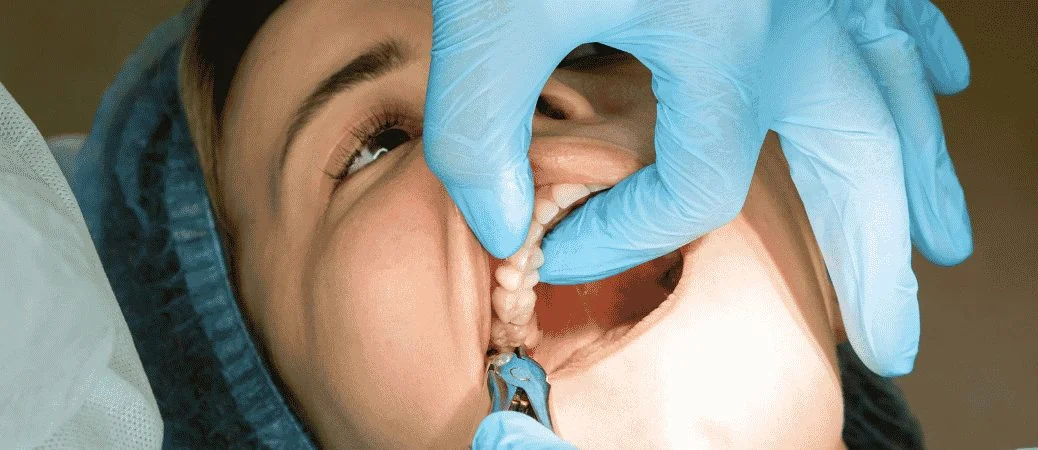
No single wisdom teeth removal age is right for everyone, and the decision comes down to your own roots, bone, and symptoms rather than a deadline.
A simple tooth at 45 can be easier to remove than an impacted one at 25, so comparing your case to a friend’s experience at a different age rarely tells you much.
The most useful step at any age is a current exam with imaging, so your dentist can tell you plainly whether your tooth is a good candidate for monitoring or removal.
If you are unsure where you stand, the team at Southtowns Dental can review your x-rays and walk you through what your specific anatomy suggests.
Frequently Asked Questions
Is 25 too old for wisdom teeth removal?
No, 25 is not too old for wisdom teeth removal. Roots are usually fully formed by this age, which can make the procedure a bit more involved than in your teens, but most people in their mid-twenties still have a manageable recovery.
Is it a good idea to get wisdom teeth removed at 35?
Removal at 35 can be a good idea if your tooth is impacted, causing pain, or showing signs of decay or gum disease.
If your dentist’s imaging shows a healthy, well-positioned tooth, monitoring instead of removing it is often reasonable too.
Should I remove my wisdom teeth at 45 if they do not hurt?
Not necessarily. A painless wisdom tooth at 45 can often stay in place if it is fully erupted, easy to clean, and free of decay or gum disease on exam, though your dentist will also check for hidden issues like cysts before confirming that monitoring is safe.
Does waiting until your 40s increase the risk of nerve damage?
Roots can grow closer to the inferior alveolar nerve over time, which may raise the risk of temporary numbness in the lip or chin after surgery.
Imaging before extraction helps your surgeon see this risk clearly and adjust the surgical plan rather than leaving it to chance.
Why might a dentist recommend monitoring instead of removing wisdom teeth?
A dentist may recommend monitoring when a wisdom tooth is fully erupted, properly positioned, and free of pain, decay, or gum disease.
Regular checkups with dental x-rays let your dentist catch any changes early, so watching the tooth carefully can be just as protective as removing it.