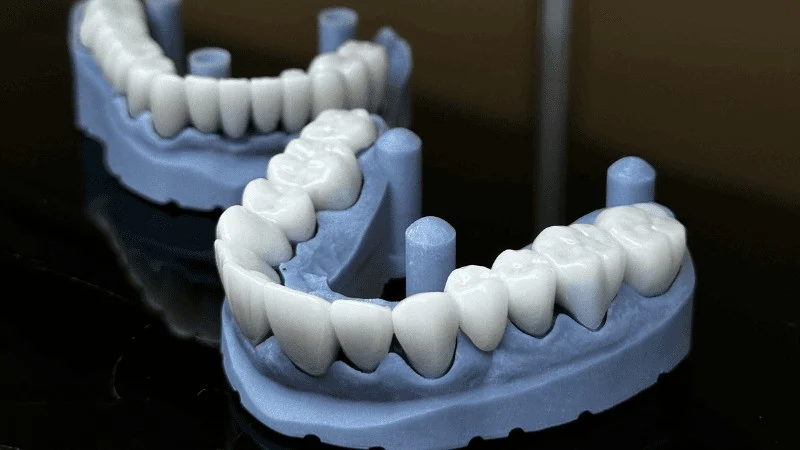
Losing one tooth feels different from losing several. When a single gap appears, the question is usually straightforward.
When you’re missing three, five, or most of a jaw, the choices multiply, and so does the pressure to pick something you’ll live with for decades.
When comparing single tooth implant vs full arch dental implants, the guiding principle is simple: replace what’s missing with the smallest reliable solution that protects the healthy teeth you still have.
A single missing tooth with sound neighbors calls for one implant and one crown. Several missing teeth in a row often point toward an implant-supported bridge, which uses fewer implants than teeth.
Most or all teeth gone in one jaw is where full-arch dental implants earn their place.
Tooth loss also changes the bone underneath. The ridge that once held a tooth root begins to shrink once that root is gone, and the longer a gap sits empty, the more that affects your tooth replacement options later.
That’s part of why the conversation about dental implants is about your whole oral health picture, not just the empty space you see in the mirror.
Key Takeaways
- Match the size of the treatment to the size of the problem, and protect healthy neighboring teeth whenever you can.
- An implant-supported bridge is the middle path many people never hear about, using two implants to replace three or four teeth.
- Bone volume, the location of the gap, and the outlook for your remaining teeth drive the plan more than the number of missing teeth alone.
Table of Content
- When a Single Implant, Bridge, or Full Arch Makes Sense
- How Each Implant Restoration Works
- What Determines the Right Treatment Plan?
- Comparing Surgery, Recovery, Cost, and Long-Term Care
- Choose the Smallest Reliable Solution for Your Smile
- Frequently Asked Questions
When a Single Implant, Bridge, or Full Arch Makes Sense
The right restoration depends on how many teeth are gone, where they sit, and whether the teeth you still have are worth keeping.
A useful rule of thumb: single implants for isolated gaps, an implant-supported bridge for two to four teeth in a row, and full-arch treatment when a jaw has little left to build on.
Here’s how the three approaches compare on the points that shape your decision.
| Single-tooth implant | Implant-supported bridge | Full-arch restoration | |
| Teeth replaced | 1 | 2 to 4 in a row | Most or all in a jaw |
| Implants used | 1 per tooth | Typically 2 | Often 4 to 6 per arch |
| Neighboring teeth touched? | No | No | Not applicable |
| Removable by you? | No | No | Depends on design |
| Planning complexity | Low | Moderate | High |
One Missing Tooth With Healthy Neighboring Teeth
One implant and one crown is the cleanest fix when the teeth on either side are healthy. The implant stands on its own, so your neighboring teeth stay untouched.
That’s the real advantage over a traditional bridge, which requires filing down two healthy teeth to serve as anchors.
If you’re weighing that trade-off, this side-by-side look at dental implants vs a dental bridge walks through what each option asks of the teeth around the gap.
Scattered gaps count here too. Missing a molar on the lower right and a premolar on the upper left? Those are two separate small cases, each treated on its own.
Several Missing Teeth in One Area
When three or four teeth are missing side by side, an implant-supported bridge often makes more sense than an implant for every tooth.
Depending on the treatment plan, two well-placed implants may support a bridge that replaces several adjacent teeth.
The implants share the chewing load, which is why you don’t need a one-to-one match. Fewer surgical sites means less healing time and lower cost than individual implants across the same span.
This middle option gets skipped in a lot of conversations that jump straight from one implant to All-on-4. Ask about it directly if you have a run of adjacent gaps.
Most or All Teeth Missing in One Jaw
Full-arch dental implants replace an entire upper or lower row using a set of implants that support one connected restoration. Placing an implant for every tooth would be impractical and unnecessary.
Full-arch treatment also suits people who already wear traditional dentures and are tired of the movement, the sore spots, and the food list that keeps getting shorter.
An implant-supported denture snaps onto attachments and holds firm.
When Remaining Teeth May Not Be Worth Saving
Sometimes the teeth still in your mouth are the deciding factor.
Advanced gum disease, deep decay, or fractured roots can leave teeth with a poor long-term outlook, and rebuilding around them means rebuilding on a shaky foundation.
Your dentist will weigh whether saving a tooth buys you real years or just delays a larger decision. A root canal versus extraction discussion often comes up here, tooth by tooth, before any arch-level plan is settled.
How Each Implant Restoration Works
Every implant restoration shares the same foundation: a small post placed in the jawbone that fuses with the bone and then carries something on top.
What changes is how many posts you need and what they hold.

The Parts of a Single-Tooth Implant
A single-tooth implant has three pieces. The implant post goes into the jawbone where the tooth root used to be. A connector called an abutment sits on top.
A custom crown, your artificial tooth, attaches to that.
Between implant placement and the crown comes osseointegration, the healing period when bone grows tightly against the implant surface.
This takes months, not weeks, and it’s what makes the implant stable enough to chew on.
That fused post also transmits chewing pressure into the jawbone, which helps keep bone in that spot from shrinking the way it does under an empty gap.
How an Implant-Supported Bridge Replaces Several Teeth
An implant-supported bridge spans a gap using implants at each end rather than crowned natural teeth.
Two implants anchor a bridge of three or four connected prosthetic teeth, with the middle teeth suspended between them.
The middle teeth, called pontics, rest just above the gum without their own posts underneath. That’s why cleaning under a bridge takes a different tool than regular floss.
Placement follows the same rhythm as a single implant: posts first, healing, then the bridge is attached once integration is confirmed.
How Full-Arch Dental Implants Support a Complete Smile
Full-arch dental implants use a small number of posts, positioned strategically around the arch, to support one restoration that spans the whole jaw.
Angling the back implants forward lets them anchor in denser bone toward the front, which is the idea behind All-on-4 protocols.
Load sharing is the whole point. The implants work as a connected system, so bite forces spread across all of them instead of concentrating on one.
Curious what the finished result looks like once healing is done? This walkthrough of what dental implants look like after healing covers the visual side.
Fixed vs. Removable Implant-Supported Teeth
Full-arch restorations come in two designs. A fixed bridge stays in your mouth and only your dentist removes it.
An implant-supported denture snaps on and off attachments so you can take it out to clean.
Fixed feels most like natural teeth and needs less bulk in the palate. Removable costs less, cleans more easily, and can be simpler to repair or adjust down the road.
Neither one is the automatic choice. Your bone support, bite strength, hand dexterity, and budget all feed into which design your dentist recommends.
What Determines the Right Treatment Plan?
Imaging and bone assessment drive the plan more than the count of missing teeth.
Two people missing the same six teeth can end up with completely different recommendations based on what a 3D scan shows about their jawbone.
How Bone Density and Bone Volume Affect Your Options
Implants need enough bone, in the right place, to hold securely. Bone volume is how much bone you have in height and width; bone density is how solid it is.
Bone loss starts once a tooth root is gone and continues while the gap stays empty. A tooth lost twenty years ago sits in a very different ridge than one lost last spring.
Thin or soft bone doesn’t rule you out. It changes the implant length, the angle, the number of implants, or whether you need to build bone first.
Why the Location of Missing Teeth Matters
Back teeth handle the heavy chewing, so molar sites face bigger bite forces and often need wider implants or more support.
Front teeth carry lighter loads but higher cosmetic stakes, since gum shape and crown color show every time you smile.
The upper jaw brings its own anatomy. Bone up top is softer than the lower jaw, and the sinus cavity sits close above the back teeth.
When Bone Grafting or a Sinus Lift May Be Needed
Bone grafting rebuilds volume at a site that has shrunk, using graft material that your body gradually replaces with its own bone.
It can happen before implant placement or at the same appointment, depending on how much is needed.
A sinus lift creates room in the upper back jaw by gently raising the sinus floor so a longer implant fits. Both procedures add months to the timeline.
Grafting right after an extraction preserves the ridge before it collapses, and this look at bone grafting after tooth extraction explains why the timing helps.
What Happens During an Implant Consultation

A consultation covers your medical history, a clinical exam, and diagnostic imaging that maps bone volume and jaw anatomy in three dimensions.
Your dentist checks gum health, bite alignment, and the outlook for each remaining tooth.
Conditions like uncontrolled diabetes, active infection, heavy smoking, or certain bone medications get reviewed here because they affect healing.
At Southtowns Dental, your implant consultation helps determine which treatment approach fits your needs, from a single implant to a full-arch restoration.
You’ll receive a personalized plan covering the recommended implant count, treatment sequence, timeline, and cost.
If you want to prepare for the conversation, am I a candidate for dental implants is a helpful primer before your consultation.
Comparing Surgery, Recovery, Cost, and Long-Term Care
Surgery for a single implant is a short, focused appointment; full-arch treatment can involve extractions, grafting, and multiple implant placements in one longer visit.
Recovery, cost, and daily cleaning scale with the scope of the work.
What to Expect From Dental Implant Surgery
Implant surgery happens with local anesthesia, often with sedation available if you’d prefer it.
A single implant placement may take about an hour, although treatment time varies based on the implant site and whether additional procedures are needed.
Soreness and swelling for a few days is normal, managed with ice and over-the-counter pain relievers for most people. Soft foods for a week or two protect the site.
The prep matters as much as the day itself. Learning how a dentist prepares for dental implant surgery can help you understand what happens before the procedure.
After surgery, reviewing dental implant recovery timelines can give you a better idea of healing stages and how much time you may need before returning to your normal routine.
Can You Receive Temporary Teeth During Treatment?
Often, yes. You won’t be sent home without teeth in a visible spot. A single front-tooth implant usually gets a temporary crown or a small removable appliance while the post heals.
Full-arch patients frequently receive a temporary set of teeth attached the same day, sometimes called immediate function or teeth in a day.
This depends on how firmly the implants seat at placement.
Temporary teeth come with soft-food rules. Following them protects the healing implants underneath.
Why Full-Arch Treatment Usually Requires More Planning
Full-arch work reconstructs your whole bite, so the planning goes deeper than site preparation.
Your dentist maps tooth position, lip support, midline, and how your jaws come together before a single implant goes in.
Extractions of failing teeth, ridge reshaping, and grafting may all happen in the same surgical session. That means more chair time, more follow-up visits, and a higher cost than a single-tooth case.
Expect several appointments between surgery and the final restoration, with adjustments along the way.
How Oral Hygiene Differs for Crowns, Bridges, and Full Arches
A single implant crown gets brushed and flossed like a natural tooth. Straightforward.
An implant-supported bridge needs a floss threader, a water flosser, or interdental brushes to clean beneath the pontics where regular floss can’t reach.
A fixed full-arch restoration requires cleaning underneath the whole prosthesis daily, and your dental team will show you the specific tools.
Removable implant-supported dentures come out for brushing, which many people find easiest.
Whichever you have, the gum and bone around the implants need regular professional monitoring, since inflammation can develop around implants the same way it does around teeth.
Choose the Smallest Reliable Solution for Your Smile

Matching the treatment to the actual problem protects the teeth you still have and keeps future options open. One healthy gap deserves one implant.
A run of three or four missing teeth points toward an implant-supported bridge before you consider anything larger. An arch with failing or absent teeth is where full-arch dental implants do work nothing smaller can.
What tips the decision is rarely the number of missing teeth by itself.
Bone volume, the position of the gaps, your bite, and the honest outlook for your remaining teeth all shape the plan, and those come out of imaging and an exam.
Bring your questions to that appointment. Ask what happens to each remaining tooth in the plan, what the timeline looks like if grafting is needed, and how you’ll clean whatever gets built.
Frequently Asked Questions
Is a single tooth implant worth it if I have healthy teeth around the gap?
Yes, and the healthy neighbors are exactly why. A single tooth implant stands on its own without filing down the teeth on either side, which a traditional bridge requires.
It also puts chewing pressure back into the jawbone at that spot, helping slow the bone shrinkage that follows tooth loss.
What is the most affordable way to replace two or three missing teeth?
An implant-supported bridge may be more cost-effective than placing an individual implant for every missing tooth because fewer implants may be needed.
Your dentist will confirm whether your bone supports the bridge design.
How many implants are needed for a full arch of teeth?
Full-arch restorations may be supported by four, six, or another number of implants depending on bone quality, anatomy, bite forces, and the planned restoration.
The upper jaw often needs more support than the lower because its bone is softer. Nobody should quote you a number before reviewing a 3D scan.
Can All-on-4 work if I have bone loss?
Often yes, because All-on-4 uses strategically positioned implants, including angled posterior implants, which may help make use of available bone and reduce the need for additional grafting in some patients.
The scan will show whether the available bone supports the approach.
What is the difference between single-arch and double-arch implants?
Single-arch treatment restores one jaw, upper or lower; double-arch restores both. Costs and surgical time roughly double for a full mouth, and your dentist plans the two arches together so the bite fits properly.
Some people restore one arch first and address the other later.
Am I too old for dental implant surgery?
Age alone does not necessarily rule out dental implant treatment.
Overall health, healing capacity, bone quality, medications, and controlled medical conditions are generally more important considerations when determining candidacy.