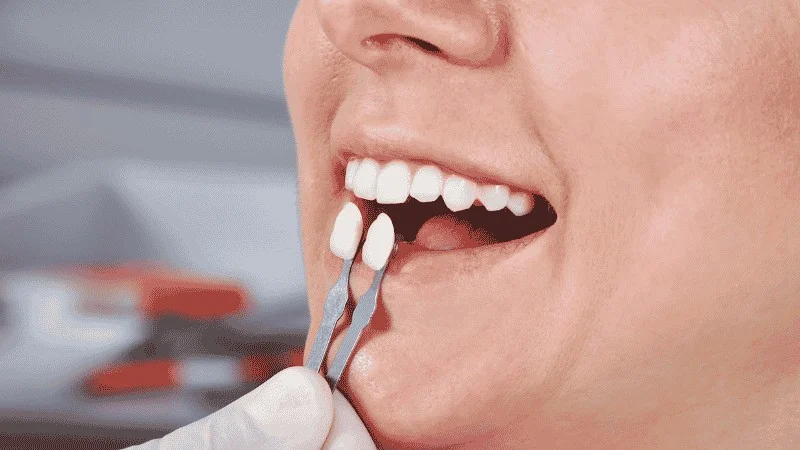
You want a straighter smile, but you also juggle work, family, and daily life. Invisalign and traditional braces both fix crooked teeth, gaps, and bite issues, yet they fit into your routine in very different ways.
Choosing the right option can shape your comfort, appearance, and results for years.
Invisalign works best if you want a discreet, removable option and can wear clear aligners 20–22 hours a day, while traditional braces often handle more complex tooth and bite problems with steady, fixed control.
Adult orthodontics gives you real choices, but each path comes with trade‑offs in cost, treatment time, and daily care.
Before you commit, you need clear facts about how each system works, what results you can expect, and how each option affects your everyday life. A smart choice now can lead to a smooth smile transformation without added stress.
Key Takeaways
- Clear aligners offer a discreet, removable option but require daily discipline.
- Traditional braces stay fixed in place and often treat complex cases more precisely.
- Your lifestyle, budget, and dental needs should guide your final choice.
Compare invisalign vs traditional braces and find the best option for your smile goals.
Table of Content
- How Invisalign and Traditional Braces Work
- Effectiveness for Adult Orthodontic Issues
- Comfort, Appearance, and Daily Life
- Treatment Timeline, Cost, and Long-Term Results
- Choosing the Right Option for Your Adult Smile
- Frequently Asked Questions
How Invisalign and Traditional Braces Work
Both Invisalign and traditional braces move your teeth by applying steady, controlled pressure over time.
The main differences come down to the type of appliance used, how your treatment plan is built, and how closely your orthodontist monitors each step.
Overview of Clear Aligners and Braces
Invisalign uses clear aligners made from smooth plastic. You wear each set of Invisalign aligners for about one to two weeks before switching to the next set. Each tray shifts your teeth a small amount.
You remove the aligners when you eat, drink anything other than water, brush, and floss. This makes aligner treatment flexible, but it also means you must wear them 20 to 22 hours a day for results.
Traditional braces use fixed appliances that stay on your teeth. Metal braces attach small brackets to each tooth and connect them with wires. The wires apply pressure and guide your teeth into better alignment.
Unlike aligners, you cannot remove braces on your own. They work all day without relying on your memory or habits.
Both options aim to correct crowding, gaps, overbites, and underbites.
Treatment Planning and Appliances
Your orthodontic treatment starts with a detailed exam. Your orthodontist takes digital scans, X-rays, and photos to map out your teeth and jaw.
With Invisalign treatment, the scans create a 3D model of your mouth. The software shows how each set of Invisalign aligners will move your teeth step by step. You receive several trays at once and change them at home as directed.
Traditional braces follow a different path. Your orthodontist bonds brackets and wires to your teeth and adjusts them during office visits. These adjustments tighten the wire or change its shape to guide movement.
Here is a quick comparison:
| Feature | Invisalign | Traditional Braces |
| Appliance type | Removable clear trays | Fixed metal brackets and wires |
| Adjustments | New trays every 1–2 weeks | Wire tightening in office |
| Visibility | Nearly invisible | Noticeable metal braces |
Both systems use steady force to shift teeth safely.
Role of the Orthodontist

Your orthodontist plays a central role in both options. They diagnose your bite issues, design your treatment plan, and track your progress.
With aligner treatment, your orthodontist checks that your teeth move as planned. If teeth do not track properly, they may add small tooth-colored attachments or revise your trays.
With traditional braces, your orthodontist adjusts wires and may add rubber bands to correct your bite. These changes help fine-tune tooth position and jaw alignment.
Regular visits matter with either choice. Adults often prefer fewer emergencies, and clear aligners usually have fewer broken parts than fixed appliances.
In both cases, your results depend on careful planning and your commitment to follow instructions.
Schedule your visit in Buffalo NY to discuss invisalign vs traditional braces.

Effectiveness for Adult Orthodontic Issues
Both Invisalign and traditional braces can straighten your teeth and improve your bite. The right choice depends on how much movement you need and how complex your case is.
Treating Crowded Teeth and Spacing
If you have crowded teeth or small gaps, both options can work well. Dentists often use braces for moderate to severe crowding because they allow steady and precise control of tooth movement.
Metal brackets and wires stay fixed to your teeth. That steady pressure helps move teeth that overlap or sit at sharp angles. Braces also work well for rotated teeth, which can be harder to correct with removable trays.
Invisalign can treat mild to moderate spacing and crowding. You wear clear trays that shift your teeth step by step. You must wear them 20 to 22 hours a day for them to work as planned.
Braces often handle more difficult alignment problems. If your teeth overlap heavily or twist in place, braces may give you more predictable control.
Correcting Overbite, Underbite, and Malocclusion
Bite issues like overbite, underbite, and other forms of malocclusion often require more than simple straightening. You may need vertical movement, rotation, and changes in how your upper and lower teeth meet.
Braces allow your orthodontist to adjust wires and add rubber bands. These tools help guide your jaw and teeth into better alignment. They work well for moderate to severe bite correction.
Invisalign can treat mild to moderate bite issues. Clear aligners can include small attachments on your teeth to improve grip and control. For some adults with minor overbite or spacing problems, this approach works well.
However, aligners may have limits with larger jaw differences or complex bite correction. If your bite problem affects how you chew or speak, braces may provide stronger and more consistent force.
Suitability for Complex and Severe Cases
When you face severe crowding, large gaps, or major jaw misalignment, case complexity becomes the key factor. Complex tooth movement often includes vertical shifts, large rotations, or pulling teeth into new positions.
Traditional braces give your orthodontist direct control over each tooth. They can tighten wires, change brackets, and adjust force at each visit. This level of control makes braces a common choice for severe cases.
Invisalign continues to improve and can handle more cases than before. Many adults choose it for comfort and appearance. Still, in very complex cases, your orthodontist may recommend braces for more reliable results.
If your treatment plan includes extractions, major bite correction, or large tooth movements, ask how each system will manage those steps. The answer often determines which option fits your specific needs.
Contact our team in Lackawanna NY to learn which orthodontic option fits your needs.
Comfort, Appearance, and Daily Life
When you choose between Invisalign and traditional braces, you feel the difference every day. Comfort, visibility, and how treatment fits into your routine can matter as much as the final results.
Aesthetics and Visibility
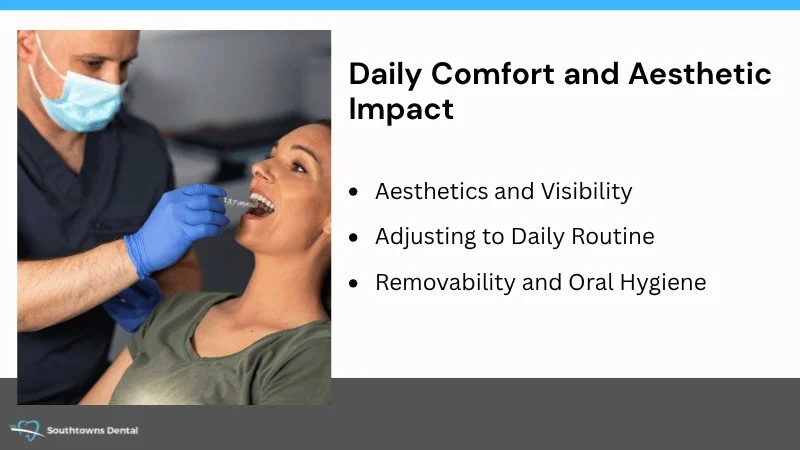
If appearance matters to you at work or in social settings, clear aligner therapy often feels less noticeable. Many adults choose aligners because they act like invisible braces.
The clear plastic trays sit snug against your teeth and do not use metal brackets or wires.
Traditional fixed braces use metal brackets and wires that show when you smile or talk. Some adults prefer ceramic braces, which use tooth-colored or clear ceramic brackets. These blend in better but still remain visible up close.
You may also hear about lingual braces, which attach behind your teeth. They hide from view, but they can feel bulky against your tongue and may cost more.
Adjusting to Daily Routine
Both options change your daily routine, but in different ways.
With fixed braces, you cannot remove the brackets. You may feel soreness after adjustments, and the wires can irritate your cheeks at first. Your orthodontist can give you wax to reduce rubbing.
Clear aligners also cause pressure when you switch to a new set, usually every one to two weeks. The trays feel tight for a few days, then the pressure fades.
You must wear aligners 20 to 22 hours a day for Invisalign for adults to work as planned. That means planning around meals, coffee breaks, and snacks.
If you travel often or have long workdays, you need to stay organized so you do not miss wear time.
Removability and Oral Hygiene
Removability plays a big role in comfort and cleanliness.
With Invisalign, you remove the trays to eat and drink anything besides water. You brush and floss as usual, then place the aligners back in. This makes it easier to maintain gum health and avoid stains.
Fixed braces require more effort. Food can get trapped around metal or ceramic brackets. You may need special tools, such as an interdental brush, to clean between wires and teeth.
You also need to avoid sticky or hard foods that can damage brackets. Clear aligners do not have food restrictions, but you must clean the trays daily to prevent odor and buildup.
Your choice affects not just how your smile looks, but how you manage meals, cleaning, and comfort every single day.
Treatment Timeline, Cost, and Long-Term Results
You want clear facts about how long treatment takes, what you will pay, and how you keep your straight teeth after it ends. These details often matter as much as comfort or appearance.
Time Commitment and Treatment Duration
Your treatment timeline depends on how complex your case is and how closely you follow instructions.
Most adults wear braces or Invisalign for about 12 to 24 months. Severe crowding or bite problems can take longer. Traditional braces often work better for complex tooth movement, especially when teeth need large rotations or vertical shifts.
With Invisalign, you must wear aligners 20 to 22 hours a day. If you forget or remove them too often, you can extend your treatment duration. Braces stay on your teeth, so they work full time without daily decisions.
You will also visit your orthodontist every 4 to 8 weeks. Invisalign requires switching to a new set of trays every 1 to 2 weeks, which adds responsibility but not extra office time in most cases.
Cost Comparison and Payment Options
Invisalign cost and braces cost often fall in a similar range, but your final price depends on your case and location.
Many adults pay between $3,000 and $8,000 for Invisalign and about $3,000 to $7,000 for traditional braces. Complex cases cost more because they require longer treatment and more adjustments.
Dental insurance may cover part of your orthodontic care, often up to a lifetime maximum. You can also use:
- Monthly payment plans
- Health savings accounts (HSA)
- Flexible spending accounts (FSA)
Ask for a written estimate that lists exam fees, adjustments, retainers, and any replacement aligners. This helps you avoid surprise costs during your smile transformation.
Retainer Wear and Maintaining Results
Your treatment does not end when your braces come off or when you finish your last aligner. You must wear a retainer to keep your teeth in place.
Teeth can shift back without consistent retainer wear. Most orthodontists tell you to wear retainers full time for several months, then switch to nighttime wear long term.
Some adults need lifetime nighttime retainer use to protect their results.
You may choose a clear plastic retainer or a fixed wire bonded behind your teeth. Clear retainers look discreet but can crack or warp. Fixed retainers stay in place, but you must clean around them carefully.
Consistent retainer wear protects your straight teeth and keeps your smile transformation stable for years.
Choosing the Right Option for Your Adult Smile
You need a treatment that fits your schedule, budget, and dental needs. When you compare Invisalign vs braces, focus on how each option works in real adult life, not just how it looks.
Factors to Consider for Adults
Adults often choose treatment based on work, family, and social life. Clear aligners stay discreet, while metal braces remain visible.
Think about these key factors:
- Complex tooth movement: Braces for adults often handle severe crowding, large gaps, and bite problems better.
- Daily discipline: Invisalign must stay in your mouth 20–22 hours a day.
- Oral hygiene: You remove aligners to brush and floss. Braces require more careful cleaning around brackets and wires.
- Food limits: Braces mean avoiding sticky and hard foods. Aligners let you eat normally after you remove them.
If you are deciding between Invisalign or braces, be honest about your habits. Skipping aligner wear slows progress.
Consulting With an Orthodontist

A licensed orthodontist should evaluate your teeth before you choose braces vs Invisalign. X‑rays, photos, and digital scans help them see how your teeth and jaw line up.
In adult orthodontics, no two cases look the same. Some adults qualify for clear aligners, while others need fixed braces for better control.
The University of Iowa notes that traditional braces often correct complex tooth movement more precisely, especially rotations and vertical shifts.
Ask clear questions during your visit:
- How long will treatment take?
- What results can you expect?
- What will adjustments involve?
- What happens if you do not wear aligners as directed?
Your orthodontist can map out a plan that matches your dental needs and daily routine.
Frequently Asked Questions
Adults often compare treatment time, cost, comfort, and how well each option handles complex tooth movement. You also need to think about daily habits, appearance at work, and what kind of results you can expect.
Which option usually works faster for adults: clear aligners or braces?
Treatment time depends on how much your teeth need to move.
Many adults finish clear aligner treatment in about 12 to 18 months, while braces often take 18 months to 3 years.
If your case is mild, clear aligners may move your teeth a bit faster. If your case is complex, braces may work more efficiently because they control tooth movement more precisely.
What are the biggest pros and cons of clear aligners compared with braces?
Clear aligners are nearly invisible, and you can remove them to eat and brush. Many adults like this flexibility at work and social events.
However, you must wear them 20 to 22 hours each day. If you forget or remove them too often, your treatment can take longer.
Braces stay on your teeth at all times, so you do not have to remember to wear them. They are more visible, and cleaning around brackets and wires takes more effort.
Which is more effective for more complex or severe teeth alignment issues?
Braces often work better for severe crowding, large gaps, and major bite problems. They allow your orthodontist to move teeth vertically and rotate them with more control.
Clear aligners work well for mild to moderate issues. In complex cases, they may not provide enough force or precision.
If your teeth need major movement, your orthodontist may recommend braces first. Some adults even switch to braces if aligners do not correct the problem as planned.
How much does each option typically cost, and what affects the final price?
Costs vary based on where you live, how long treatment lasts, and how complex your case is.
Clear aligners and braces often fall into a similar price range, but longer treatment and added procedures increase the total. Insurance coverage can lower your out-of-pocket cost.
What do adults need to know about comfort, eating, and daily maintenance for each option?
Clear aligners feel smooth because they have no brackets or wires. You may feel pressure when you switch to a new set, but it usually fades in a few days.
You remove aligners to eat, so you can keep your normal diet. You must brush before putting them back in to avoid trapping food and plaque.
Braces can cause soreness after adjustments. You also need to avoid hard or sticky foods that can break wires or brackets. Cleaning takes more time because you must floss around the hardware.
How noticeable are the results before and after treatment, and what can I realistically expect?
Clear aligners are hard to notice during treatment, which many adults prefer in professional settings. Braces are more visible, even with tooth-colored options.
Both methods can straighten teeth and improve your bite when you follow instructions. Your final results depend on how closely you follow your orthodontist’s plan and whether you wear your retainer after treatment.