If you have gum disease, you may worry about scalpels, stitches, and long healing times. Laser dentistry offers a different option that feels less invasive and more precise.
It uses focused light energy to remove infected tissue and bacteria from around your teeth.
Yes, laser dentistry can treat gum disease without traditional surgery in many mild to moderate cases, but severe periodontal disease may still require surgical care.
Dentists often use laser therapy as a non-surgical approach, and research shows it can achieve results similar to scaling and root planing alone.
Some offices also offer advanced options like LANAP laser gum therapy that target infected gum tissue while helping support healing.
You still need a full exam to know what fits your condition, but laser gum disease treatment may reduce discomfort and shorten recovery compared to traditional surgery.
Key Takeaways
- Laser dentistry can treat many cases of gum disease without traditional cutting and stitches.
- Dentists use focused light energy to remove infected tissue and bacteria around teeth.
- Severe periodontal disease may still require surgical treatment.
Table of Content
- How Laser Dentistry Targets Gum Disease
- The LANAP Protocol and Other Laser Treatments
- Benefits and Considerations of Laser Gum Therapy
- What to Expect Before, During, and After Treatment
- Cost, Accessibility, and Choosing a Provider
- Frequently Asked Questions
How Laser Dentistry Targets Gum Disease
Laser dentistry treats gum disease by aiming focused light energy at infected tissue inside your gums.
The dental laser removes bacteria, reduces swelling, and helps your gums reattach to your teeth with less cutting than traditional surgery.
Understanding Periodontal Pockets and Gum Health
When you have gum disease, plaque and bacteria collect under your gum line. This infection causes your gums to pull away from your teeth and form small gaps called periodontal pockets.
Healthy gums fit snugly against your teeth. But as pockets deepen, they trap more bacteria. This makes gum health worse and can lead to bone loss if you do not treat it.
Laser gum treatment targets the infected lining inside these pockets. The laser removes diseased tissue while leaving more healthy tissue in place. It also reduces bacteria in the area.
Because the dental laser works with focused light, your dentist can clean deeper areas without making large cuts. This helps control infection and supports healing inside the pockets.
Types of Dental Lasers Used in Treatment
Dentists use different tools in laser dentistry depending on your needs. Each dental laser works at a specific wavelength and treats certain types of tissue.
Common lasers for gum disease include:
- Diode laser – Often used for soft tissue procedures. It targets bacteria and infected gum tissue.
- CO2 lasers – Used to remove diseased tissue with strong precision and control.
Some practices also use systems designed for laser periodontal therapy, which focus on treating moderate to advanced gum disease with less trauma than traditional surgery.
Your dentist chooses the type of laser based on the depth of your periodontal pockets and the severity of infection.
Differences Between Soft Tissue Lasers and Hard Tissue Lasers
Not all lasers work the same way. Soft tissue lasers and hard tissue lasers target different parts of your mouth.
Soft tissue lasers treat your gums. Dentists use them to remove infected gum tissue, reshape the gum line, and disinfect periodontal pockets. Diode laser systems fall into this group.
Hard tissue lasers, on the other hand, work on teeth or bone. Dentists use them to treat cavities or shape bone during certain procedures.
For gum disease, soft tissue lasers play the main role. They focus on infected gums while limiting damage to nearby healthy tissue.
Many patients choose this approach because it offers a less invasive option than traditional surgery..
By using the right type of dental laser, your dentist can target infection more precisely and protect as much healthy tissue as possible.
The LANAP Protocol and Other Laser Treatments
Laser dentistry gives you a way to treat gum disease without a scalpel or stitches.
Some options focus on removing infected tissue, while others aim to help your gums and bone reattach to the tooth.
Laser-Assisted New Attachment Procedure (LANAP)
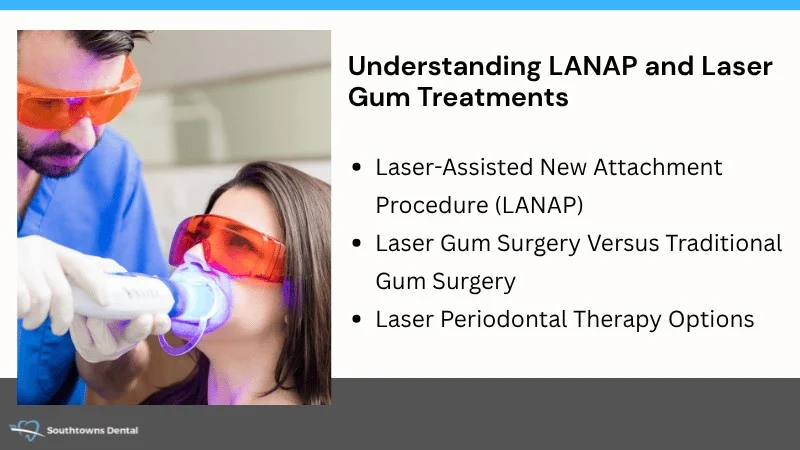
The Laser-Assisted New Attachment Procedure (LANAP) is a specific treatment for gum disease that uses the PerioLase® MVP-7™ laser.
The LANAP protocol has FDA clearance for true periodontal regeneration, which means it can support new bone and connective tissue attachment in certain cases.
During LANAP gum surgery, your periodontist places a thin laser fiber between your tooth and gum. The LANAP laser targets infected tissue and bacteria while leaving healthy tissue in place.
After the laser removes diseased tissue, your provider cleans the root surface with special tools. The laser then helps form a stable clot that seals the area and supports healing.
You do not receive stitches. Many patients report less swelling and a faster return to normal activity compared to traditional surgery.
A periodontal specialist may recommend LANAP if you have moderate to severe periodontitis with deep pockets.
Laser Gum Surgery Versus Traditional Gum Surgery
Traditional gum surgery often requires cutting the gums, folding them back, cleaning the roots, and placing stitches. Healing can take weeks, and you may need more downtime.
Laser gum surgery uses focused light energy instead of a scalpel. With treatments like LANAP gum laser surgery, your provider removes infected tissue through the gum pocket without large incisions.
Here is a simple comparison:
| Feature | LANAP / Laser Gum Surgery | Traditional Gum Surgery |
| Cutting of gums | No scalpel | Yes |
| Stitches | Not usually needed | Usually required |
| Healing time | Often shorter | Often longer |
| Tissue removal | Targets diseased tissue | May remove some healthy tissue |
Not every case qualifies for laser treatment for gum disease. If you have severe bone loss or complex defects, your periodontist may still suggest conventional surgery or bone grafting.
Laser Periodontal Therapy Options
LANAP is one type of laser periodontal therapy, but it is not the only one. Some dental offices offer other laser treatments to reduce bacteria and inflamed tissue in gum pockets.
For example, some providers use lasers to disinfect pockets after deep cleaning. Others combine laser therapy with scaling and root planing to improve results.
Costs for LANAP can be similar to traditional gum surgery, depending on your case and location.
When you meet with a periodontal specialist, ask:
- What type of laser do you use?
- Do you offer the full LANAP protocol?
- Am I a good candidate for laser gum surgery?
Clear answers help you choose the right treatment for gum disease based on your needs and oral health goals.
Benefits and Considerations of Laser Gum Therapy
Laser gum therapy offers a minimally invasive way to treat infected gum tissue while supporting healthy gums.
You may notice less pain, shorter recovery time, and less bleeding compared to traditional surgery, but results depend on the stage of your gum disease.
Faster Recovery and Reduced Discomfort
Laser therapy targets infected tissue without cutting large areas of your gums. This approach often leads to less swelling, less bleeding, and less pain after treatment.
Many patients return to normal routines within a day or two. Traditional gum surgery may require a longer recovery time, especially if stitches are placed.
In comparison, laser periodontal therapy recovery time is often shorter because the laser seals blood vessels as it works.
You may still feel mild soreness for a few days. Your dentist may suggest soft foods and gentle brushing while your gums heal.
Because the treatment is minimally invasive, it can feel more manageable if you feel anxious about dental procedures.
Precision and Gum Tissue Preservation
Lasers focus on diseased tissue while leaving more healthy gums in place. This precision helps reduce damage to nearby areas.
During treatment, the laser removes bacteria and infected tissue from gum pockets. It can also help reshape your gum line when needed.
Gum laser treatment allows your dentist to work in tight spaces with control and accuracy, as described in this guide on gum laser treatment benefits and what to expect.
By preserving more of your natural tissue, you may see improved healing. Healthier tissue can reattach to the tooth surface after deep cleaning such as scaling and root planing.
This targeted approach may also help reduce bad breath linked to bacteria trapped below the gum line.
Limitations for Advanced Gum Disease
Laser therapy does not replace every form of gum surgery. If you have advanced gum disease with deep pockets or bone loss, you may still need traditional procedures.
Severe periodontitis can damage the bone that supports your teeth. When bone loss becomes significant, your dentist may recommend grafting or other surgical steps to prevent tooth loss.
Laser treatment can reduce bacteria and inflammation, but it cannot rebuild lost bone on its own. You should ask your dentist how much bone support remains around your teeth before choosing this option.
Risks and Who Is a Good Candidate
Laser gum therapy is generally safe when a trained dental professional performs it. Still, you need a detailed dental checkup to confirm you are a good candidate.
You may benefit most if you have:
- Bleeding gums
- Moderate gum pockets
- Ongoing inflammation after scaling and root planing
- Early to moderate gum disease
People with uncontrolled diabetes, heavy smoking habits, or very advanced gum disease may see limited results.
Laser therapy may also cost more than traditional deep cleaning. Strong oral hygiene habits remain essential.
Brushing, flossing, and regular cleanings help protect your results and support long-term gum health.
What to Expect Before, During, and After Treatment
You will go through a clear plan that starts with a detailed exam, continues with laser treatment under local anesthesia, and ends with careful healing and follow-up care.
Each step focuses on reducing infection, shrinking gum pockets, and helping your gums reattach to your teeth.
Initial Consultation and Periodontal Assessment
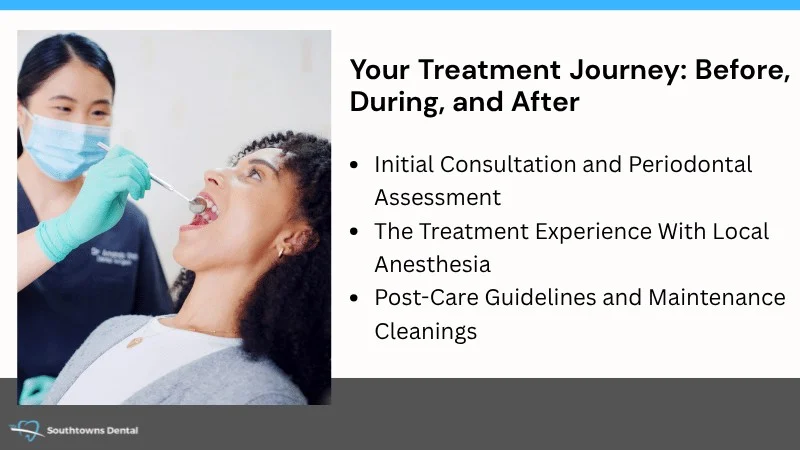
Your visit begins with a full periodontal assessment. Your dentist or periodontist measures the depth of your gum pockets using a small probe and checks for bleeding, bone loss, and loose teeth.
They may take digital X-rays to see how much support your teeth have lost. This helps them decide if you qualify for laser periodontal treatment instead of traditional surgery.
During this visit, you will review your health history. Conditions like diabetes or smoking can affect healing and recovery time.
If laser therapy is recommended, your provider will explain how it works. You will also receive instructions on how to prepare. This may include eating a light meal and taking prescribed medication if advised.
The Treatment Experience With Local Anesthesia
On the day of treatment, your provider numbs the area with local anesthesia. You stay awake, but you should not feel pain.
The dentist uses a small laser tip to remove infected gum tissue from inside the pockets. The laser also helps reduce bacteria and clean the area around the tooth root.
After that, they perform scaling and root planing to remove tartar buildup. This step smooths the root surface and supports gum reattachment.
Laser therapy is less invasive than flap surgery. Many patients choose it because of shorter healing periods and less swelling. Most visits last one to two hours, depending on how many areas need care.
Post-Care Guidelines and Maintenance Cleanings
Your recovery time usually ranges from a few days to about two weeks. Mild soreness, light swelling, or gum color changes can happen during this time.
Follow your post-op care guidelines closely. These often include:
- Eating soft foods for several days
- Avoiding hot, spicy, or crunchy foods
- Rinsing with a prescribed mouthwash
- Brushing gently around treated areas
These post-care guidelines protect the healing tissue and lower your risk of reinfection.
As your gums heal, they tighten around your teeth. This supports gum reattachment and reduces pocket depth.
You will also need regular maintenance cleanings, often every three to four months. These visits help control bacteria and protect the results of your periodontal treatment.
Cost, Accessibility, and Choosing a Provider
You need clear facts about price, insurance, and who should perform laser gum treatment. The right provider and setting can affect both your results and your total cost.
Cost of Laser Gum Treatment and Insurance Considerations
The cost of laser gum treatment depends on how much of your mouth needs care and how severe your gum disease is. Many offices charge by quadrant, and full treatment can reach several thousand dollars.
Some providers report a range of about $1,000 to $4,000 per quadrant, with full-mouth treatment costing much more.
Insurance coverage varies. Some plans cover laser therapy under periodontal surgery, while others label it elective or experimental.
Before you schedule treatment, ask the office to submit a pre-authorization. This step shows what your plan will pay and what you will owe. You should also ask about payment plans if the fee feels high.
Questions to Ask and How to Find a Periodontist
Laser treatment for gum disease falls under periodontics, which focuses on gum and bone health. A periodontist has extra training beyond dental school and often handles moderate to severe cases.
Ask these direct questions:
- Are you trained in LANAP or another laser protocol?
- How many laser gum procedures have you completed?
- What results should I expect based on my pocket depths and bone loss?
- What are the risks and alternatives?
Not every dentist offers advanced dental lasers for gum disease. If your general dentist suggests surgery, ask for a referral or search online to find a periodontist in your area who provides laser options.
Specialty Practices and Cosmetic Dentistry Options

Some specialty offices combine periodontics and cosmetic dentistry in one location. This setup can help if you want both gum disease treatment and cosmetic work.
For example, after infection control, you might consider gum contouring, crown lengthening, or gum reshaping to improve how your smile looks.
Some practices, such as Harlem Dentistry or the Harlem Center for Aesthetic Dentistry, also provide cosmetic services like teeth whitening alongside periodontal care.
Ask whether the provider focuses mainly on disease treatment or also offers cosmetic procedures using dental lasers.
If your main goal is health, choose a provider with strong periodontal training. If you also want aesthetic changes, confirm they have experience with both gum health and cosmetic dentistry techniques.
Frequently Asked Questions
Laser treatment for gum disease focuses on removing infected tissue, reducing bacteria, and helping your gums reattach to your teeth.
You should understand how it works, how it compares to deep cleaning, what it costs, and what recovery looks like before you decide.
How does laser therapy help treat gum disease?
Your dentist uses a dental laser to target and remove infected gum tissue around your tooth roots. The laser also helps kill bacteria inside the gum pockets.
After removing the diseased tissue, your provider often performs deep cleaning to clear away plaque and tartar.
Some treatments, such as laser periodontal therapy for gum disease, combine laser use with scaling and root planing.
The laser can also help form a stable clot in the pocket. This may support healing and allow your gums to tighten around your teeth.
What are the pros and cons of using lasers for gum disease treatment?
Laser treatment often causes less bleeding and swelling than traditional gum surgery. Many people report shorter recovery times and less discomfort.
You usually do not need general anesthesia. The laser can focus on infected tissue while leaving healthy tissue in place.
However, research is still ongoing. Some experts note that lasers have not clearly proven better results than standard care, even though they show promise in certain cases.
How does laser gum treatment compare to deep cleaning (scaling and root planing)?
Scaling and root planing is the standard first step for treating periodontitis. It removes plaque and tartar from below the gumline and smooths the tooth roots.
Laser treatment may be used along with deep cleaning, not always instead of it.
For example, the LANAP laser gum treatment procedure uses a specific laser to remove diseased tissue while preserving healthy gum.
Deep cleaning alone can work well for mild to moderate disease. Laser therapy may be considered when pockets are deeper or when you want a less invasive option than flap surgery.
How much does periodontal laser treatment typically cost?
The cost depends on how severe your gum disease is and how many areas need treatment. Your dentist will usually give you a price after a full exam.
Laser treatment can cost more than standard deep cleaning. Insurance may cover part of the procedure, but coverage varies by plan.
You should contact your insurance company before treatment. Ask about limits, waiting periods, and whether laser procedures are included.
What side effects or risks can happen after laser gum treatment?
You may notice mild swelling, light bleeding, or gum color changes right after the procedure. Some people feel tooth sensitivity or soreness for a few days.
In rare cases, you could develop infection, scarring, or gum tissue changes. Choosing a trained provider lowers these risks.
Laser devices used in dentistry are cleared for treating gum disease, and many clinics describe laser gum treatment benefits and risks as low when performed correctly.
What is the usual healing time and what should I expect before and after laser treatment?
Healing usually takes about one to two weeks. Your exact recovery time depends on how advanced your gum disease is and how your body heals.
Before treatment, your dentist will numb the area with local anesthesia. You should not feel pain during the procedure.
After treatment, you will need to eat soft foods and avoid very hot, spicy, or crunchy items for several days.
Your dentist will give you clear brushing and flossing instructions to protect the treated areas while they heal.