A chipped tooth can make you feel self-conscious every time you smile or talk. The good news is that cosmetic dentistry offers two proven ways to fix it: dental bonding and veneers.
Both treatments can restore your smile, but they work differently and suit different needs.
Dental bonding uses tooth-colored resin applied directly to your tooth in a single visit, while veneers are thin porcelain shells custom-made to cover the front of your teeth and typically require multiple appointments.
Bonding offers a quick and affordable solution for minor chips, but veneers provide longer-lasting results for more noticeable damage.
Understanding which option, veneers vs bonding for a chipped tooth, works best depends on your budget, how much damage you have, and how long you want the fix to last.
Choosing between these two treatments doesn’t have to be confusing.
We’ll walk you through everything you need to know about how each procedure works, what they cost, and which situations call for bonding versus veneers so you can make the right choice for your smile.
Key Takeaways
- Bonding fixes minor chips in one visit using composite resin, while veneers cover more extensive damage with custom porcelain shells
- Veneers last longer and resist stains better than bonding but cost more and require removing some tooth enamel
- Your best choice depends on the severity of your chipped tooth, your budget, and whether you want a quick fix or long-term solution
Table of Content
- Understanding Dental Bonding and Veneers
- Key Differences: Materials, Durability, and Stain Resistance
- Treatment Process: From Tooth Preparation to Final Results
- Best Uses: Repairing Chips, Closing Gaps, and Enhancing Your Smile
- Comparing Cost, Maintenance, and Long-Term Care
- Frequently Asked Questions
Understanding Dental Bonding and Veneers
Dental bonding uses a tooth-colored composite resin applied directly to your tooth surface, while veneers are thin shells that cover the front of your teeth.
Both cosmetic dental procedures can fix chipped teeth, but they differ in materials, application process, and how long they last.
What Is Dental Bonding?
Dental bonding is a minimally invasive cosmetic procedure where your dentist applies composite resin directly to your tooth. The process is quick and straightforward.
Your dentist starts by roughening your tooth and applying a conditioning liquid. They then carefully apply the tooth-colored composite resin and mold it to match your tooth’s natural shape.
A special light cures the material and bonds it to your tooth surface. Finally, your dentist polishes the tooth and makes any needed adjustments.
The entire procedure usually takes one visit. You won’t need multiple appointments or temporary restorations while you wait.
Dental bonding removes almost no tooth enamel, making it one of the gentlest options for fixing small chips, cracks, or discoloration.
How Do Veneers Work?
Dental veneers are thin porcelain shells that your dentist bonds to the front of your teeth. The process requires more steps than bonding but can address bigger problems.
Your dentist removes a thin layer of enamel to create space for the veneer. They then take impressions or scans to custom-fit each veneer to your tooth. You’ll wear a temporary veneer while the permanent one is made in a lab.
At your second visit, your dentist places the permanent veneer and bonds it with special adhesive. The entire process takes two to three visits spread over one to four weeks.
Porcelain veneers can correct more severe discoloration and cover larger chips than bonding can fix.
Types of Veneers: Porcelain vs. Composite
You have two main choices when getting veneers: porcelain veneers or composite veneers.
Porcelain veneers are made from dental-grade ceramic in a lab. They look the most natural because porcelain mimics your tooth’s texture and translucency.
These veneers resist staining better than your natural tooth enamel and typically last longer than composite options.
Composite veneers use the same resin material as dental bonding. Your dentist can often apply them in one visit instead of waiting for lab fabrication. They cost less than porcelain but may stain more easily over time.
Porcelain offers superior durability and a more natural appearance. Composite veneers work well if you want a faster, more affordable option.
Key Differences: Materials, Durability, and Stain Resistance
The materials used in bonding and veneers make a big difference in how long they last and how they look over time.
Composite resin and porcelain each have their own strengths when it comes to durability and keeping your smile bright.
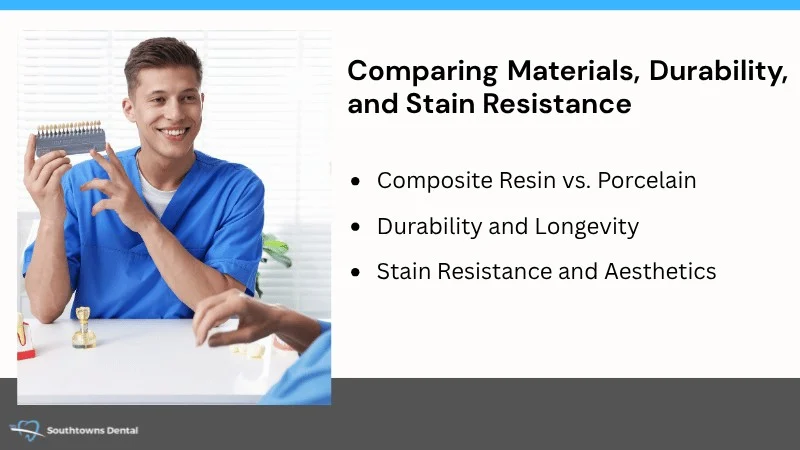
Composite Resin vs. Porcelain
Dental bonding uses composite resin, which is a tooth-colored plastic material that your dentist shapes directly on your tooth.
It’s soft at first, then hardens with a special light. Porcelain veneers are thin shells made in a lab from ceramic material.
The two materials feel and perform differently in your mouth. Composite resin is easier to work with and can be applied in one visit.
Porcelain is harder and stronger than composite resin, similar to the strength of your natural tooth enamel.
Porcelain also reflects light in a way that looks more like real teeth. This makes it better for creating a uniform smile if you’re getting multiple teeth fixed at once.
Durability and Longevity
Bonding typically lasts 3 to 10 years with proper care. Porcelain veneers can last 10 to 20 years or even longer. The difference comes down to how strong each material is.
Composite resin can chip or wear down faster, especially if you bite your nails or chew on hard objects. It may need touch-ups or replacement sooner than veneers.
Porcelain is more resistant to daily wear and tear from chewing and brushing.
Your habits affect how long either option will last. If you grind your teeth at night or eat a lot of hard foods, veneers might be worth the extra investment for better durability.
Stain Resistance and Aesthetics
Composite resin is porous, which means it can absorb stains from coffee, tea, wine, and dark foods over time. You might notice your bonding getting darker after a few years.
Porcelain is non-porous, so it resists staining much better and keeps its color longer.
This difference in stain resistance affects the aesthetics of your smile. Bonding might start to look yellowed or discolored compared to your natural teeth. Porcelain veneers maintain their bright appearance for many years.
If you’re looking for a cosmetic upgrade that stays looking fresh, veneers offer better long-term results. Bonding works well for small fixes but requires more maintenance to keep looking good.

Treatment Process: From Tooth Preparation to Final Results
Bonding takes just one dental visit and needs minimal tooth prep, while veneers require multiple appointments with a dental laboratory creating custom shells between visits.
The main difference is that bonding uses resin applied directly to your tooth, but veneers involve removing enamel and wearing temporary veneers while you wait.
Dental Bonding Procedure Steps
Your cosmetic dentist starts the dental bonding procedure by selecting a resin shade that matches your natural tooth color.
They’ll roughen the surface of your chipped tooth and apply a conditioning liquid to help the material stick properly.
The process takes 30-60 minutes per tooth. Your dentist carefully applies the tooth-colored resin to the damaged area and molds it into the correct shape.
They use a curing light to harden the material and bond it permanently to your tooth surface.
After the resin hardens, your dentist polishes the bonded area and makes final adjustments to match your bite. You leave the office with your repaired tooth the same day since no dental laboratory work is needed.
Veneer Application and Dental Laboratory Involvement
Your first visit includes a consultation where you meet with the right cosmetic dentist to evaluate your chipped tooth, discuss your smile goals, and determine whether veneers are the best treatment.
If so, your cosmetic dentist removes a thin layer of enamel to make room for the custom veneer shell.
Your dentist takes impressions or digital scans of your prepared tooth. The dental laboratory uses these to create custom veneers that match your tooth’s natural shape and color. This process usually takes one to four weeks.
During your second appointment, your dentist removes the temporary veneer and bonds the permanent porcelain shell to your tooth using special adhesive.
They check the fit and make sure it looks natural before you leave.
Tooth Preparation and Temporary Solutions
Tooth preparation for bonding is minimal since your dentist only needs to roughen the surface slightly.
They don’t remove any significant enamel, which makes bonding a reversible option if you want to change treatments later.
Veneers require more extensive tooth preparation because your dentist must remove about 0.5 millimeters of enamel. This creates space for the porcelain shell without making your tooth look bulky or unnatural.
Your dentist places a temporary veneer on your prepared tooth to protect it while the dental laboratory makes your permanent one.
These temporary veneers aren’t as strong as the final product, so you’ll need to be careful with hard or sticky foods during the waiting period.
Best Uses: Repairing Chips, Closing Gaps, and Enhancing Your Smile
Both treatments work well for different dental problems. The size of your chip or gap matters most when choosing between bonding and veneers.
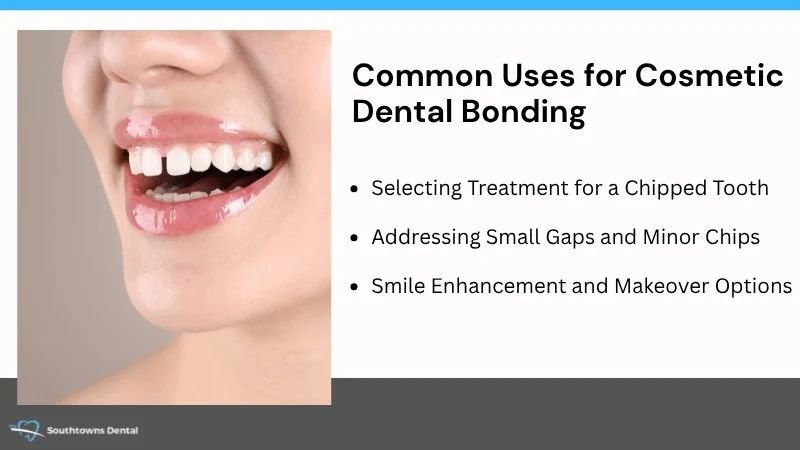
Selecting Treatment for a Chipped Tooth
Bonding works best for small chips that don’t affect much of your tooth. If you chipped a tiny piece off the edge of your tooth or have a small crack, teeth bonding can smooth and fill the damaged area in just one visit.
Your dentist applies a tooth-colored resin directly to the chipped area and shapes it to match your natural tooth.
Veneers make more sense for larger chips or multiple damaged teeth. They cover your entire front tooth surface with a thin porcelain shell.
This option works better when the chip is too big for bonding to look natural or if your tooth has other problems like stains or wear.
Consider these factors for tooth repair:
- Chip size: Minor chips under 2mm do well with bonding
- Location: Front teeth chips show more and may need veneers
- Budget: Bonding costs less upfront
- Timeline: Bonding takes one visit while veneers need 2-3 appointments
Addressing Small Gaps and Minor Chips
Bonding can close gaps between teeth when the space is small. Your dentist adds resin material to the sides of teeth next to the gap, making them slightly wider to close the space. This works well for gaps under 2-3mm wide.
For larger gaps or multiple spacing issues, veneers provide better results. They can change the width and shape of several teeth at once to create an even smile.
Veneers also resist staining better than bonding material, which matters if you drink coffee or wine regularly.
Gap and chip solutions:
- Gaps under 2mm: Tooth bonding
- Gaps over 3mm: Veneers
- Single minor chip: Bonding
- Multiple chips: Veneers
- Temporary fix: Bonding
- Long-term solution: Veneers
Smile Enhancement and Makeover Options
A smile makeover can involve either treatment depending on your goals. Bonding suits you if you want quick improvements before a big event like a wedding or graduation.
It fixes discolored spots, reshapes uneven teeth, and handles minor cosmetic concerns in one appointment.
Veneers create more dramatic smile enhancement when you want to transform your entire smile. They work for moderate to severe discoloration that whitening can’t fix.
You can change the size, shape, and color of multiple teeth to get the exact look you want.
Your smile goals matter:
- Quick touch-up: Choose bonding for fast results
- Complete transformation: Pick veneers for major changes
- Budget-conscious: Start with bonding
- Long-lasting results: Invest in veneers that last 10-15 years
Comparing Cost, Maintenance, and Long-Term Care
Bonding typically costs less upfront but may need replacement every few years, while veneers require a larger initial payment but can last much longer with proper care.
Your choice affects both your wallet now and your maintenance routine for years to come.
Initial Investment and Value
Dental bonding costs less than veneers at the start. You can expect to pay between $100 and $400 per tooth for bonding. This makes it a good option if you need a quick fix for a chipped tooth without spending too much.
Veneers cost more because they’re custom-made from porcelain. The price ranges from $800 to $2,500 per tooth.
While this seems high, veneers offer better stain resistance and a more natural look that matches your other teeth.
Most insurance plans don’t cover these cosmetic dental procedures unless they’re needed for health reasons.
You should check with your insurance before scheduling a dental visit. Some dental offices offer payment plans to help spread out the cost over time.
Longevity and Future Maintenance

Bonding typically lasts 3 to 10 years before needing replacement. The composite resin can chip, crack, or stain over time, especially if you drink coffee or wine regularly.
You might need touch-ups or complete replacement sooner than expected.
Veneers can last 10 to 15 years or even longer with good care. The porcelain material resists stains better than bonding resin. This means fewer repairs and replacements over the years.
When you look at long-term cost, veneers often become the better value. If bonding needs replacement every 5 years but veneers last 15 years, you’ll pay for bonding three times during that same period.
Essential Dental Care Tips
Both cosmetic dental treatment options need regular brushing and flossing to stay in good shape. You should brush twice daily and floss once to remove food particles and prevent staining.
Avoid biting hard foods like ice, nuts, or hard candy with bonded or veneered teeth. These can crack or chip both materials. Cut corn off the cob and slice apples instead of biting directly into them.
Visit your dentist every six months for cleanings and checkups. Your dentist will check for damage and polish your teeth to keep them looking their best.
Tell your dentist right away if you notice any chips, cracks, or loose spots so they can fix problems before they get worse.
Frequently Asked Questions
Both treatments can fix your chipped tooth, but they differ in how long they last, what they cost, and how they look. Your choice depends on your budget, the size of your chip, and how long you want the repair to last.
Which option lasts longer for fixing a chipped tooth: bonding or veneers?
Veneers last much longer than bonding. If you take good care of them, veneers can last 10-20 years before they need replacement.
Bonding typically lasts 3 to 7 years. The resin material used in bonding can chip or wear down faster than porcelain. You’ll likely need touch-ups or replacements more often with bonding.
How do bonding and veneers compare in cost for repairing a chipped tooth?
Bonding costs less than veneers. Bonding typically costs $300-$600 per tooth, making it a budget-friendly option.
Veneers are more expensive. Porcelain veneers cost $900-$2,500 per tooth. The higher price reflects the custom fabrication and longer lifespan.
Most insurance plans don’t cover cosmetic procedures. However, if your chipped tooth affects your bite or causes pain, you might get some coverage.
Does getting veneers or bonding hurt, and will I need anesthesia?
Bonding usually doesn’t hurt because it requires very little tooth preparation. Your dentist only roughens the surface slightly, which doesn’t reach the sensitive parts of your tooth.
Most people don’t need anesthesia for bonding.
Veneers involve removing a thin layer of enamel from your tooth. This can make your tooth sensitive, so your dentist will likely use local anesthesia. The numbing keeps you comfortable during the procedure.
After both procedures, you might feel some sensitivity for a few days. This usually goes away on its own.
How natural will my tooth look after bonding compared to veneers?
Veneers look slightly more natural because they’re custom-made from porcelain. The material mimics how real teeth reflect light and their natural translucency.
Bonding still looks good, but it may not match your other teeth as perfectly. The composite resin is tooth-colored and your dentist will match it to your teeth during your visit.
However, it doesn’t have the same depth and shine as porcelain.
Porcelain also resists staining better than bonding material. This means veneers keep their color longer, especially if you drink coffee or wine.
Which choice is better if my chip is small versus more noticeable?
Bonding works best for minor chips and small imperfections. If your chip is barely noticeable or only affects a small part of your tooth, bonding can fix it quickly in one visit.
Veneers are better for larger chips or multiple problems. If your chip is big, affects several teeth, or you also have severe discoloration, veneers can handle more extensive damage. They cover the entire front surface of your tooth.
Your dentist can help you decide based on the size and location of your chip. Sometimes a small chip in a highly visible area might look better with a veneer, while a larger chip in the back might be fine with bonding.
What kind of care and maintenance do veneers and bonding need after the repair?
Both bonding and veneers need good daily care. Brush twice a day and floss once daily just like you do with natural teeth. Regular dental cleanings help keep them in good shape.
Avoid biting hard objects with bonded or veneered teeth. Don’t chew ice, bite your nails, or open packages with your teeth. These habits can crack or chip both types of repairs.
Bonding can turn yellow over time from coffee, tea, red wine, and tobacco. Limiting these staining foods helps your bonding stay whiter longer.
You can’t whiten bonded areas like natural teeth, so you may need replacement if they discolor.
Veneers resist stains better but still need protection. Wear a nightguard if you grind your teeth at night. This prevents damage to both veneers and bonding from grinding pressure.